
The Plot Against Harry 1971
Deadpan, small-time Kosher Nostra mobster Harry Plotnick goes meshugga when he gets into the catering biz with his ex-brother-in-law.
Deadpan, small-time Kosher Nostra mobster Harry Plotnick goes meshugga when he gets into the catering biz with his ex-brother-in-law.
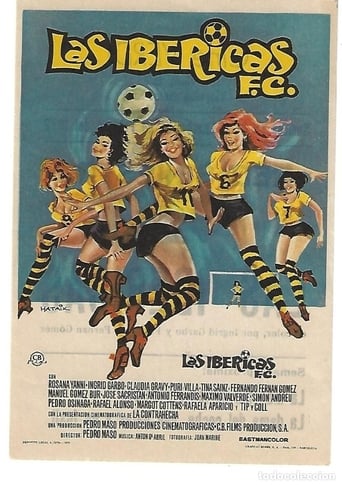
The Iberian F.C. is a female football team makes a splash in the world of football, rather than their athletic skills, their physical attraction for the male audience. Each of the components of the whole suffers a different and peculiar relationship status, derived from its new sports.

A sexually unsatisfied housewife gets into a world of trouble when her meetings with an old friend are discovered.
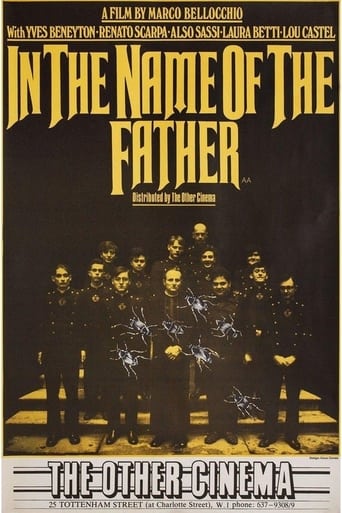
In 1958 Angelo, a rich and spoiled boy, enters a religious school, where students are tired of its vice-rector, and the strict rules and old-fashioned teaching methods of priests. Soon, Angelo exerts strong leadership among his peers and incites turmoil among them, helped by intellectual Franco and shy Camma. They expel the prefect from the school, organize a Grand Guignol show, and disappear the corpse of an old professor.

In the 23rd century, it is no longer necessary to work thanks to the latest technology. Convicts do the work that still needs to be done. The World Leisure Center uses a computer system to decide how people spend their free time. World citizen number DARK 7035 7201 is called Prun. Although an examination shows that his IQ is too low for him to have a child of his own, he becomes the father of Botho. Because it is a "black birth", he has to keep Botho hidden from now on. Prun comes into contact with the so-called "semi-intelligentsia", who oppose the government.
A degenerate gambler, unable to come up with the cash necessary for a high-stakes gin rummy game, bets his nubile daughter. And loses. His daughter becomes the delectable property of a hot-to-trot sex fiend and becomes involved in a catalog of perversion, wallowing in domination, humiliation, fetishism, voyeurism, masturbation, lesbianism, spanking, bondage, blowjobs, incest, among other retrogrades.
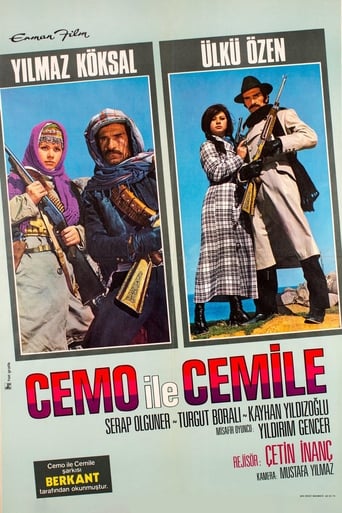
The adventures of two bandits who are in love with each other are recounted.
Experiencing something of a mid-life crisis after his beloved son marries and moves out, a factory worker makes some drastic changes in his life, moves in with the boy and his wife, and sets them all on the path to a communal lifestyle.
Two pilots are hired to reclaim a stolen jet from the son of a South American dictator.
Renowned writer Shen Chiang had become so popular for his scripts that the studio let him direct as well. Here he continued his winning ways with this tale of the end of the Sung Dynasty and the survivors who band together to save their prime minister. Shen outdoes himself with this bold and stirring story of daring Sung avengers (led by Shaws' first international star, Lo Lieh), who must fight their way out of trap after trap.

In a pre-revolutionary Russia, a poor Jewish milkman struggles with the challenges of a changing world as his daughters fall in love and antisemitism grows.
The Cortez brothers rob a bank and flee beyond the Mexican border. On their trail are various people, each for a different reason: Sheriff Fulton is sent by the robbed bank to recuperate the money; Django, a head-hunter, is after them for the reward money; Pickwick is after a saddle stolen from him by the Cortez brothers; Pedro and Dolores, saloon owners, also would like to have the loot.
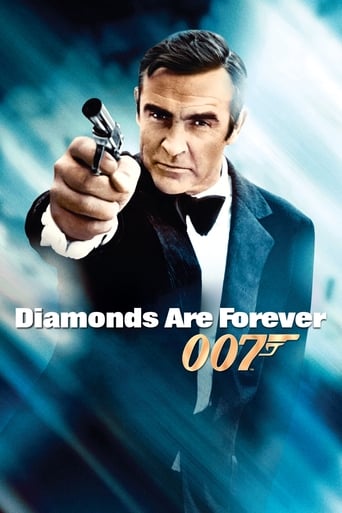
Diamonds are stolen only to be sold again in the international market. James Bond infiltrates a smuggling mission to find out who's guilty. The mission takes him to Las Vegas where Bond meets his archenemy Blofeld.
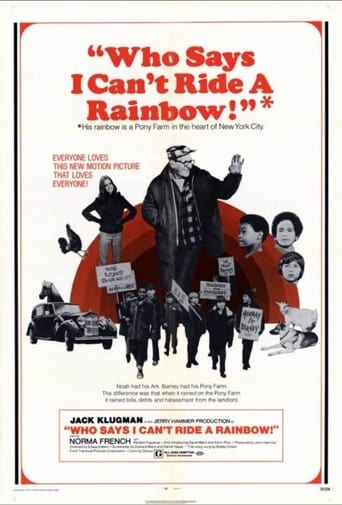
Barney owns the last working farm in Manhattan. For various reasons, city officials have decided to close it down. A special event is planned to raise awareness and money to keep it running.
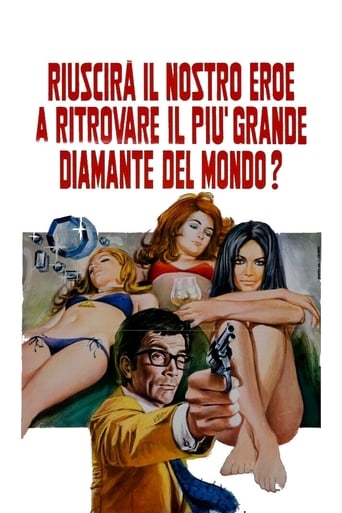
Jimmy Logan, a detective, tries to retrieve a diamond from the British crown stolen by the traitorous chief of the English Secret Service. After carrying out dangerous investigations at Montecarlo, Beirut and Hamburg, he discovers that the headquarters of the thieves is located in a mental hospital and sets about infiltrating their ranks.
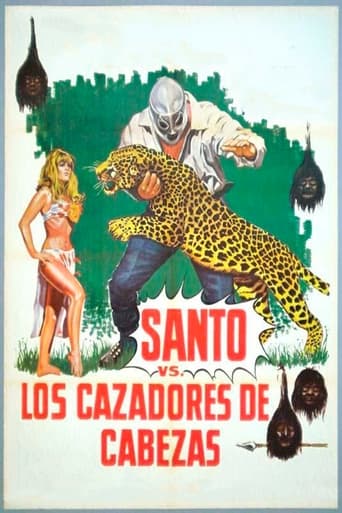
Santo battles a mad scientist reviving the dead


Ajit saves the village from the dakus (bandits); whilst having romance with Anju.
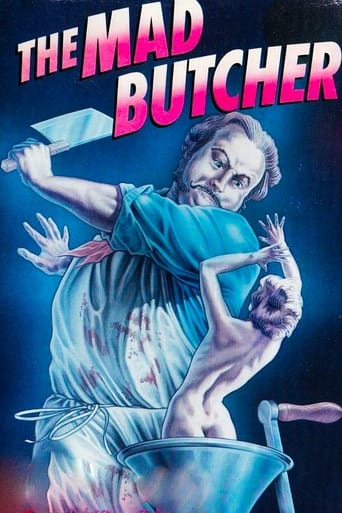
After being released from a mental hospital, Otto returns to his old job as a butcher. He tries to adjust to his new life, but after a bitter argument with his wife, he accidentally kills her. Fearing he will be sent back to the hospital, he grinds up her body and sells it as sausages. As friends and relatives start asking questions about her disappearance, they too start ending up in the butcher's display case.
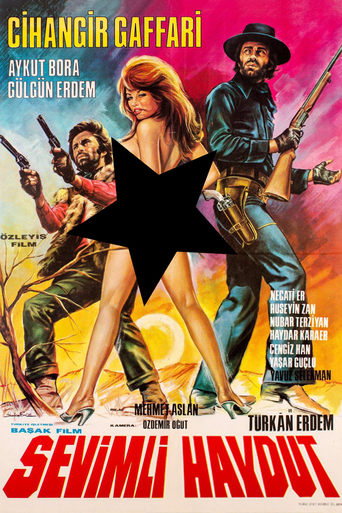
This film is about the adventures of cowboy Tom as he sets out to exact revenge on his father’s killer, Taylor. Tom is a cowboy from Nevada. He lives on a ranch in Nevada with his father. One day, he goes to Texas. He gets into trouble here, and is unable to return home for a while. Forced to work in a stone pit, Tom eventually escapes. But once he gets home, he finds the ranch burned down and his father dead. Tom goes back to Texas to avenge his father
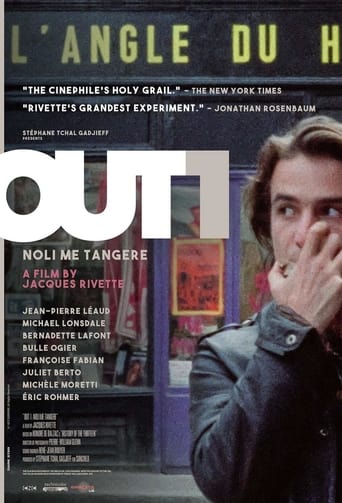
Following the May 1968 civil unrest in France, two theater groups rehearse plays by Aeschylus while two solitary individuals wander the Parisian streets hustling the populace for cash.
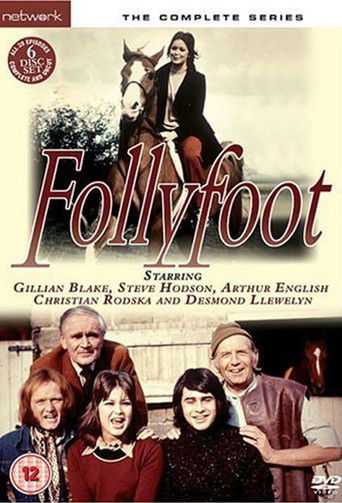
Follyfoot is a children's television series co-produced by the majority-partner British television company Yorkshire Television and the independent West German company TV Munich. It aired in the United Kingdom between 1971 and 1973, repeated for two years after that and again in the late 1980s. The series starred Gillian Blake in the lead role. Notable people connected with the series were actors Desmond Llewelyn and Arthur English and directors Jack Cardiff, Stephen Frears, Michael Apted and David Hemmings. It was originally inspired by Monica Dickens' 1963 novel Cobbler's Dream; she later wrote four further books in conjunction with the series—Follyfoot in 1971, Dora at Follyfoot in 1972, The Horses of Follyfoot in 1975, and Stranger at Follyfoot in 1976.

The comedians is a British television show of the 1970s produced by Johnnie Hamp of Granada Television. The show gave a stage to nightclub and working men's club comedians of the era, including Russ Abbot, Lennie Bennett, Stan Boardman, Jim Bowen, Jimmy Bright, Duggie Brown, Mike Burton, Dave Butler, Brian Carroll, Frank Carson, Mike Coyne, Jimmy Cricket, Colin Crompton, Pauline Daniels, Charlie Daze, Vince Earl, Steve Faye, Eddie Flanagan, Stu Francis, Ken Goodwin, Jackie Hamilton, Jerry Harris, George King, Bobby Knutt, Bernard Manning, Mike McCabe, Paul Melba, Mick Miller, Hal Nolan, Tom O'Connor, Tom Pepper, Bryn Phillips, Mike Reid, George Roper, Harry Scott, Sammy Thomas, Johnny Wager, Roy Walker, Charlie Williams, Lee Wilson and Lenny Windsor. Also featured on the TV show, were Shep's Banjo Boys, a 7-piece band comprising Charlie Bentley, John Drury, Andy Holdorf, John Orchard, John Rollings, Graham Shepherd and Howard Shepherd. In 1973, the line up was Mike Dexter, Tony "Tosh" Kennedy, Ged Martin, Tony Pritchard, Graham Shepherd and Howard "Shep" Shepherd.
Soul Train is an American musical variety show that aired in syndication from 1971 to 2006. In its 35-year history, the show primarily featured performances by R&B, soul, and hip hop artists, although funk, jazz, disco, and gospel artists have also appeared. The series was created by Don Cornelius, who also served as its first host and executive producer. Production was suspended following the 2005–06 season, with a rerun package airing for two years after that. As a nod to Soul Train's longevity, the show's opening sequence contained a claim that it was the "longest-running first-run, nationally syndicated program in television history," with over 1,100 episodes produced from the show's debut through the 2005-06 season. Despite the production hiatus, Soul Train will continue to hold this honor until at least 2016, if and when its nearest competitor, Entertainment Tonight, completes its 35th season.

After Professor Kasuga is killed by fiendish aliens for plans to a super-rocketship, his children trek across Japan, protected by the second-oldest brother, Koji, who transforms into the super-cyborg, Silver Mask.
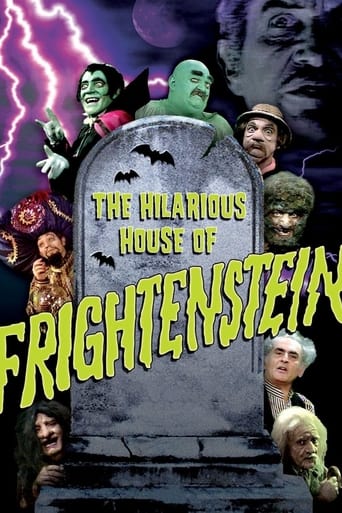
The Hilarious House of Frightenstein, was a quirky Canadian sketch comedy TV series from the 1970s that included some genuine educational content among the humour. It featured the talented Billy Van, who played a variety of characters, Fishka Rais played the role of Igor, Guy Big brought Count Munchkinstein to life, and the legendary Vincent Price made special guest appearances as The Host who would start each episode with: “Another lovely day begins, for ghosts and ghouls with greenish skin. So close your eyes and you will find that you’ve arrived in Frightenstein. Perhaps the Count will find a way to make his monster work today. For if he solves this monster-mania, he can return to Transylvania! So welcome where the sun won’t shine, to the castle of Count Frightenstein!”
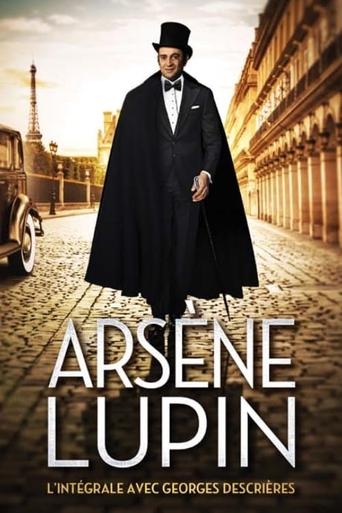
Arsène Lupin is a French TV show which was co-produced with German, Canadian, Belgian, Dutch, Swiss, Italian and Austrian TV stations. It was only loosely based on Maurice Leblancs novels. Georges Descrières' portrayal of Arsène Lupin showed more similarity to Graf Yoster than to Maurice Leblanc's original. He behaved in the first place as a perfect gentleman who never got angry. He was always relaxed, because whatever could possibly had bothered him in daily life was taken care of by his butler. It wasn't questioned how he had come to his financial independence although the series sometimes discreetly implied that he was a professional criminal. Besides rescuing damsels in distress Lupin took on criminals, competing with their wit and intelligence. Either he stole paintings from rich people who had to be considered white-collar criminals or he acted as a detective who derailed criminal schemes. However, when he was attacked, he could defend himself effortlessly by using elegant jujutsu methods. Among the guest stars were German actors such as Günter Strack and Sky du Mont. Jean-Paul Salomé said in his commentary on the DVD version of his film Arsène Lupin he had like this series as a child. German TV, one the investors, would broadcast the show eventually between 18:00-20:00 o'clock because it was only allowed to show commercials within that very timeslot. For them to get a financial return on investment the show had to be appropriate for families and also for children who would watch it alone. Subsequently it was nearby to ask to defuse and flatten some of Leblanc's plots in order to avoid possible complaints that could force the station to broadcast the show beyond the "Vorabendprogramm".

A comedy about a group of kids forming a school baseball team, with the leader being very stubborn and argumentative.
The BBC's flagship cinema review TV program featuring reviews of new releases, news items and interviews. The title of the program changes each year to incorporate the year of broadcast.
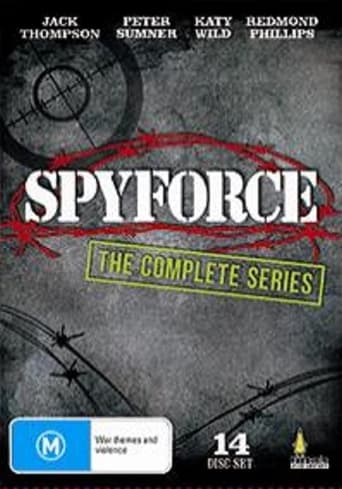
Spyforce was an Australian TV series produced from 1971 to 1973, based upon the adventures of Australian Military Intelligence operatives in the South West Pacific during World War II. It was produced by the Nine Network in conjunction with Paramount Pictures. The series centres on the action and adventures of lead actor Jack Thompson's character Erskine, and his main support character, Peter Sumner's Gunthar Haber. It was the first lead role for Jack Thompson. The two are part of an elite unit of special operatives, the Special Intelligence Unit, and their adventures are loosely based upon those of the real Services Reconnaissance Department who often operated behind Japanese-held lines during the war. Unlike most previous war films, Spyforce deliberately steered away from the notion that the United States was solely responsible for Japan's defeat, and highlights the important role Australian forces played in the defeat of the Imperial Japanese Army. Producer Roger Mirams was also careful to avoid stereotypes of the genre, and tired formulas for the battle scenes. The idea appealed to American producers Paramount Pictures, who backed creator Roger Mirams to begin production without having seen a script. He made the pilot episode, "Spy Catcher", which impressed Paramount, and the Nine Network immediately bought the local rights. The first episode aired in Sydney on 8 August 1971, and the rest of Australia on 26 August 1971. It was originally intended to produce 26 episodes, but following the success of the first series, Mirams held talks with both Nine Network and Paramount Pictures, who backed him for a second series. In all 42 episodes were produced. The series was last aired on Australian television in Adelaide on 21 September 1976, but has been re-run several times since.

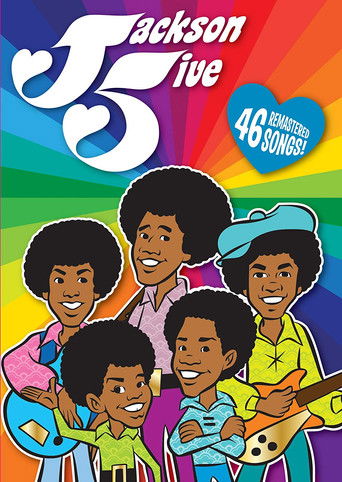
The Jackson 5ive was a Saturday morning cartoon series produced by Rankin/Bass and Motown Productions on ABC from September 11, 1971 until 14 October 1972; a fictionalized portrayal of the careers of Motown recording group The Jackson 5. The series was rebroadcast in syndication through Worldvision Enterprises during the 1984–1985 Saturday morning season, during a period when Michael Jackson was riding a major wave of popularity as a solo artist. The series was animated mainly in London at the studios of Halas and Batchelor, and some animation done at Estudios Moro, Barcelona, Spain. The director was Spanish-American Robert Balser.
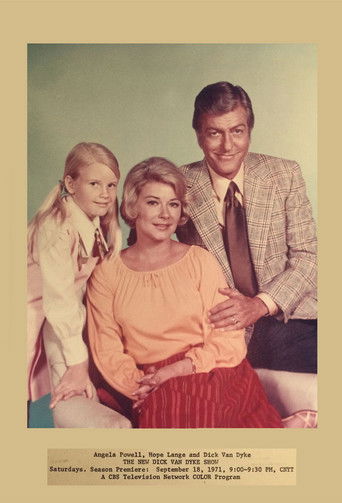
The New Dick Van Dyke Show is an American sitcom starring Dick Van Dyke that aired on CBS from 1971 to 1974. It was Van Dyke's first return to series television since The Dick Van Dyke Show.
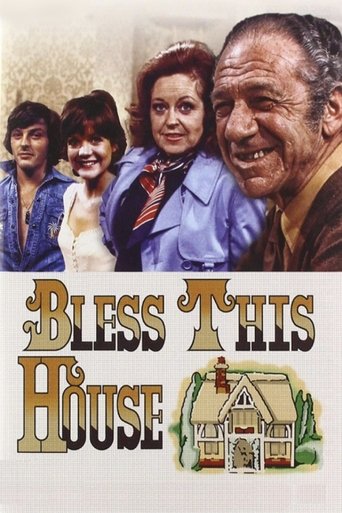
Bless this house is a British sitcom starring Sid James and Diana Coupland that aired on ITV from the 2nd February 1971 to the 22nd April 1976. It was written by Derek Collyer, David Comming, B.C. Cummins, Harry Driver, George Evans, Dave Freeman, Carla Lane, Brian Platt, Vince Powell, Adele Rose, Mike Sharland, Bernie Sharp, Myra Taylor, Jon Watkins and Lawrie Wyman. It was made for the ITV network by Thames Television. In 2004, Bless this house came 67th in Britain's best sitcom.
Hem till byn, written by Bengt Bratt, is Sweden's longest running TV series and one of its most popular. It is a realistic drama about people in a rural Swedish village and their daily life and romances and fights but also the consequenses of agricultural policy and other changes in the society. The series was first aired in 1971 and has since then been shown in eight seasons with three to five years between them, except a 14-year long intermission between 1976 and 1990. The 2006 season was likely the last. All the characters were played by the same actors throughout the series' run, and thus aged naturally with the actors. As the actors grew older and eventually died during the years, the characters that they played had also died at the start of the following season. The seven seasons between 1971 and 2002 were directed by Jackie Söderman and the eighth season of 2006 by Gun Jönsson, who herself portrayed one of the main characters in the series.
Now Take My Wife was a BBC situation comedy which ran for only one series of 14 episodes in 1971. It starred Sheila Hancock and Donald Houston as a suburban middle-class couple, Claire and Harry Love. He would start each episode by turning to the camera and saying "Now ... take my wife". They had a teenage daughter, played by Liz Edmiston. Their next-door neighbour was an eccentric German woman, who also had a daughter. Of the 14 episodes, two are currently missing from the BBC archives; they were either wiped to reuse the tapes or possibly lost at one stage after their first broadcast. Several years later, in a Guardian interview, Hancock indicated that she was not very happy with the programme, seeing it as an example of the sort of stereotyped role for women actors she landed. However, her character often got the better of her husband during each episode.
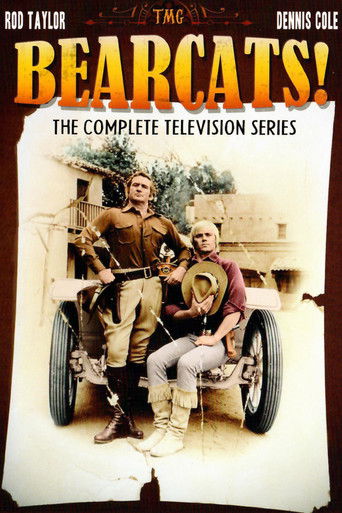
Bearcats! is an American television series broadcast on the CBS television network during the Fall 1971 television season. It starred Rod Taylor and Dennis Cole as troubleshooters in the period before America entered World War I. Bearcats! was produced by Filmways Inc.. It was co-produced by Rodlor, Rod Taylor's production firm.
