
Interview with Sula 2023
Davor Sučić aka Sejo Sexon talks about his views on music.
Davor Sučić aka Sejo Sexon talks about his views on music.
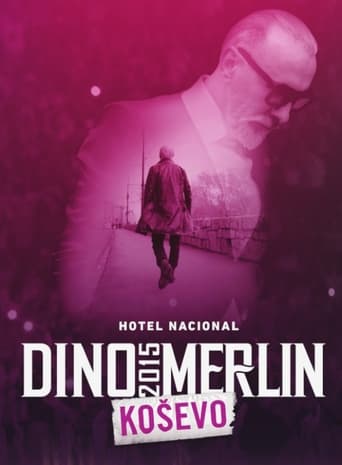
Kosevo July 19 is a DVD by Dino Merlin. It was released in January 2009. It has been recorded on July 19, on his concert in Sarajevo on stadium Kosevo, promoting his tenth studio album Ispočetka.
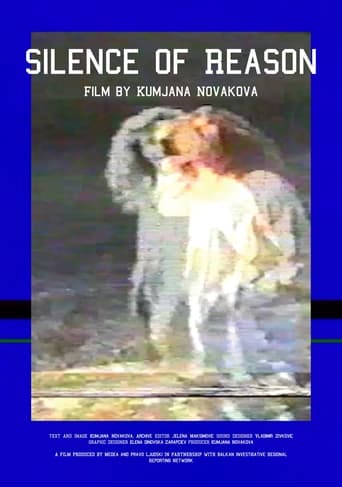
Built solely from forensic visual archive and testimonies, Silence of Reason acts as a memory itself: elusive, fluid, rejecting framing, moving in all directions, spatial and temporal. The singular experiences of violence and torture to women from the Foča rape camps during the war in Bosnia and Herzegovina become our own collective memories, surpassing time and space.
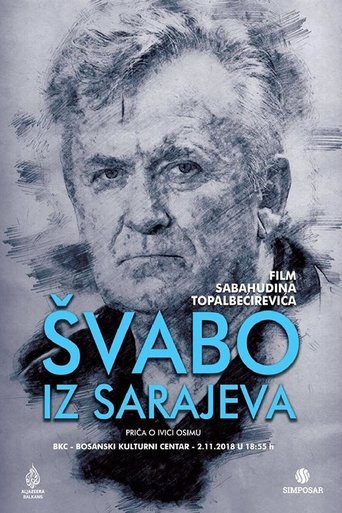
The exciting and emotional story of Ivica Osim, legendary Zeljeznicar football player, started in his hometown of Sarajevo, with a life-long journey through Strasbourg, Belgrade, Athens , Graz and far as Japan. Wherever he worked as a football expert, he obtained the status of a sports legend, the ups and downs, the beautiful and difficult moments of his career. A story of affection for the family, for Sarajevo, but also for love of football.

The members of Serbian army kill innocent Bosnian Muslim victims after Srebrenica massacre in the nearby village of Kravice.

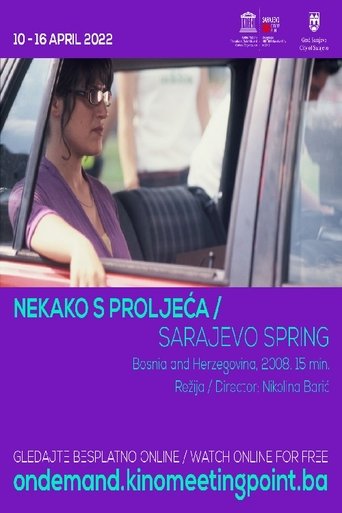
In Sarajevo, drinking coffee means much more than just waking up… How hard can sometimes be to relax and just enjoy the prospect around you? This is a story of the spirit of Sarajevo and its simplicity of life. All you need is a cup of coffee and good company…
Where does tolerance reside? Where does individual end and collective begin? And who claims the privilege to grant or deny rights?
In and around a house love stories intertwine. One love story leads to another. The ghosts of love are left behind to seek the answers to the same question: "What do I know about love?"
A boy and a girl meet in club's toilet. High on drugs, they walk the streets of Sarajevo aimlessly. They end up in an apartment, fooling around, making out, until this careless atmosphere is interrupted by someone else's presence.

Through a photographic narrative, this film presents texts of Bosnian poet Marko Tomaš. Marko and Maja are moving flats in Sarajevo. Maja's depression turns Marko's struggle into poetry, and played on the radio, Marko’s poems become the last bridge of communication between them
A movie about 100 years of Football Club Zeljeznicar.
Portrait of family members during isolation with limited technical resources (phone recording).
An attempt to make a short film about a traditional Kosovar face painter in an ethnic Bosnian village.
After 7 years since “Tokyo-Morava”, Moku and Bekim were filming at Brčko. Based on “Tvoj sin Huckleberry Finn”.

The 2014 unrest in Bosnia and Herzegovina was a series of demonstrations and riots that began in the northern town of Tuzla on 4 February 2014 but quickly spread to multiple cities in Bosnia and Herzegovina, including Sarajevo, Zenica, Mostar, Jajce, and Brcko, among others, for social reasons and with the aim of overthrowing the government. The riots were the most violent scenes the country had seen since the end of the Bosnian War in 1995. The rioting largely took place in the entity of Federation of Bosnia and Herzegovina, and the same level of unrest or activism did not occur in Republika Srpska.
Glasgow during lockdown: Empty streets, empty roads, playparks devoid of life with a population hiding indoors. Juxtaposed alongside this footage is an audio voiceover read by a survivor of the 1992 – 1995 Sarajevo siege in Bosnia. They describe their city in lockdown, day to day life, their challenges, thoughts, fears and their hopes. The voiceover could easily be that of a Glaswegian in Spring 2020. There are striking similarities between this wartime siege and the lockdown experienced in Glasgow. Just as in Sarajevo, our freedom of movement was very limited – we couldn't travel, go to pubs and restaurants, children couldn't go to school.
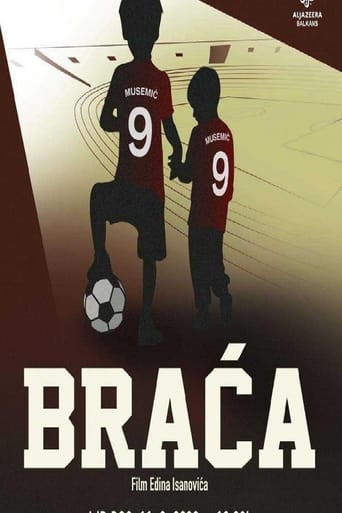
A film story about sports success and brotherly love, full of emotions and memories of the time when FK Sarajevo was the champion of the former Yugoslavia on two occasions. Vahidin and Husref Musemić were each in their respective time the goal scorers and best players of the Sarajevo's champion teams.

This documentary follows the heart-wrenching journey of a father who has been separated from his daughter, Ajlin, after the sudden death of his wife. The family of his wife took Ajlin to Novi Pazar, Serbia, and he never saw her again in her baby bed in Sarajevo, Bosnia and Herzegovina. Despite his efforts to fight for his rights, the other side of the family initiated a trial process against him, claiming he was not fit to care for a child. The father made countless trips to Novi Pazar, hoping to reunite with his daughter, but to no avail. In a particularly distressing incident, Ajlin was schooled to fear her father, who was painted as a monster who would harm her. The documentary highlights the father’s resilience and determination to be reunited with his daughter, while also shedding light on the legal and cultural challenges that stand in his way.
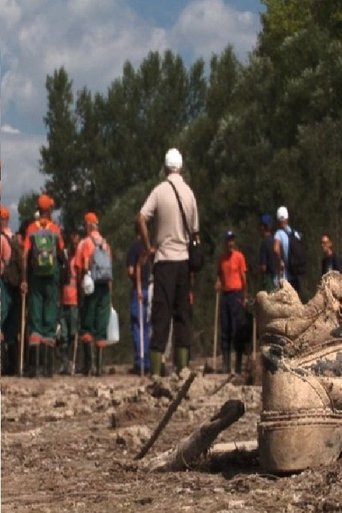
In august 2010, during the repair of the turbines of the hydroelectric power plant Bajina Bašta, body remains of more than 250 incomplete skeletons were found in the mud of the artificial lake Perućac; the remains belong mostly to the Bosniaks killed by members of the army of Republika Srpska in Višegrad and its surrounding area in the period of 1992/95.
