
From Nowhere to Nowhere 2002
Portrait of the famous Lithuanian prose writer Grigorijus Kanovičius.
Portrait of the famous Lithuanian prose writer Grigorijus Kanovičius.
“Sisters” is sensitively and beautifully told story of two families of Pomerancai and Petrauskai who were scattered by brutal events of The World War II and difficult, unexpected challenges of life which wounded their destinies. Story focuses on rescue of the famous violinist Danute Pomerancaitė who born in Kaunas Ghetto. Vilnius Jewish Public Library
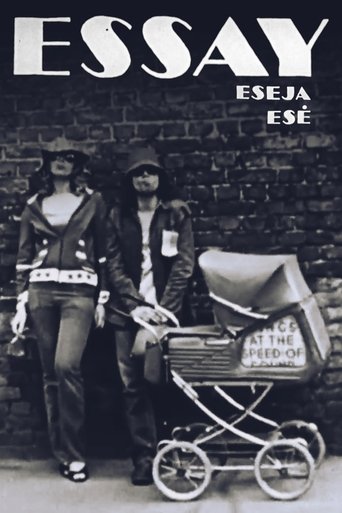
A couple of America-worshipping cool cats cruise the streets with their pram full of forbidden fruit.
The film reflects the care of recreation and preservation of the cultural heritage of Vilnius Jews shown by our state and international community. lfc.lt

An allusion to the last song of the Kauai 'o'o Bird.
The narrative of the film Kaimietis is based on the monologues of two individuals, who do not know each other.

Critical film about the misuse and recycling of household waste.
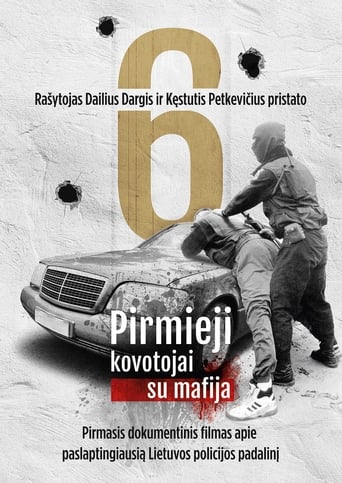
Documentary movie by Dailius Dargis about 6th criminal police unit in Lithuania, who were the first ones to fight against Lithuanian mafia in the early 90s.
After the 1941 Lithuanian deportations to Siberia, this is a story of a woman who grew up there and watched her parents struggle through the aftermath of the traumatic events.
He is Georgian. She is Lithuanian. They meet in Moscow for two hours - To break up. But the hotel is not the best place for breaking up, when your neighbors are making love.

An unknown artist repents in Lithuanian places of pilgrimage, as she is not famous in this success-oriented society and therefore has a guilty conscience.
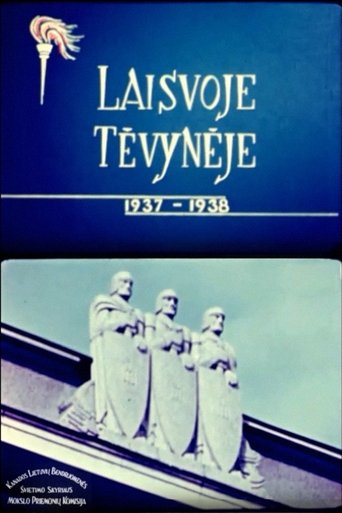
Colour documentary about Lithuania in 1937-1938 by Motūzas Brothers is made for Lithuanian community schools and youth organisations in Canada to show Lithuania's life before the Soviet occupation in June 1940. It shows the Lithuanian countryside, cities and towns, architecture, people's daily life, the most important events of 1937 - 1938 years.

In the last 7 years I lived in 5 countries, in 7 cities and in 16 homes. Now I only have three days to pack my things. It‘s my sixteenth home, sixteenth room from which I‘ll move myself out. I am packing things and through my window I see another 215 windows. Through these windows I see immigrants, couples, misfortunes. Some read, some play, some sleep, some learn to walk on the balance beam, they come in, they go out. I am filming so I wouldn‘t forget about them.
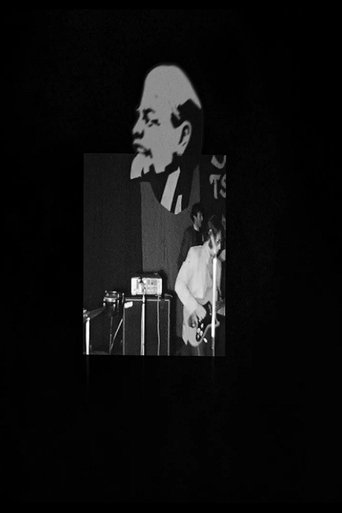
Film reel and its material qualities are inseparable from an image it carries. Polarity between the physical marks on celluloid and the photographic image that it supports was an inspiration to create a stereoscopic sculptural illusion, titled Stains and Scratches.
Eimantas and Migle finally decide to move in together. One day Eimantas notices a snake in the toilet. While this confrontation ends without any casualties the atmosphere between the couple changes when the fear of a reptile at their house, slowly turns into the real paranoia.
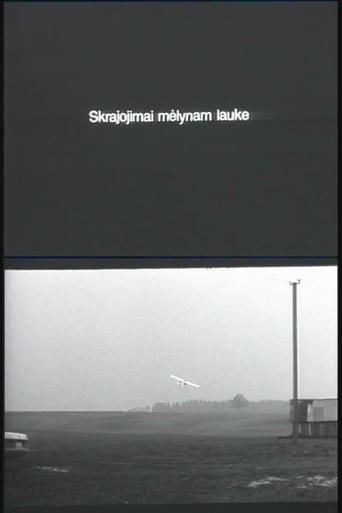
"After “Antigravitation” I wanted to make another step up, where disappears last prop under your feets. “Flying Over the Blue Field” – movie about loneliness in infinite sky. Man stays with himself, home-made plane and balance on the limit between death and life." - Audrius Stonys.

Two brothers and their cousin are preparing an etude based on Lord Of The Rings. Patrik finds it hard to concentrate, Robert is teasing Demin and Demin himself is head over heels trying to explain the secrets of stage art to his younger relatives.
A documentary commemorating the 100th birthday of Czeslaw Milosz, the Nobel Prize-winning Polish-Lithuanian poet. Famous cultural figures, friends, and family retrace the life and work of this extraordinary thinker, joined by Milosz’s own words and a wealth of archival material. Born in a cross-border region of Lithuania in 1911, Milosz grew up a polyglot, fluent in Polish, Lithuanian, Russian, English, and French. During World War II he wrote for underground presses. Surviving Nazi rule, he went on to serve as a cultural attache of Poland in Paris. In 1951, he defected to the West and wrote his most famous prose work, The Captive Mind. By 1960, Milosz had emigrated to the U.S. to teach at the University of California, Berkeley. With the fall of the Iron Curtain, Milosz returned to Poland, where he passed away in 2004 at the age of 93. This film is a lyrical reflection on a life spent in exile yet filled with humor, passion, and big ideas that often went against the spirit of the age.

Bulvinukas is a wanderer – a quiet soul drifting through forgotten paths, finding beauty where others rarely pause to look. Is beauty meant to be admired… or to be held onto?
