
Wyszła z siebie 1970
The main character is the next generation working at the lighthouse, and the film tells the story of how she got out of it.
The main character is the next generation working at the lighthouse, and the film tells the story of how she got out of it.
Kościsław is a little skeleton who wants nothing more than to play his guitar. Unfortunately, his lack of assertiveness is a major obstacle.
The workshop participants reflected on situations from their own lives that had left a particularly strong impression on them and which were related to seemingly trivial gestures. Based on these memories, they created a film story about the value of mindfulness in relationships and its great impact on the quality of our lives. The film was made as part of the workshops during the 17th ŻUBROFFKA in Białystok in December 2023.
An animated film etude made using the photomontage technique. In this short episode, Magdalena Abakanowicz's immobile, frozen cast iron figures break away from the crowd and disperse in different directions across the city. By setting these cast iron monuments in motion, the author creates a new interpretation of the surrounding reality and contemporary man.
Animated epigram about pigeons ...
Wiktoria Cukt, CUKT’s virtual presidential candidate, was the culmination of the group's projects that used rave parties. The artists created a candidate who was a computer program, so-called Citizen Election Software (OSW, Obywatelski Software Wyborczy). Wiktoria Cukt represented the views of everyone who decided to choose her as a representative of their views. She demonstrated a faith in direct, participatory democracy without unnecessary, harmful middlemen, which CUKT considered politicians to be. Wiktoria Cukt's campaign slogan was: “Politicians are useless”. Each time a campaign office for Wiktoria Cukt was opened, there was a rave party. The parties were an occasion to round up Wiktoria's policies – what people wanted her to say. CUKT members also gathered signatures for her official candidacy and membership declarations for the Wiktoria Cukt political party.
In 1998, for the New Year’s Eve party at the Forum Fabricum club in Łódź, Zammenhoff created the video work called 'Manifesto'. The film was presented within an installation formed of many television sets and functioned as the party’s decor. The artist delivered an address in which he expressed a pessimistic evaluation of his own belief from the beginning of the decade in the potential of new techno-culture to radically transform reality.
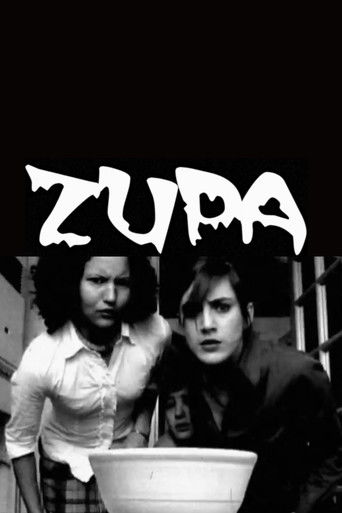
The family dare not drink this peculiar bowl of soup.
The film was produced as part of the "Our Contemporaries" series.
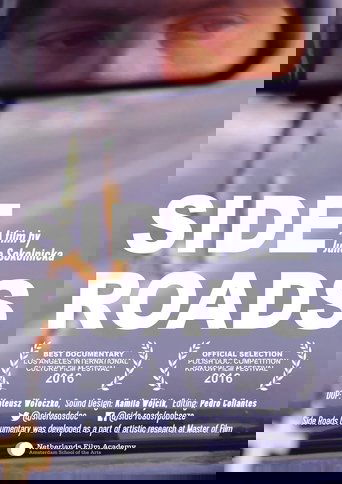
The countryside of Poland from the perspective of a hitchhiker. Traveling around the country, the director recorded conversations with the drivers who share their thoughts, concerns about their own situation, their environment and of human nature. Among them is a woman who all of her life lived in the same village, never really going anywhere; a singer of “disco polo”, who spent a lot of time on the road; a baker, who has been baking bread for over 50 years and dreams about moving to Mazuria. These intimate portraits are confronted with an ugly, chaotic landscape, full of incongruous buildings and billboards.
The story of a young, talented man for whom poetry became the only meaning of existence. He paid the highest price for it. In the film, his loved ones recall their memories of Rafal Wojaczek: his fiancée, friends and, in archival sound recordings, his late parents and brother Andrzej. The filmmakers visited with the camera places important to the poet: his hometown of Mikolow, where his "poem-making" began, and Wroclaw, where he spent the last six most creative, but also most turbulent years of his life. For the first time, unknown manuscripts, typescripts, notes and drawings by Rafal Wojaczek collected at the Ossolineum in Wroclaw were published in this film.

"Once Means Forever" is a short animated film, which shows us, without delusion, story of young women. Girl who could be any other women. Looking by her eyes, we will be troubled by her one day. The day which will change her life forever.
In the late 1960’s, four strong men from a local bar in Wroclaw in southwest Poland carried a 150 kg heavy German-made "credenza" from one side of the Zgodna street to the other. Then it disappeared. Against the will of his mother, the filmmaker and son sets out to find the vanished piece of furniture in the place his family escaped 40 years ago, and finds a new perspective on the emigration. In sensitive and tragicomical observations, shot mise-en-scène in one building, this wild goose chase can also be seen as a social experiment about how much we are an oblivious product of history. The background are the mysterious and dramatic spring months of 1968 in Poland - a time that until today evokes a lot of controversy inside Poland while it is largely unheard of outside.

