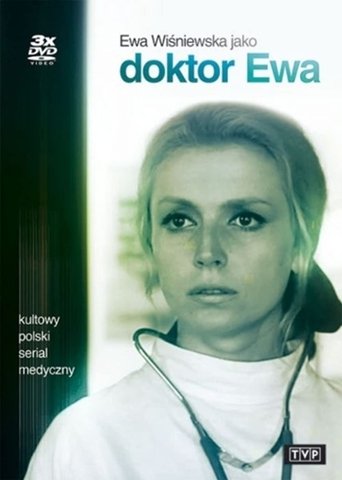
Doktor Ewa

Doktor Ewa 1971

1

Doctor Ewa Lipska, an attractive young woman just after graduation, with interesting professional prospects for the future, chooses the job of a village doctor. Brought up in a big city, she settles in the small town of Międzybórz in the Łódź Province. She is forced not only to overcome the daily difficulties resulting from medical practice in a rural health center, but also to learn to talk to people of a different mentality and gain the trust of her patients.
1971

World Uprising: Island Ritual

World Uprising: Island Ritual 1971

1

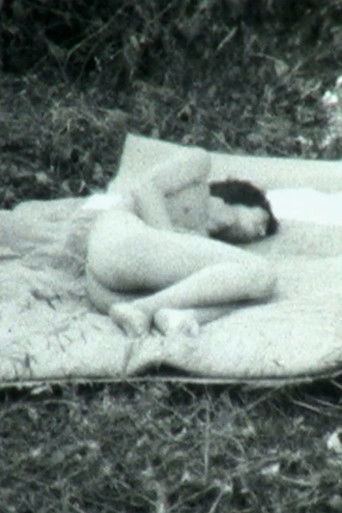
This film documents actions performed for World Uprising by Ikuo Shukusawa, Sanzō Tanaka, and Shigeru Hanagata, who collectively worked as Shikata Kōbō (Death Type Workshop). Camera person unknown, 1971, B&W, silent, 3 min. Courtesy of Kumiko Matsuzawa.

1971

Run

Run 1971

1

In "Run", Avraham filmed filmed himself running from point to point, and then edited the film layer by layer. The result is a chromatic intruiguing film.

1971

2 x 45 Bilder / Sätze von Agadir

2 x 45 Bilder / Sätze von Agadir 1971

1

12 minutes. 6 pages of text. 180 lines. 90 photos 2 lines per photo. 45 photos of the new Agadir. 45 photos from the slums of Morocco.

1971

The Events at Garabandal

The Events at Garabandal 1971

1

This documentary by Richard Everson marked the first groundbreaking attempt to depict the events of Garabandal in color 16MM film.

1971

Sympathy for the Devil

Sympathy for the Devil 1971

1

"Bruce Benton's four‐minute “Sympathy for the Devil” uses the classic Rolling Stones recording to lend a sort of frayed irony to a collage of news reel shots of President Nixon, the Vietnam war, Gov. George C. Wallace, riots, Billy Graham and lots of other ducks that aren't sitting as much as they are lying down, exhausted." - Vincent Canby, New York Times, Nov. 19th, 1971

1971

Quiet Snow

Quiet Snow 1971

1

"People with an abiding interest in what young America is thinking today will be happy to learn that with perhaps one exception all the movies in the Whitney Museum's current Teen‐Age Filmmakers program are concerned with nightmare visions. The one exception is “Quiet Snow,” a nature study by Rob Hahn and Corey Kaup, which earns its “perhaps” because after several minutes of pastoral imagery it ends with about 30 seconds of mere blackness accompanied only by noise. For all I know, that may be a nightmare." - Roger Greenspun, New York Times, Oct. 19th, 1971

1971

Our Realms as We Lived Them

Our Realms as We Lived Them 1971

1

"An elaborately structured and miserably acted unveiling of how ruinous people are, it looks like nothing so much as a rich kids' meditation on the vanity of life—from the point of view of a posh Manhattan townhouse." - Roger Greenspun, New York Times review Oct. 19th, 1971 David Wise, the son of Electronic Arts Intermix founder Howard Wise and producer Barbara Wise, was a child prodigy whose pre-adolescent films led him to be described by Jonas Mekas as "the Mozart of Cinema." The young Wise would be trained in stop frame animation by Stan Van der Beek, before going on to his later career as a successful writer of science fiction film and television.

1971

My Country Occupied (Newsreel #151)

My Country Occupied (Newsreel #151) 1971

1

In this moving film, the personal testimonies of Guatemalan Indians, peasants, and guerrillas are dramatized to provide the narration for a powerful overview of the history of U.S. destabilization of democracy in Central America.

1971

Portrait - Jesse Fuller

Portrait - Jesse Fuller 1971

1

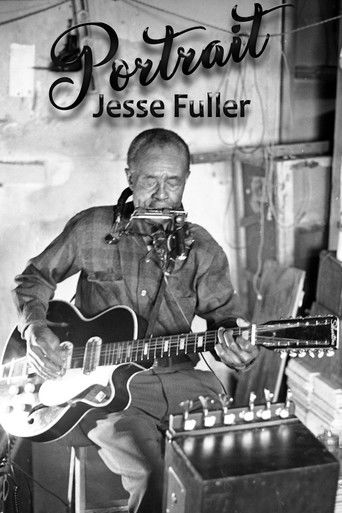
A KRON-TV film documentary featuring the last public concert given by one man band musician Jesse Fuller, in Oakland Museum's Cowell Hall on May 7th 1971. Fuller is seen playing several songs (including 'San Francisco Bay Blues') and bantering with the audience, recalling how he appeared in Raoul Walsh's 1924 movie 'The Thief of Bagdad'. Also includes close-up views of him playing his guitar and fotdella (a foot operated percussion bass) and talking about his playing style. Begins and ends with brief scenes of Fuller walking around his Oakland neighborhood.

1971

Il grande ammalato

Il grande ammalato 1971

1

The great sick nowadays, the traffic, is always under observation. Methods and studies to attempt to decrease harmful discharges. But if planes and trains are constantly under control, the same goes for cars and pedestrians, where an infringement can often cause collateral damage to other drivers and / or pedestrians as well. Examples of how in some cases reckless driving can cause serious damage. Safer driving, on the other hand, can avoid further aggravating the problems of the very sick person. Preserved and digitized by the National Cinema Impresa - CSC

1971

III/71 Aktionen

III/71 Aktionen 1971

1

Things (and their treatment) are shown repeatedly - a loaf of bread, a sausage, an egg cracked open on the rim of a cup: everyday actions with irreversible, one might say vitally destructive consequences. In the second part, the actions are directed at people, and the anxiety changes because the situations are created deliberately and uncritically. Part three, which could be read as a sober protocol of a relationship, loses the proximity to actionism and performance. Images of a man and a woman alternate with images of windows, mirrors, sofas, and the interior.

1971

Progress?

Progress? 1971

1

Sven Elfström (1927-2017) was a full-time manual labourer who started off as a welder at the shipyards in Uddevalla. Eventually he moved to the industrial city of Nynäshamn, south of Stockholm, to work at the manufacturing workshops of the state telecommunications company, Televerket. Elfström began shooting 8mm films at an amateur film club in Uddevalla. When moving to Nynäshamn he acquired a 16mm camera. Most of the eleven films that he made in this format are shot in Nynäshamn; the actors in these films were friends and family. The films were self-financed, shot and edited by himself, often on reversal film stock as this was the cheapest way to make a film. This means that usually neither negatives nor additional copies exist of these films, but merely one original print. UTVECKLING? starts with a fierce critique against capitalism, consumerism and man’s exploitation of the world.

1971

Bouquet

Bouquet 1971

1

Exploits the potential of film as medium and flowers as subject. Editing incorporates split screen, kine-static cutting and other optical techniques to reveal a manifestation of nature.

1971

Understanding Composition in Art

Understanding Composition in Art 1971

1

This short documentary explains the importance of formalist elements such as positive/negative space, texture, color balance, and rhythm in painting and sculpture. The film characterizes these various compositional strategies as being universal, but foremost stresses their manifestation in twentieth-century art.

1971