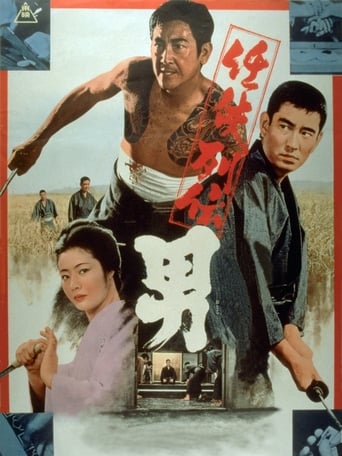
The Man 1971
Japanese movie.
Japanese movie.
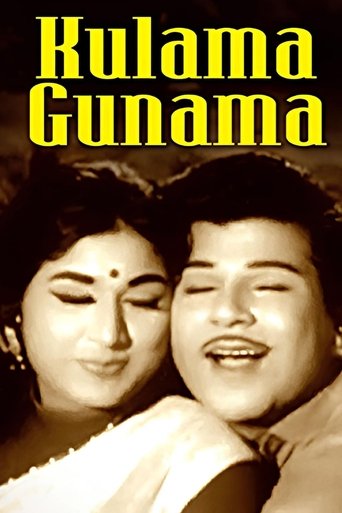
Chinnathambi is a well-respected pillar of his village, dedicating his life to public welfare—but his devotion to duty comes at the cost of time with his wife, Seetha, who longs for a child. His younger brother Raja falls in love with Lalitha, the daughter of a corrupt shopkeeper who profits from exploiting the villagers. When Chinnathambi opens a fair-price cooperative store, tensions rise—and Lalitha’s father seizes the opportunity to drive a wedge between the brothers. As family bonds are tested by love, rivalry, and personal sacrifice, the women of the household stand at the heart of reconciliation. But when a twist of fate turns joy into sorrow, hidden truths and quiet acts of love begin to shape the future of both couples.
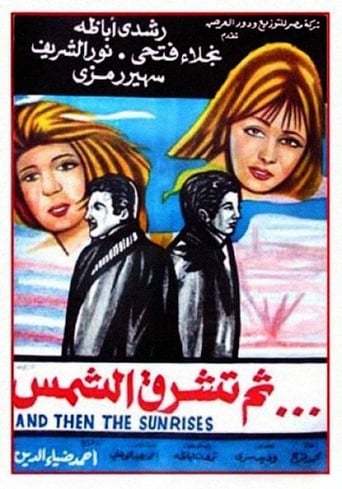
Two brothers with a rich uncle, who love his two daughters, Faiza and Faouia, are deaf. The father loses all his wealth and the two brothers become poor, pushing Hamed with his sister to Rushdie while traveling abroad in order to obtain a doctorate. A relationship between (Rushdie) and (Suhair), a faithful (faithful) nurse, will arise that appears sinful at its beginning, but (Rushdie) can wake up to his senses and return to his senses.

Anoop marries Minoo, a childish girl who doesn't understand her relationship with Anoop. While returning back to Calcutta, he is compelled to leave her with her mother.
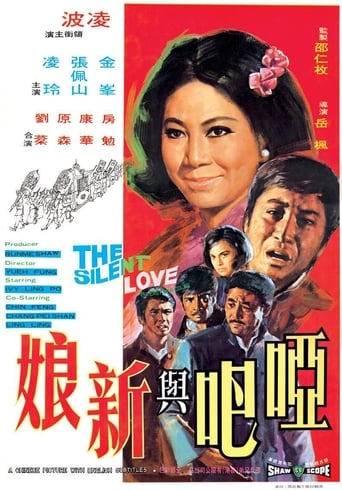
Ivy Ling Po gives a startling performance as an abused wife who suffers through all his adulterous and treacherous ways in The Silent Love, which became an allegorical, tragic love story that reflected the unspoken truths inherent in Chinese society. Lead actor Chin Feng received the 1971 Golden Horse Outstanding Performance award for his portrayal as The Mute, a man that secretly loves Ivy and does all he can to make her life better, except that it backfires on him.
Satirical comedy based on the notebooks and short stories by Anton Pavlovich Chekhov: "Romance with Double-Bass","On the Harmful Effects of Tobacco", "Misery", "Grateful", "Polinka", "The Cynic", "The Ninny".
A rebel youth joins a duo of entertainers only able to communicate by gesturing; when the female performer is suddenly abducted, he and Takeru must take action.
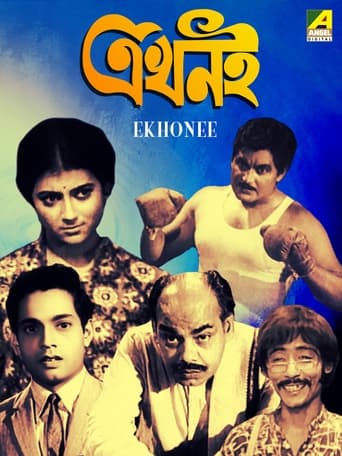
Ekhonee depicts the lives and frustrations of a bunch of youth struggling to cope with the adversities of a bureaucratic society. There's a bunch of college students Arun, Tiklu, Shambhu, Biman, Sujit, Urmi whose lives undergo a change after the carefree days of college are over.
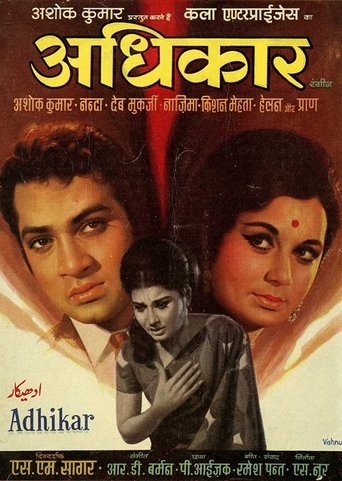
Shyam falls in love with Radha, but his father has arranged his wedding to Meera
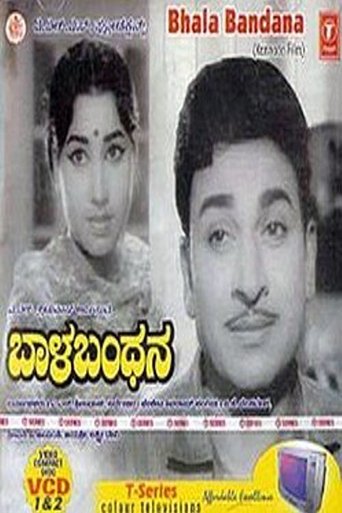
Orphaned as an infant, Ranga (played by Rajkumar) is brought up by his distant relative Chandrashekhar Rao Bahadur (Sampath) and his compassionate wife Parvathi (M Jayashree). Life takes a cruel turn for Chandrashekhar Rao when he loses all his wealth in share market. His daughter's marriage is called off, his sons attitude change and he is forced to send Ranga and Lakshmi out. How Ranga sets right the turmoil in the family and reunites them forms rest of the story.

In the wake of an atomic disaster, the entire male population of the Earth has been rendered sterile, except for a young man named Adam who was deep below the planet's surface in an iron mine at the time of the accident. This hapless nonentity suddenly finds himself feted as humanity's savior, exhibited to international teams of scientists, and instructed to leave his wife and instead join his new harem of beauty contest winners; until, that is, the fateful day when other males start to regain their potency and Adam is no longer 'special'. This satirical sci-fi movie is of interest not merely for its candid approach to sex and sexuality, but also because it's an unauthorized adaptation of Pat Frank's 1946 novel “Mr. Adam”.
Lesser, but still modestly entertaining sequel. Wakayama is wonderfully bastardly here, but has to do without Chicago bros. Yamashiro & Watanabe and the film is just that much less fun. It's also a little bogged down by an out-of-place environmental message. In return one does get Willie Dorsey (who would go on to lose his balls in The Street Fighter) in a rather big role as Capone's right hand man. There's a legion of other gaijin as well, Osman Yusuf among them of course. The rating could be a notch higher on a good day.
A critique of the Japanese family, seen here as militaristic, absurdly incestuous and patriarchal with the father dominating his family sexually and violently. Nihilistic destruction by the young ones seems to be the only way out.
A humble and long-suffering New York waiter finally turns the tables on a regular, insufferable customer who delights in pestering him about the service. Based on the playwright’s personal experiences as a waiter at a resort in the Catskill Mountains.
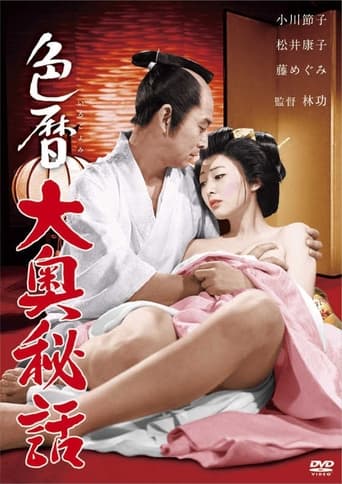
A young girl who has been made a maidservant in the harem of the Tokugawa shogun. She is entrusted with the role of the mistress's maid and gradually grows up to be a woman.
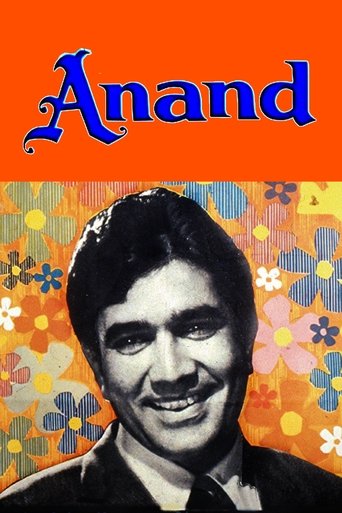
Dr. Bhaskar Bannerjee struggles with his patients' suffering and the darkness and poverty he confronts daily. He treats cancer patient Anand who upon learning of his impending death determines to use the time he has left to the absolute fullest.

Georges Duroy cynically exploits women - and his position as a journalist - to gain power in 19th-century France.
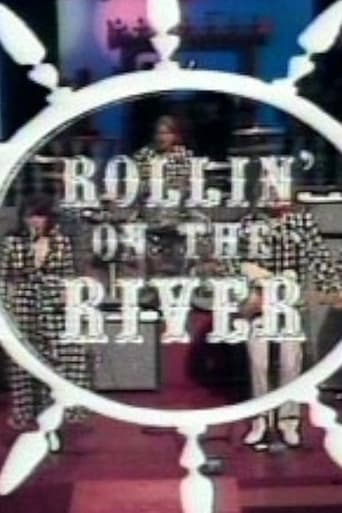
Rollin' On The River 1971-72 - (Rollin 1972-73) was a Canadian Music Variety Series hosted by Kenny Rogers and The First Edition. They were the first pop-rock group to host their own prime-time TV series. - 53 episodes x 60 min - Featured guests included: Tina Turner, Merle Haggard, Bo Diddley, April Wine, Bill Withers, The Raiders, Cheech & Chong, The Stampeders, Bruce Cockburn, The Grass Roots, The Five Man Electrical Band, Lighthouse, Climax, Billy Preston, Jim Croce, Kris Kristofferson, Jose Feliciano, Mac Davis, Ronnie Hawkins, John Kay, Chilliwack, Looking Glass, The James Gang, The Poppy Family, Ian & Sylvia, Pat Paulsen, Helen Reddy, Andy Kim, John Stewart and many others. *Note: The series was an hour long in Canada. In the U.S. it was only half an hour, and Canadian talents were excised from the show for prime-time viewing.

A 1971 three-part miniseries about the birth of the Italian Republic, directed by Sandro Bolchi, Vittorio De Sica, and Ermanno Olmi
Programme X is a 1970 TV show
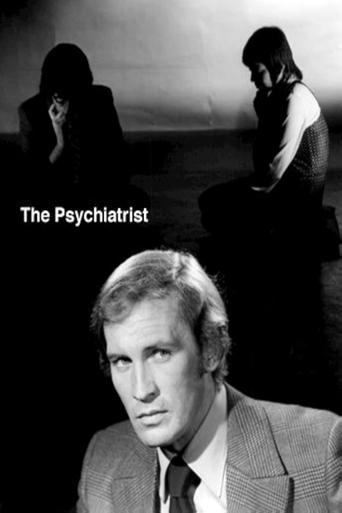
The Psychiatrist is an American television series about a young psychiatrist with unorthodox methods of helping his patients. Roy Thinnes played the title role of Dr. James Whitman. Luther Adler co-starred as Dr. Bernard Altman, the older psychiatrist with whom Whitman worked. Two episodes of the short-lived series, "The Private World of Martin Dalton" and "Par for the Course," were directed by Steven Spielberg. The regular hour long series ran from February 3, 1971 to March 10 of the same year. The pilot for the series, a made for TV movie called The Psychiatrist: God Bless the Children, aired on December 14, 1970. Actor Pete Duel was at the center of this 90 minute drama, as Casey Poe, a former drug addict who, after finishing a two year prison sentence, must battle his own personal demons, as well as the prejudices of others, in order to reenter society. Dr. Whitman is the psychiatrist who must break through Poe's resistance in order to help him form a new life for himself. Duel received much praise for his performance and reprised his role in the first regular episode of the series, "In Death's Other Kingdom." The Psychiatrist was an element in the wheel series Four in One, which NBC aired in the 10 PM Eastern time slot during its 1970-71 series. The Psychiatrist was the final series of the four to air, following the first-run conclusions of the other three components, McCloud, Night Gallery, and San Francisco International Airport. After all four series had completed their initial six-episode runs, reruns of the four were interspersed with each other until the end of the summer. Of the four elements, McCloud was picked up as one element of a new wheel-format series, the NBC Mystery Movie, and Night Gallery was picked up as a stand-alone series, while San Francisco International Airport and The Psychiatrist were cancelled with no further episodes ordered beyond the original six.
The Man and the City is a dramatic television series which was aired on the ABC television network as part of its Fall 1971 lineup from September 15, 1971 to January 5, 1972. The Man and the City stars the well-known Hollywood actor Anthony Quinn as Thomas Jefferson Alcala, the long-term Hispanic mayor of a major but unidentified city in the Southwestern United States. Quinn's WASP deputy, Andy Hays, was portrayed by Mike Farrell. Hays' main role was to make sure that the well-meaning Mayor Alcala did not become so engrossed in aiding individual constituents with their problems that he failed to address the issues facing the city as a whole. Despite the vast talents of Quinn and the earnest Farrell, The Man and the City was a Nielsen ratings failure, finishing third in its Wednesday night time slot against the hit private eye show Mannix and the Rod Serling anthology series Night Gallery, and was cancelled at midseason.
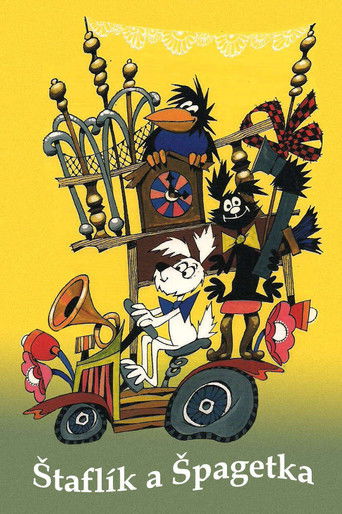
Coppers End is a police station where the policemen work very hard to avoid work. A crime would involve them filling in forms, making out reports and, heaven forbid, giving evidence in court.
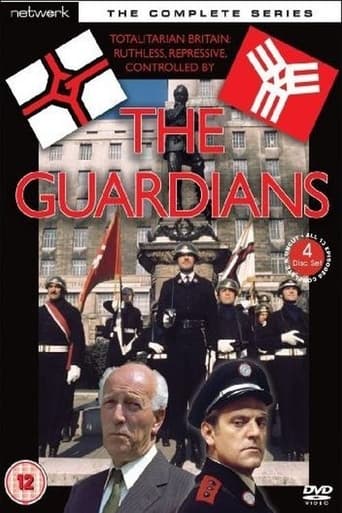
The Guardians is a television drama series of 13x60 minute episodes made by London Weekend Television and broadcast in the UK on the ITV network between July 10, 1971 and October 2, 1971. The opening titles and closing credits included a memorable theme tune composed by Wilfred Josephs.
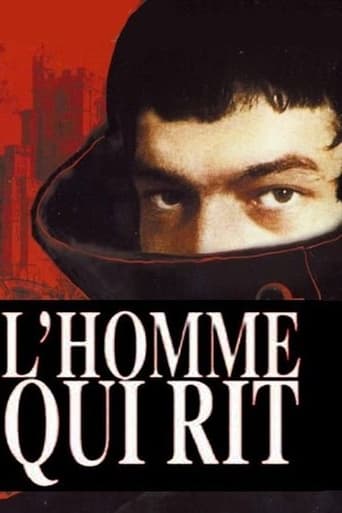
A three-episode series, based on the novel of the same title by Victor Hugo, telling of the adventures of two children, a blind girl and a badly scared boy, who are rescued and looked after by a vagabond.
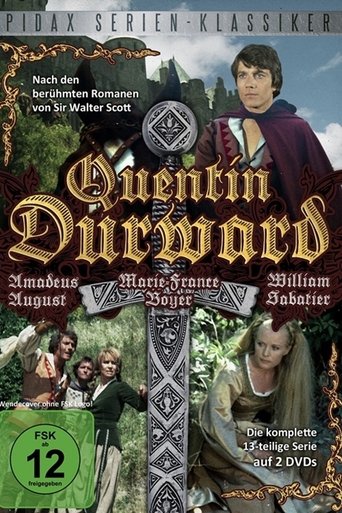
Quentin Durward is a French-German swashbuckler TV series. It was produced in 1970, directed by Gilles Grangier and broadcast in 1971. The series starred the German actor Amadeus August as the protagonist and the French actress Marie-France Boyer as Isabelle de Croye. The series was based on Sir Walter Scott's in 1823 published novel Quentin Durward. It concerns a Scottish soldier who serves French King Louis XI while the King has to overcome the schemes of his rival Charles the Bold and Jean Balue. The TV series kept close to the classic novel and was often shot at historic French locations. The French version consists of 7 instalments of 52 minutes each, while the dubbed German version had 13 episodes of about 25 minutes apiece. Both versions have been made available on DVD.
The show revolves around a group of five ronin (masterless samurai) who make a living by transporting anything, anywhere. They take on tasks ranging from dangerous items that the town's couriers won't handle to people. The narrative features an innovative concept where the characters become entangled in incidents and use their skills and courage to resolve them. Starring veteran actors Yutaro Daitomo, Ryuji Shinagawa, Goh Wakabayashi, and others, the series is known for its lively and bold storytelling, making it a must-watch for fans of historical dramas.
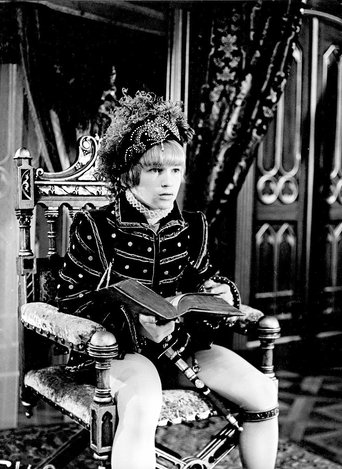
A prince meets a young man to whom he bears a striking resemblance. The two exchange places and learn to be better people in the process.

A story of two sisters attempting to find happiness in the tightly structured society of 18th century England. Elinor, disciplined, restrained and very conscious of the manners of the day, represents sense. Outspoken, impetuous, emotional Marianne represents sensibility.
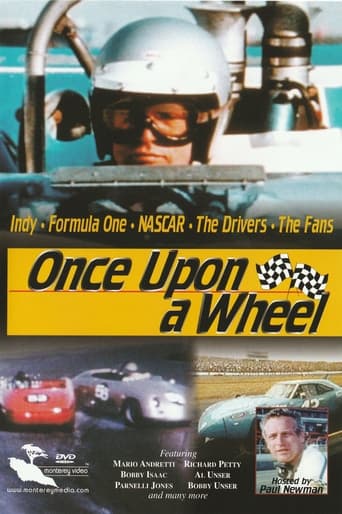
Once Upon a Wheel is a 1971 ABC television documentary on the history of auto racing. It was hosted by Paul Newman and was directed and produced by David Winters. A racing enthusiast, Newman narrated this hour long documentary on the history of auto racing. Joining Newman was Mario Andretti, Kirk Douglas, Hugh Downs, Dean Martin, Cesar Romero, Dick Smothers and many others. TV Guide featured an article on the program as well as Newman on the cover in the April 17, 1971 issue. The film was released to home video by Monterey Media.
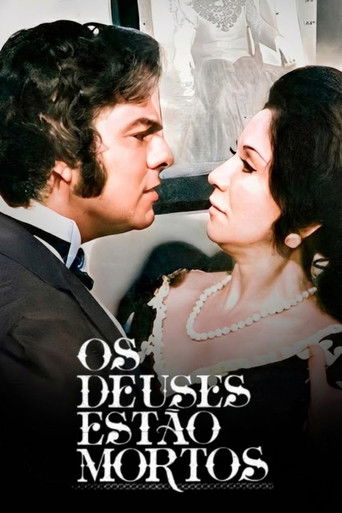
In 1889, a conflict arose between the decadent and ruined rural aristocracy following the liberation of slaves and a new class of wealthy individuals, comprised of entrepreneurs emerging from the republican industrial class, interested in free labor. In the city of Ouro Negro, in the interior of São Paulo state, the conservative, aristocratic, and monarchist Almeida Santos family, which traditionally dominated the region, began to lose ground to the Lobo Ferraz family, representing the nascent progressive and republican bourgeoisie.

