The Littlest Hobo

The Littlest Hobo 1979

7.30

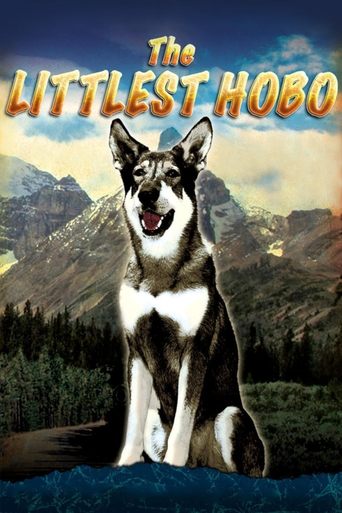
The Littlest Hobo is a Canadian television series based upon a 1958 American film of the same name directed by Charles R. Rondeau. The series first aired from 1963 to 1965 in syndication, spanning six seasons and was revived for a popular second run on CTV from October 11, 1979 to March 7, 1985. It starred an ownerless dog. All three productions revolved around a stray German Shepherd, the titular Hobo, who wanders from town to town, helping people in need. Although the concept was perhaps similar to that of Lassie, the Littlest Hobo's destiny was to befriend those who apparently needed help. Despite the attempts of the many people whom he helped to adopt him, he appeared to prefer to be on his own, and would head off by himself at the end of each episode. Never actually named on-screen, the dog is often referred to by the name Hobo or by the names given by temporary human companions. Hobo's background is also unexplained on-screen. His origins, motivation and ultimate destination are also never explained. Although some characters appeared in more than one episode, the only constant was the Littlest Hobo himself.
1979

Katts and Dog

Katts and Dog 1988

5.50

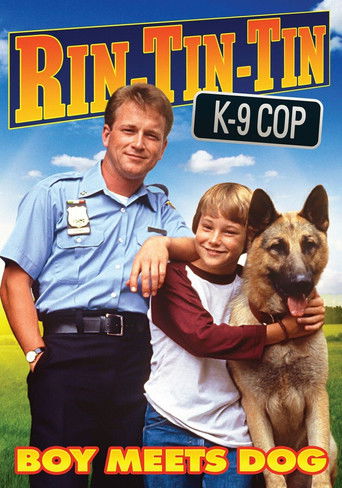
Katts and Dog is a French and Canadian-produced television series which ran from 1988 to 1993. It was known as Rin Tin Tin: K-9 Cop in the United States where it originally aired on CBN Cable/The Family Channel and Rintintin Junior in France on La Cinq. CTV broadcast the series within Canada. When the episodes were filmed the dog’s name was “Rudy”. When the series was aired in the U.S. and France, the name was dubbed as “Rinty” to go with the new title. However, some episodes of Katts and Dogg have the American dubbing where "Rudy" is called "Rinty" throughout the episode. The episode Hit and Run is an example of this. When the series went out in Britain, it kept the title Katts and Dog, but the dog's name was changed to “Rinty.” The show is about the life of Canine Officer Hank Katts and his canine partner who fight crime and the forces of evil. The show’s early episodes begin with Hank just finishing up Police Academy. Later on, it shows the first meeting between Katts and Rudy/Rinty. It also shows the life of Hank’s nephew, Steve, through the death of his mother and his adoption by Officer Katts. A 1991 TV movie had Officer Katts and Rudy visit Paris.

1988

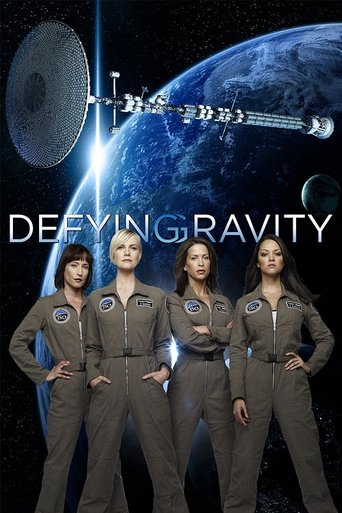
Defying Gravity

Defying Gravity 2009

6.69

In the very near future, a team of eight astronauts embarking on a six-year journey to explore Venus and other planets in the solar system, find their lives and destinies intertwined and carefully directed, not only by Mission Control officials on Earth, but also by an unseen force which is much closer and far more powerful.

2009

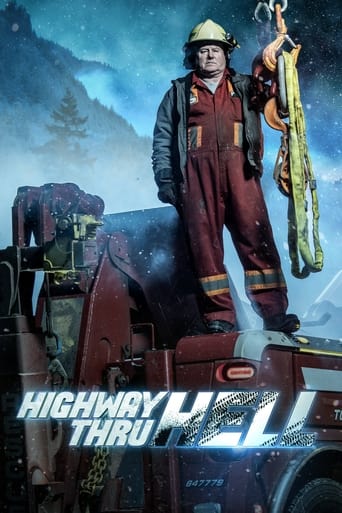
Highway Thru Hell

Highway Thru Hell 2012

7.30

Follow the operations of Jamie Davis Motor Truck, a heavy vehicle rescue and recovery towing company based in Hope, British Columbia focusing on the hardships of operating along the highways of the BC Interior, especially the Coquihalla Highway, which is notorious for rapidly changing weather.

2012

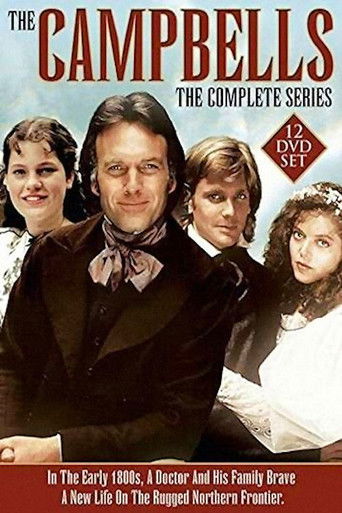
The Campbells

The Campbells 1986

5.00

The Campbells was a Scottish-Canadian television drama series, which aired on Scottish Television and CTV from 1986 to 1990. A historical family drama, the series starred Malcolm Stoddard as James Campbell, a Scottish doctor living in 1830s Upper Canada with his three children, Neil, Emma and John.

1986

The Odyssey

The Odyssey 1997

7.20

Warrior Odysseus leaves his idyllic life in the kingdom of Ithaca to fight in the Trojan War. Following victory, he now must endure a lengthy, decade-long return journey, and with all his wits, overcome deadly monsters, powerful forces of nature, seductive enchantresses, and even journey into the bowels of the Underworld.

1997

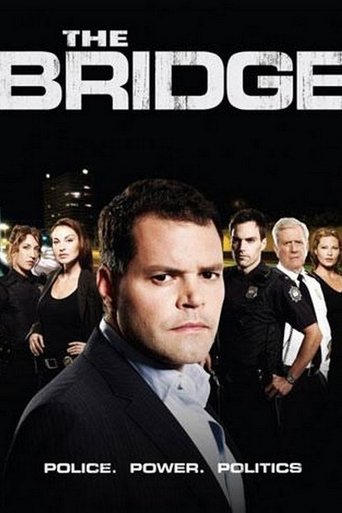
The Bridge

The Bridge 2010

5.50

The Bridge was a Canadian police drama commissioned by CTV and CBS starring Aaron Douglas. The name of the series is derived from the bridge which connects the wealthy Rosedale neighborhood of Toronto with one of its poorest, St. James Town. The initial order is for 11 episodes, produced by Entertainment One. After CTV ordered the pilot to series in November 2008, CTV later shared the pilot with CBS. This series premiered on CTV on March 5, 2010 and premiered on July 10, 2010 on CBS. It has been canceled in the US after three episodes due to low ratings. CTV announced on June 3, 2010 that the series will return for a second season during the 2010–2011 season. However, on January 13, 2011, star Aaron Douglas tweeted that the series has been officially canceled after only one season.

2010

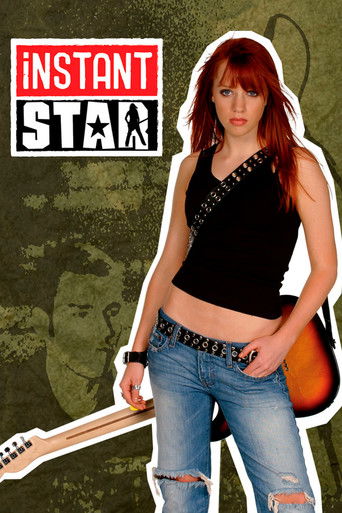
Instant Star

Instant Star 2004

6.20

When Jude Harrison enters G Major’s singer/songwriter contest, she knows her stuff will kill, but she’s shocked when she learns she won the whole darn thing! Now, with a recording contract, a soon-to-be released single and a mega-crush on her producer, Jude’s wading through a world bigger than her wildest rock n’ roll dreams. Thrust into the spotlight, Jude is desperate to prove she belongs there…but she’s not even old enough to drive.

2004

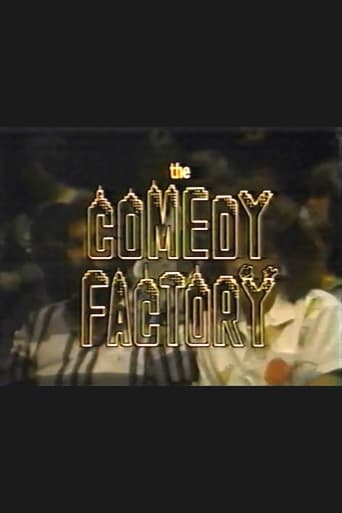
The Comedy Factory

The Comedy Factory 1985

1

The Comedy Factory (no known affiliation with the comedy club of the same name) was a live-action, scripted comedy series that ran during the summers of 1985 and 1986 on ABC in the United States and CTV in Canada (who also oversaw production). The show revolved around comedians and actors acting out scenes from television pilots that had been passed on previously by ABC. Further information on the show is scarce and nearly every episode of the show is presumed lost; only the premiere episode, "Honey, It's the Mayor," is known to survive in its entirety (uploaded to YouTube).

1985

Hiccups

Hiccups 2010

4.80

Millie Upton is a successful children's author who's prone to flying off the handle. Stan Dirko is Millie's less-than-qualified life-coach. Together, they work through Millie's...err...unpredictable spasms. It's a case of the lost leading the lost, with the best of intentions and very little chance of success.

2010

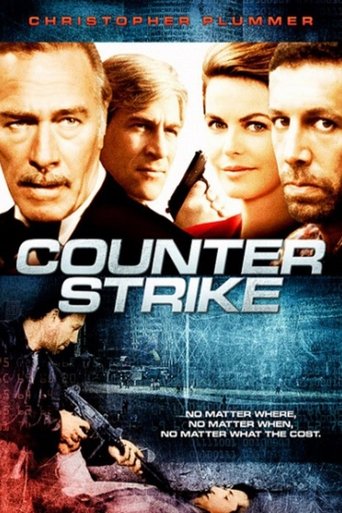
Counterstrike

Counterstrike 1990

7.00

Counterstrike is a Canadian/French crime-fighting/espionage television series. It premiered on November 2, 1991 on CTV in Canada and on November 20, 1991 on TF1 in France. It also aired in the United States on cable channel USA Network, premiering on July 1, 1990. The series ran for three seasons, airing 66 hour-long episodes in total. Counterstrike has since aired in reruns in Canada on Showcase and TVtropolis.

1990

You Can't Do That on Television

You Can't Do That on Television 1979

7.40

You Can't Do That on Television is a Canadian television program that first aired locally in 1979 before airing internationally in 1981. It featured pre-teen and teenaged actors in a sketch comedy format. Each episode had a theme. The show was notable for launching the careers of many performers, including Alanis Morissette, and writer Bill Prady, who would write and produce shows like The Big Bang Theory, Gilmore Girls and Dharma and Greg. The show was produced by and aired on Ottawa's CTV station CJOH-TV. After production ended in 1990, the show continued in reruns on Nickelodeon through 1994, when it was replaced with the similar All That. The show is synonymous with Nick, and was at that time extremely popular, with the highest ratings overall on the channel. The show is also well known for introducing the network's iconic slime. The program is the subject of the 2004 feature-length documentary, You Can't Do That on Film, directed by David Dillehunt.

1979

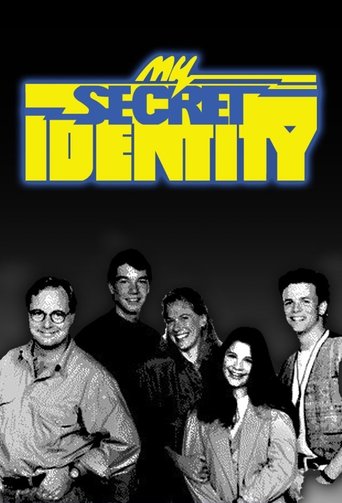
My Secret Identity

My Secret Identity 1988

6.92

My Secret Identity was a Canadian television series starring Jerry O'Connell and Derek McGrath. Originally broadcast from October 9, 1988 – May 25, 1991 on CTV in Canada, the series also aired in syndication in the United States. The series won the 1989 International Emmy Award for Outstanding Achievement in Programming for Children and Young People.

1988

Played

Played 2013

6.80

The Covert Investigations Unit (CIU) risks going undercover to infiltrate and bring down criminal organizations. In this new style of short-term, high-intensity undercover work, each covert “play” is crafted quickly and executed at an even faster pace. Placed into various worlds of crime without a safety net, the cops are in constant danger, as they repeatedly go off the grid. Wearing wires, coaxing confessions, and setting up stings, the cops of the CIU must think quickly, talk smoothly, and rely on pure instinct. They slip in and out of characters so often that, sometimes, they lose track of who they really are.

2013

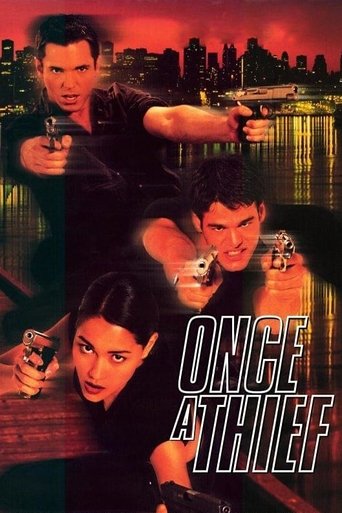
Once a Thief

Once a Thief 1996

5.60

Once a Thief is a 1997 Canadian television show inspired by the 1996 film of the same name.

1996

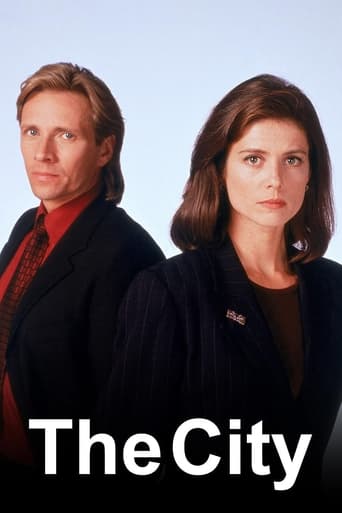
The City

The City 1999

5.00

Lawyer Katherine Strachan Berg, married to real estate tycoon Jack Berg, gets one heck of a shock when her former lover (now a priest), Shane Devlin, comes back into her life.

1999

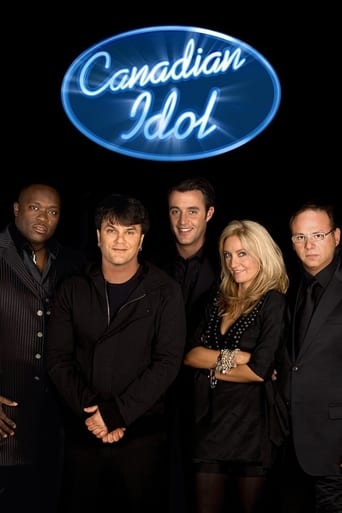
Canadian Idol

Canadian Idol 2003

4.00

Canadian Idol was a Canadian reality television competition show which aired on CTV, based on the British show Pop Idol. The show was a competition to find the most talented young singer in Canada, and was hosted by Ben Mulroney. Jon Dore was the "roving reporter" for the first three seasons. Elena Juatco assumed the role for season four, Dave Kerr had the role in season five and Jully Black in season six. The show began with a cross-Canada tour in which singers audition in front of four judges: Jake Gold of Toronto, Sass Jordan of Montreal, Quebec, Zack Werner of Winnipeg, Manitoba, and Farley Flex of Ajax, Ontario. Eventually the performers were narrowed down to 10 finalists, with each competitor performing live. Viewers had two hours following the broadcast of the show to phone in their votes for their favourite competitor. On the following night's episode, the competitor with the fewest votes was sent home. After the final two perform, viewers had more than two hours to vote. The next day, the competitor with the most votes was declared the winner. The show was taped at the John Bassett Theatre in Toronto, Ontario.

2003

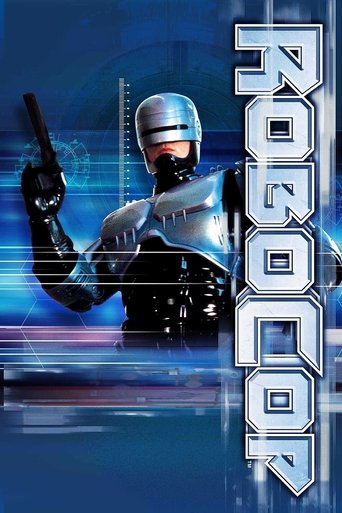
RoboCop: The Series

RoboCop: The Series 1994

6.29

RoboCop: The Series is a 1994 television series based on the film of the same name. It stars Richard Eden as the title character. Made to appeal primarily to children and young teenagers, it lacks the graphic violence that was the hallmark of RoboCop and RoboCop 2. RoboCop has several non-lethal alternatives to killing criminals, which ensures that certain villains can be recurring. The OCP Chairman and his corporation are treated as simply naïve and ignorant, in contrast to their malicious and immoral behavior from the second film onward.

1994

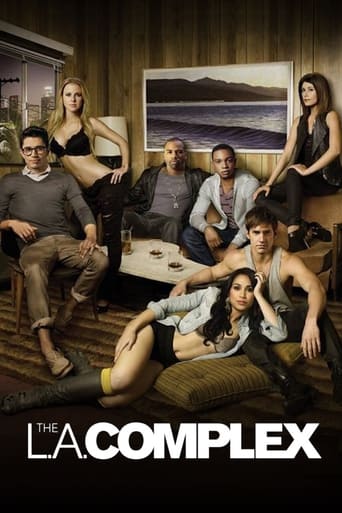
The L.A. Complex

The L.A. Complex 2012

5.00

Six young performers having been dubbed “most likely to succeed” in their hometowns now face the challenges and opportunities of a lifetime in the City of Angels.

2012

Power Play

Power Play 1998

10.00

Power Play was a Canadian television drama series, which aired on CTV from 1998 to 2000. The series was filmed at Copps Coliseum in Hamilton, Ontario. The show starred Michael Riley as Brett Parker, a former New York City sports agent who became the general manager of a National Hockey League franchise, the Hamilton Steelheads. One of the throughline plots of the series dealt with Parker's ongoing love–hate relationships with the sport, the team and his superior at McArdle Industries, corporate executive Colleen Blessed, played by Kari Matchett. The cast also included Gordon Pinsent as team owner Duff McArdle, Jonathan Crombie, Jennifer Dale and Al Waxman. The show's theme song was a modernized version of the Stompin' Tom Connors classic, "The Hockey Song", performed partly by Connors himself, and then transitioning to the performance of the band Rusty. The show was briefly aired on the US network UPN, starting in 1999, but was pulled after just two episodes. The second episode aired in the US has the distinction of being the lowest-rated episode of any prime-time TV series ever aired by any US network.

1998