
House Blend 1970
House Blend was a pilot for an American Television Series written by Anne Flett-Giordano and Chuck Ranberg and directed by John Whitesell. It was made by Paramount Network Television. The pilot first aired on May 1, 2002.
House Blend was a pilot for an American Television Series written by Anne Flett-Giordano and Chuck Ranberg and directed by John Whitesell. It was made by Paramount Network Television. The pilot first aired on May 1, 2002.
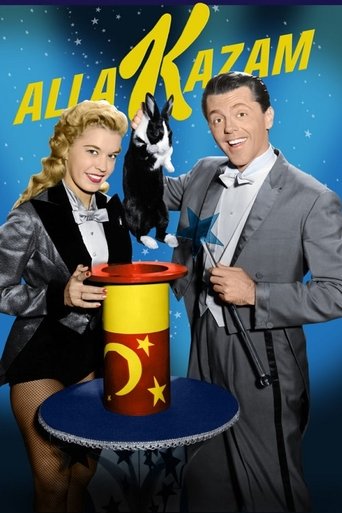
The Magic Land of Allakazam was the name of a groundbreaking series of network television shows featuring American magician Mark Wilson. It ran from 1960 to 1964 and is credited with establishing the credibility of magic as a television entertainment.
The Eddy Arnold Show is the name of three similar American network television summer variety programs during the 1950s hosted by Eddy Arnold and featuring popular music stars of the day. It was also the name of a radio program starring Arnold.
Bicentennial Minutes was a series of short educational American television segments commemorating the bicentennial of the American Revolution. The segments were produced by the CBS Television Network and broadcast nightly from July 4, 1974, until December 31, 1976. The segments were sponsored by Shell Oil Company. The series was created by Ethel Winant and Louis Friedman of CBS, who had overcome the objections of network executives who considered it to be an unworthy use of program time. The producer of the series was Paul Waigner, the executive producer was Bob Markell, and the executive story editor and writer was Bernard Eismann from 1974 to 1976. He was followed by Jerome Alden. In 1976, the series received an Emmy Award in the category of Special Classification of Outstanding Program and Individual Achievement. It also won a Special Christopher Award in 1976. The videotaped segments were one minute long and were broadcast each night during prime time hours, generally at approximately 8:57 P.M. Eastern time. The format of the segments did not change, although each segment featured a different narrator, often a CBS network television star. The narrator, after introducing himself or herself, would state "This is a Bicentennial Minute," followed by the phrase "Two hundred years ago today..." and a description a historical event or personage prominent on that particular date two hundred years before during the American Revolution. The segment would close with the narrator saying, "I'm, and that's the way it was." This was an offhand reference to the close of the weeknight CBS Evening News with Walter Cronkite, who always ended each news telecast by saying, "And that's the way it is."
The Tarzan / Lone Ranger Adventure Hour is an animated television series produced by Filmation that aired on CBS during the early 1980s. The series consisted of reruns of Tarzan, Lord of the Jungle paired with new episodes of Filmation's versions of The Lone Ranger and, in the second season, The New Adventures of Zorro — at which point the series was retitled The Tarzan / Lone Ranger / Zorro Adventure Hour. The series ran from 1980 to 1982. Don Diamond who voiced Sergeant Gonzales in this animated series previously portrayed Corporal Reyes in Disney's 1950s live-action series of Zorro.
In the News is a series of two-minute televised video segments that summarized topical news stories for children and pre-teens. The segments were broadcast in the United States on the CBS television network from 1971 until 1986, between Saturday morning animated cartoon programs, alongside features like Schoolhouse Rock and One to Grow On, which aired on competing networks ABC and NBC, respectively. NBC would also go on to produce its own competing version called Ask NBC News. The "micro-series" had its genesis in a series of animated interstitials produced by CBS and Hanna Barbera Productions called In The Know, featuring Josie and the Pussycats narrating educational news segments tailored for children. This was eventually metamorphosed into a more live-action-oriented micro-series produced solely by CBS' news division. In the News segments attempted to explain the essence of complex news stories to children, and to do so in a way that might engage a young audience. Video clips of national or world events and special-interest stories were shown with voice-over narration specifically written with children in mind. Although news stories deemed to be inappropriate for children were not covered on In the News, the series did feature a wide range of then-current events.
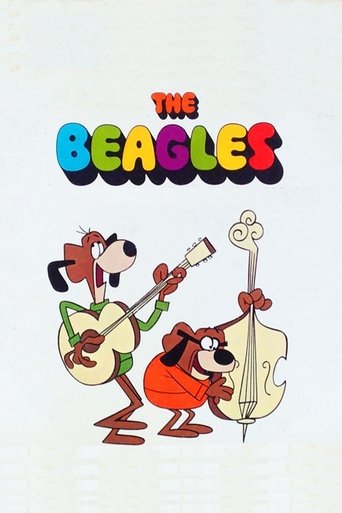
The Beagles is an animated cartoon television series that aired on CBS from September 10, 1966 to September 2, 1967 and later in reruns on ABC from September 9, 1967 to September 2, 1968. It was produced by Total Television which created King Leonardo and His Short Subjects, Tennessee Tuxedo and His Tales, and Underdog.
The Face Is Familiar is an American game show which aired in color on CBS from May 7 to September 3, 1966. The show was hosted by Jack Whitaker and featured celebrity guests including Bob Crane, Dick Van Patten, Mel Brooks and June Lockhart. The series was primarily sponsored by Philip Morris' Parliament and Marlboro cigarettes, and their American Safety Razor and Clark Gum subsidiaries. The show was produced by Bob Stewart Productions in association with Filmways Television. Its theme song was a slightly-modified version of Brasilia, performed by Herb Alpert & the Tijuana Brass.
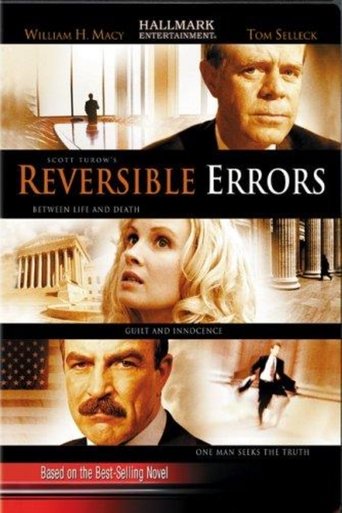
Reversible Errors is a 2004 television film based on the novel of the same name by Scott Turow. It was directed by Mike Robe, who previously directed Scott Turow's The Burden of Proof, and stars Tom Selleck and William H. Macy. Filming was done in and around Halifax, Nova Scotia, and featured shots of Halifax City Hall and Angus L. Macdonald Bridge. The film was first shown by CBS in two parts on May 23 and 25, 2004. Channel 5 in the United Kingdom has chosen to show it as a single 173 minute film.
Time Bomb is a 2006 television movie starring David Arquette, by CBS Television.

CBS Sports Spectacular is a sports anthology program produced by CBS Sports. The series began on January 3, 1960 as The CBS Sports Spectacular, and has been known under many different names, including CBS Sports Saturday, CBS Sports Sunday, Eye on Sports and The CBS Sports Show. The program continues to air on an irregular basis on weekend afternoons, especially during the late spring and summer months. Normally it airs pre-recorded "time-buy" sports events produced by outside companies, such as supercross or skiing competitions, or sponsored documentaries.
A curated live feed from inside the house to give viewers a peek into the housemates' lives that they don't always get to see during the prime-time shows.
The Continental was a 1952 CBS television series starring Renzo Cesana in the title role. The 15-minute program was shown on Tuesdays and Thursdays at 11:15pm, at the end of the night's prime time schedule. The series used a subjective camera, as Cesana spoke directly to women in the viewing audience in a suave manner, with each episode a different romantic rendezvous, accompanied by lounge music played on an electric organ. Occasionally, he would recite the lyrics to a song. In an era when advertisers and advertising agencies played major roles in program creation and sponsorship, the show began as a syndicated 15-minute radio show created, written and produced by agency owner Cesana on Los Angeles station KHJ in February 1951. It directly followed The Lonesome Gal, a nationally syndicated radio show in which host Jean King played records and spoke in a soothing monologue to male listeners. The Continental failed to attract an audience and was soon cancelled. Cesana convinced television station KNBH to air a video version, which went on the air twice weekly beginning in June 1951. The show was picked up briefly by the CBS network, where it debuted on January 22, 1952, and pitched its last woo on April 17, 1952.
