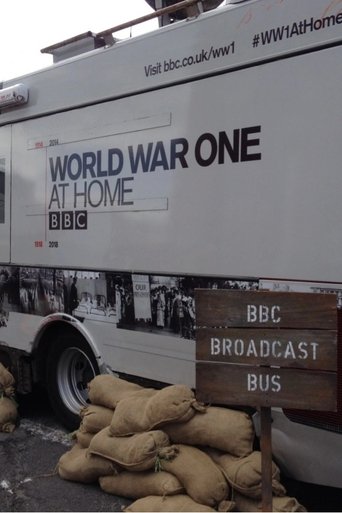
World War One at Home 2014
A series of stories produced regionally within the UK each reflected a local relevance to WWI.
A series of stories produced regionally within the UK each reflected a local relevance to WWI.
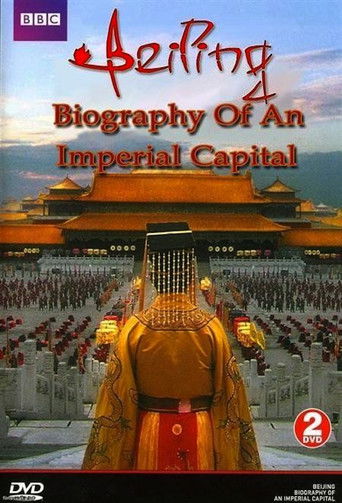
In this three-part series, the rich history of China's ancient capital city is brought to life using stunning reconstructions and CGI. From the city's conquest and destruction by the Mongol hordes of Ghengis Khan, to the moment when China's last emperor was expelled from the Forbidden City, Beijing's biography is a story of mighty rulers, rebels and renegades.
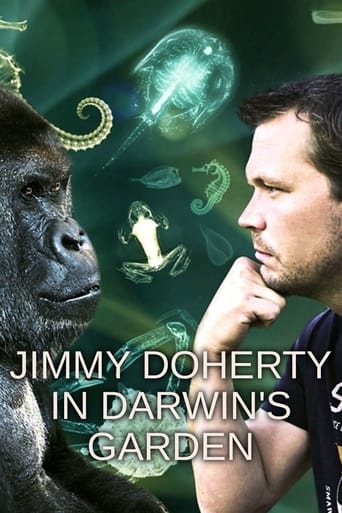
Charles Darwin came up with some ingenious experiments to prove his theory of evolution. Jimmy Doherty attempts to recreate some of these investigations.

Gareth Malone, star of BBC Two's The Choir, takes on one of his biggest challenges to date, joining the production team at Glyndebourne in the role of youth chorus leader on his first opera.
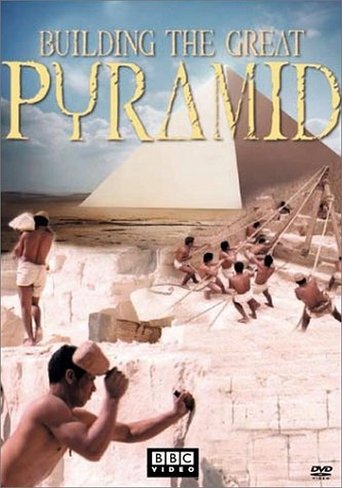
Pyramid aka Building the Great Pyramid is a 2002 BBC Television documentary film which tells the story of the building of the Great Pyramid at Giza through the commentary of the fictional builder, Nakht.
Six women are given the opportunity to travel to some of the most remote parts of the world and experience life with a tribe in this new series for BBC Two. Like many women today, juggling with the pressures of Western life from careers to home and family, all the women think something is missing. By spending time with tribes in which women's roles are very different, they hope they can find some answers and, in doing so, change their own lives. The series provides a unique and intimate insight into the lives of women in tribes around the world, from the Amazon to sub-Saharan Africa. For the six Western women, it proves to be a life-changing experience as they immerse themselves into living as a tribal woman in some of the world's most remote and beautiful locations.
Velvet Soup was a Scottish comedy sketch show, starring Gavin Mitchell, Steven McNicoll, Julia Duncanson and Mark McDonnell.
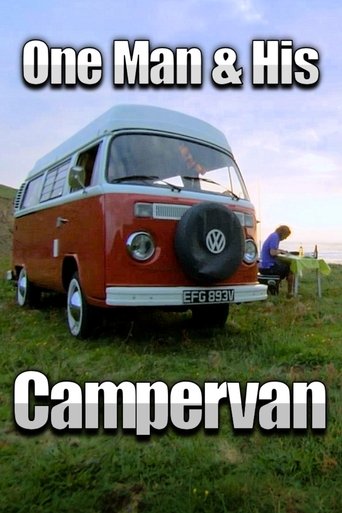
Martin Dorey, campervan lover and passionate foodie, journeys around Britain in his 1970s classic campervan on the ultimate escapist adventure.
How Britain as we know it was built on the profits of slavery, with abolition involving the shocking decision to compensate slave owners for their loss of 'property'.
In the Looking Glass is a surreal television series, broadcast on BBC2 in 1978. It starred John Wells, John Fortune, Carl Davis, and Madeline Smith, was directed by Andrew Gosling and produced by Ian Keill. The same team had previously created 1974's The End of the Pier Show. Wells, Fortune and Davis appear to have been the main writers for both series. In the Looking Glass was notable for its design, overlaying live action and drawn or animated backgrounds, for instance, a hole drilled to the centre of the earth, or the Monopoly board on which a character risks being crushed by rolling dice. The production team went on to develop this approach further in the "live action comic strip" series Jane, for which McCallum won two BAFTA Best Graphics awards.
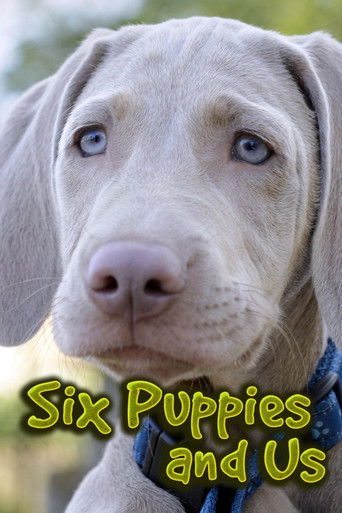
Following six British households taking on the potentially life-changing responsibility of a puppy, tracing their stories over the course of the first year of their puppy's life.
Manhunters was a three-part TV Drama Series that aired on BBC Two in the United Kingdom in 2005. It tells the story of three cases of man-eaters through the memoirs of those who hunted them and, in the case of the third episode, accidentally unleashed them on their community. The first tells the story of Jim Corbett, played by Jason Flemyng and the Man-Eating Leopard of Rudraprayag. The second tells the story of George Rushby and the Lions of Njombe, and the third tells the story of the Wolf of Gysinge.
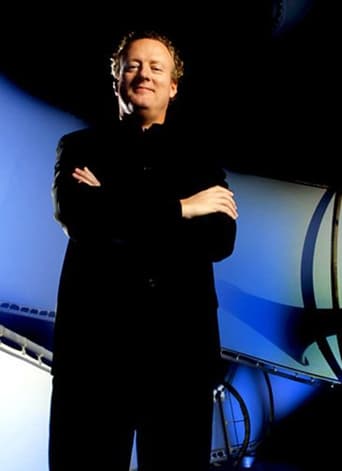
Shown as six one-hour programmes on BBC2, "Story of Music" presents Howard’s personal view of the musical timeline from the stone age to the digital age, including the influence of classical music on the growth of popular music as well as the evolution of blues, jazz and world music.
Britain's Best Buildings is a BBC documentary series in which the TV presenter and architectural historian Dan Cruickshank discusses his selection of the finest examples of British architecture. It was first broadcast on BBC Two in October 2002.
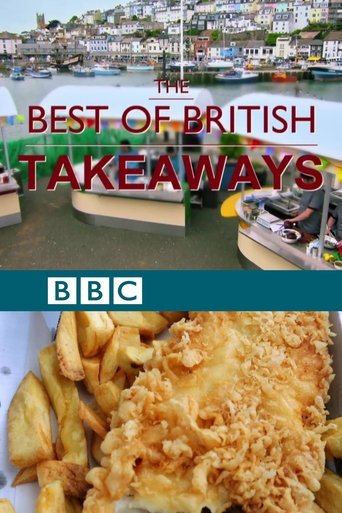
Tom Kerridge and Cherry Healey celebrate our favourite takeaways.
Me Too! is a live-action television series on BBC Two and CBeebies for preschool children based around the large community of Riverseafingal in Scotland. In reality the programme is filmed in Glasgow, Edinburgh and Newcastle upon Tyne, with some exterior shots of Manchester Metrolink trams also being used. Me Too! is produced by Glasgow-based production company Tattiemoon. One of the Directors is Andrew Agnew, Balamory's famous Policeman PC Plum. Two of Bobby's helpers cleaning the buses are Stevie Robertson and Jamie Gash. Both performed their dance routines with the combined flair of Fred Astaire and Gene Kelly.
Series which drags antiques from their pedestals, blows the dust off them and shows how they can be more affordable, stylish and better made than much of what the high street has to offer.
Using pioneering seamless filming techniques, the series explores magic moments when Earth bursts into life - fleeting windows of time when the conditions are just right and animals spring into action.
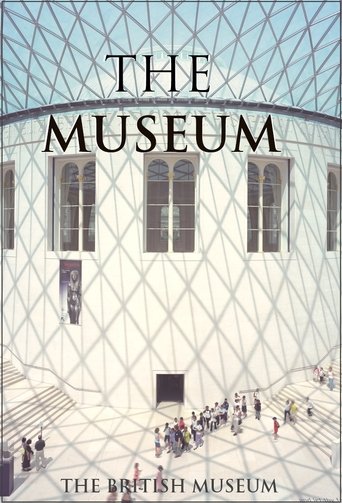
The Museum is British television documentary series. It is a behind-the-scenes look at the British Museum, narrated by Ian McMillan and first broadcast on BBC Two on Thursdays at 7.30pm from 10 May 2007. It is produced by BBC Wales. It is in 10 half-hour parts. There is an accompanying hardback book by Rupert Smith.
