World's Busiest Cities 2017
Dan Snow, Anita Rani and Ade Adepitan reveal the hidden systems and armies of people running some of the greatest cities on earth.
Dan Snow, Anita Rani and Ade Adepitan reveal the hidden systems and armies of people running some of the greatest cities on earth.
A ground-breaking two-part series following four people with dementia and their families over the course of two years.

Jimmy Doherty discovers what other farmers have achieved
Steam Days is a 1986 BBC 2 television documentary series written and presented by Miles Kington. Each episode is themed around the history of British steam locomotives and railways, particularly highlighting preserved locomotives operating at the time of its filming. The series consists of six half hour episodes. It aired on Public Television stations in the United States under the title Great Steam Trains.
Revealing anecdotes from some of Science Fiction's brightest stars give an entertaining insight into their best-known work.
Tom Kerridge and Cherry Healey celebrate our favourite takeaways.
Filmed over one term with access to three schools in Bexley, a local authority area in London which has a fully selective education system, this series follows children and teachers to see how selection impacts on education.
Show Me the Monet is a British television series first aired on BBC2 in May 2011. It is presented by Chris Hollins. The programme has been described as the "artworld's version of The X Factor and Dragons's Den".
In his latest book and this three-part series, investigative journalist Jacques Peretti strays into Adam Curtis territory. What if the way we understand our world is wrong, he wonders, and it’s not so much politicians who govern our lives but business deals done in secret, in the boardroom and on the golf course?
Rebels and Redcoats: How Britain Lost America, is a British television documentary series about the story of the American Revolutionary War, narrated by Richard Holmes in a four-parts. Throughout the entire program there are clear explanations about the politics going on behind the scenes, the impact of other nations like Canada and France, battle tactics and strategies, and weaponry, all following a beginning-to-end time line. The impact of each geographic area is frequently emphasized, as there were often a division of loyalties not just in regions but also in neighborhoods. While being a British production, the viewpoint of many different groups are discussed in detail, including the difficult choices Native American Indians and black slaves were forced to make in choosing allegiances.
Ethelbert the Tiger is a children's animated TV Show. In each episode, Ethelbert, a friendly but naïve Indian tiger cub asks his wise human friend Dilip question, often regarding morals, ethics or behaviour. The pair then set off on Dilip's raft through a magic waterfall which transports them to another part of the world. They invariably meet a new animal friend who can help answer the question and give Ethelbert a different perspective on life. The programme's visual style is very colourful, not unlike silk painting or batik.
I Love the '70s is a television mini-series produced by the BBC that examines the pop culture of the 1970s. It was broadcast in ten hour-long episodes, one dedicated to each year, with the first episode, I Love 1970, premiering on BBC Two on 22 July 2000, and the last, I Love 1979, premiering on 23 September 2000. On the original broadcasts, each episode was followed by the host introducing a film from that particular year. The series proved successful and thus was followed by two similar series, I Love the '80s and I Love the '90s, both of which aired during 2001. The "I Love..."-series spawned a US version, aired by VH-1. Part of the series was repeated in the spring of 2012 on BBC Two as part of a special season dedicated to the 1970s. The episode 'I Love 1975" is the only episode that suffered technical problems, and as concluded as part of the years that the BBC suffered problems.

The best bits and favourite moments from Saturday Kitchen.
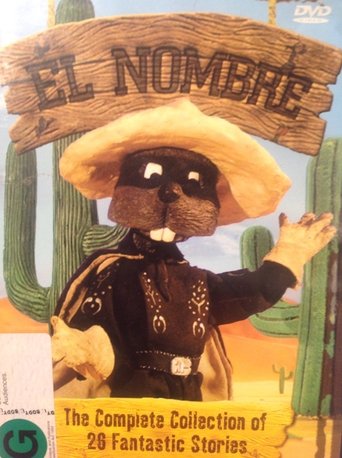
El Nombre was an anthropomorphic Mexican gerbil, originally from a series of educational sketches on Numbertime, the BBC schools programme about mathematics; he was also the only individual to appear in all sixty-eight episodes, as its original host, Lolita Chakrabarti, was relieved of her position after the end of the fourth series in 1996. His voice was provided by Steve Steen, while the other characters' voices were provided by Sophie Aldred, Kate Robbins, and former Blue Peter host Janet Ellis - and his name actually means "The Name" in Spanish, not "The Number", which would be "El Número".
Clive Anderson hosts a brain training quiz show in which contestants battle to prove themselves in a sequence of brain games which test their memory, language, visual, numerical and spacial skills.

The business is providing Class A drugs to hundreds of thousands - perhaps millions - of users every week. For the first time on British television, drug dealers describe in detail the tricks of their trade; their profits, the risks and the reasons why they deal.
Doctors to Be is a biographical documentary series that was first broadcast on BBC Two by BBC Television and is also the name of a book, published by BBC Books, that accompanies the series. The television series follows 10 medical students who enrolled at St Mary's Hospital Medical School in the 1985 intake of students. It starts in 1984 with their admission interviews, then follows them through five or six years as medical students, and ends with their first experiences of working as busy junior hospital doctors in the National Health Service. The BBC decided to make the series in 1983 and the BBC contacted several medical schools. The BBC selected St Mary's Hospital Medical School, London, England, partly because the Dean, Prof Peter Richards, was enthusiastic about filming and thought that medical education was of public interest. Filming began in November 1984 when applicants were applying for university and going to interviews for the 1985 intake at St Mary's Hospital Medical School. St Mary's Medical School interviewed 419 applicants and 100 of these interviews were filmed. In the autumn of 1985, when studies had started, every student in the year was asked if they wanted to take part in the television series, and 10 students, who were thought to be outgoing and resilient to the pressures of filming, were chosen by the BBC. Each of the 10 medical students were filmed regularly and about 300 hours of film accumulated in total.
Following six British households taking on the potentially life-changing responsibility of a puppy, tracing their stories over the course of the first year of their puppy's life.
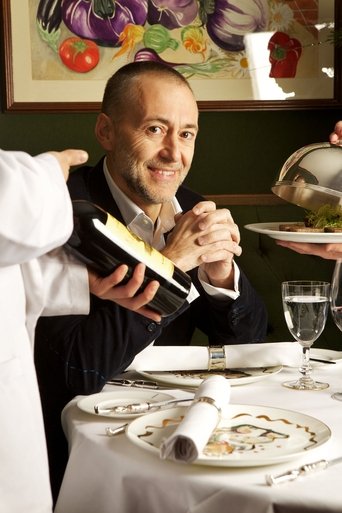
Michel Roux sets out on a personal mission to train eight young people as front-of-house superstars.

