Stad (AMS) 2000
A thriller without a storyline. A boat sails at night through the canals of The Hague and observes people and buildings. Who did what?
A thriller without a storyline. A boat sails at night through the canals of The Hague and observes people and buildings. Who did what?
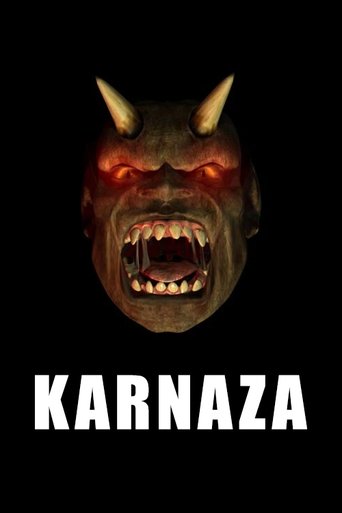
Karnaza, reaper of the peasant souls, spreads terror in the Romagna countryside.

A woman`s passage. Video work screened at Manifesta 4 and other venues
".. and yet of that living breathing throng, not one will be encased in a material frame. A company of ghosts, playing to spectral music. So may the luminous larvae of the Elysian fields have rehearsed ...

Judith Abitbol filmed the work of pianist Jean-Louis Haguenauer. More precisely his work on the twenty-four preludes of Claude Debussy. It was a question of filming the elaboration of the work of the interpreter, such as Jean-Louis Haguenauer conceives it, at home, alone, in front of his piano. What does he do for hours at his piano? What is his approach to the work? How does he find his interpretation?
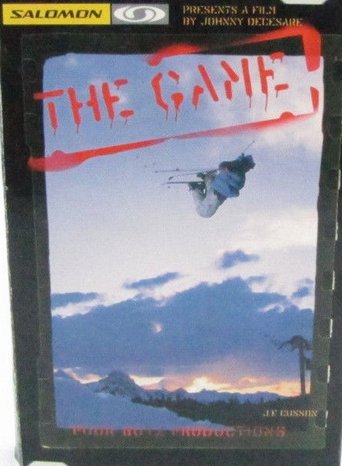
A Johnny DeCesare Film by Poor Boyz Productions with riders like Candide Thovex, Evan Raps, J.F. Cusson, JP Auclair, Julien RL, Mike Douglas, Philou Poirier, Seth Morrison, Shane Szocs, Skogen Sprang, Vini Dorion
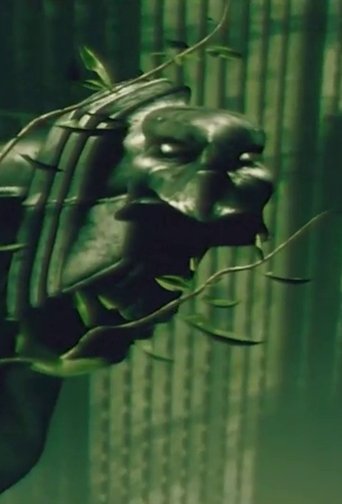
Two art deco style eagles, ornamentation on a large office building, briefly come to life and the devotion of one to the other is the subject of this animation.
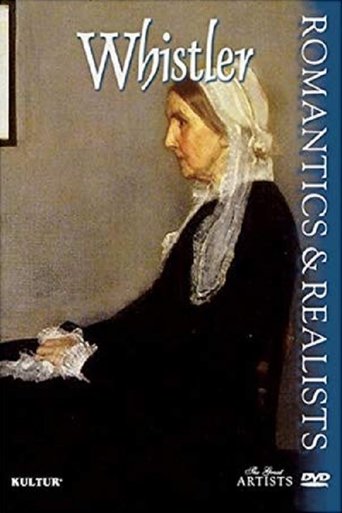
The personal life of James Abbott McNeill Whistler may have been the most remarkable of any 19th century artist. Born an American, he spent his childhood in St. Petersburg, received only his formal art training in the unlikely surroundings of West Point Military Academy, and then emigrated to Europe to pursue an artistic career. Whistler's radical emphasis on composition at the expense of subject matter was typified when he painted his famous portrait of his mother and called it Arrangement in Grey and Black.

Daniel Gabriel Rosetti was born in 1828 and lived the life of a true non-conformist. He was one of the founders of the "PRB" or Pre-Raphaelite Brotherhood. He and the other painters in this group were accused of being atheists and societal outcasts. Controversy surrounded many of his paintings, especially "Girlhood of Mary the Virgin." Many of his early works focus on his wife Elizabeth Siddal. His life took a dramatic turn for the worse following her death, an apparent suicide. During his remaining years, Rosetti became a recluse. Because of guilt, sorrow and grief, he had buried a complete collection of his poetry in his wife's coffin. Rosetti later had her body exhumed so he could obtain the poetry collection and have it published. His paintings can now be viewed at the Metropolitan Museum in New York City and at numerous European museums.
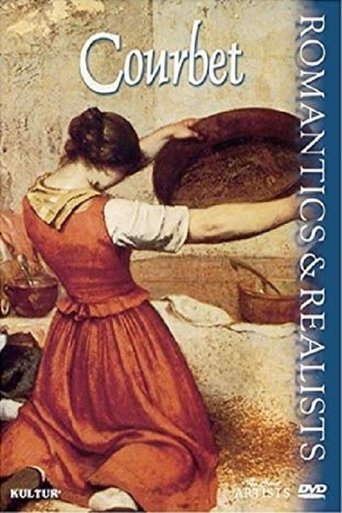
Gustave Courbet was one of the first French artists to use his talents to open up realism to paintings and drawings that featured common men and women of society in them, as well as members of the upper class. Courbet was born in 1819 and his early life was a privileged one. Those who knew him best expected him to study law when he moved to Paris in the early 1840s. Instead, Courbet had the courage to embark on an artistic adventure few others would have undertaken. Some of his best works are reviewed in this video, including "The Stone Breakers" and "A Burial at Ornans." In his later years, Courbet concentrated on painting many nature scenes. It is believed that his many seascapes greatly impacted the Impressionists. His political beliefs as a socialist eventually led to both imprisonment and his later flight to Switzerland where he eventually died.
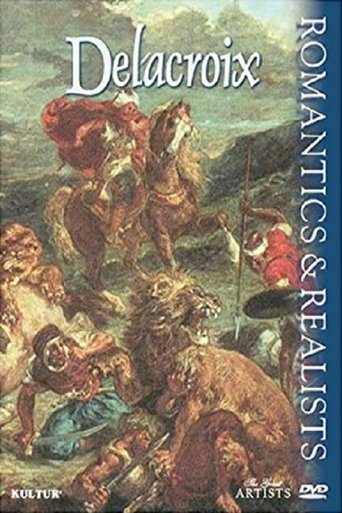
This video is one of a series of six programs on some of the great artists of Western civilization. This episode focuses on the foremost painter of the romantic movement in France, Eugène Delacroix. Born in 1798, Delacroix helped lead the revolution in painting against the traditional classical painters. He was deeply influenced by a trip to northern Africa that exposed him to a new world of images, which he then painted. Among them were Arabs in Morocco, and exotic animals at play and in combat. Unlike classical artists, he painted in exuberant colors, with the freer expression typical of the romantics. Some of his best paintings are displayed, and historians relate the cultural milieu in which he lived and painted.
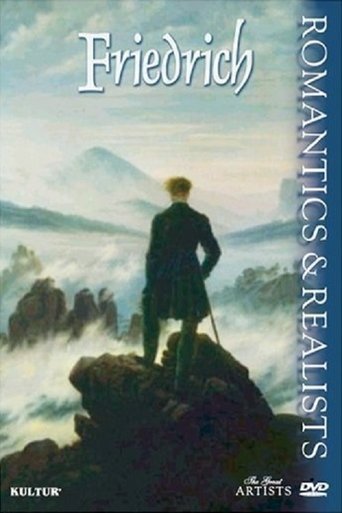
Born in 1774, Caspar David Friedrich later spent four years studying at the Academy in Copenhagen. He then moved to Dresden, Germany. Friedrich painted numerous breathtaking German landscapes featuring morning mists, rolling hills, harbors, and other natural wonders. "Wanderer Above the Sea of Fog" is one of his most beautiful paintings. A number of his works are said to be expressions of religious mysticism, including "The Cross in the Mountains." Friedrich would often incorporate crosses and other Christian symbols in his paintings in an effort to express his religious views. Some art experts believe that Friedrich's paintings often contain deeply imbedded religious commentary. For example, his painting of a ruined abbey in the snow ("Abbey with Oak Trees") is thought by some to be a statement by Friedrich about the Reformation's impact on earlier religious beliefs and practices.
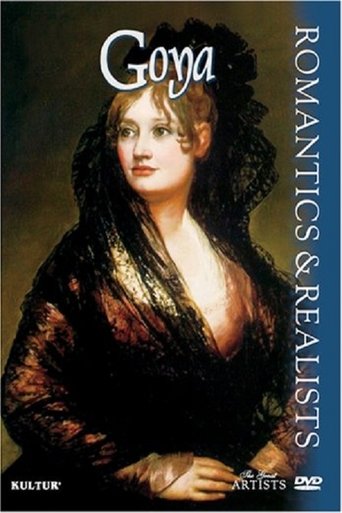
In 1792, a famous Spanish portraitist fell victim to an illness that left him permanently deaf. This was the event that proved the turning-point in the career of Francisco Jose Goya y Lucientes. Trapped in his silent world, Goya's portraiture climbed to new heights of achievement, but it was his increasingly dark images that are most appreciated today. The sheer horror of much of Goya's later work was unprecedented in Western Art, and it is these paintings and etchings that secure his status as a giant of the Romantic Age.
Paul Gauguin was thirty-five when he made the momentous decision to abandon his lucrative career as a Paris stockbroker and devote himself full-time to painting. Gauguin's bold use of flat, unmixed color gave his paintings a strong sense of personal expression, but his work struggled to find acceptance at the time. Poverty and obscurity dominated Gauguin's years as an artist. Not even a move to Tahiti could bring him happiness. Yet the paintings that he created there are now recognized as masterpieces of the Post-Impressionist age.
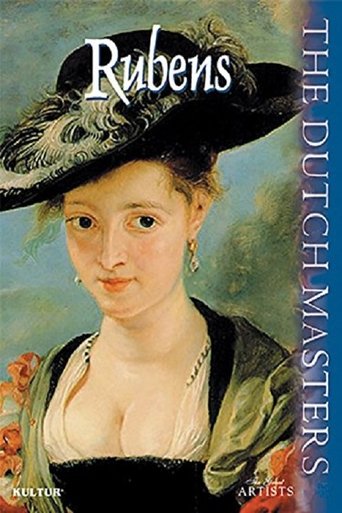
Born in Antwerp in 1577, the young Peter Paul Rubens traveled extensively in Italy, soaking up the artistic achievements of the High Renaissance, and slowly becoming one of the most important Flemish painter of the 17th century. Returning to Flanders, he began a career that combined Renaissance technique with a new boldness of approach towards color and brushwork. His mastery at depicting surface texture can be seen in his religious images commissioned by the Catholic church. But Rubens was undoubtedly a man of the world, a charming individual who worked as a diplomat and whose connections resulted in a great number of portrait commissions. It is these portraits that are, perhaps, the most enduring achievements of a giant of art history.
In May 1994, the Tate Gallery in London announced that it was going to create a huge modern art gallery in London. Instead of commissioning a new building from one of London's "star" architects, they made the controversial decision to award the contract to a small Swiss firm of architects, and convert a disused power station. Karl Sabbagh follows the team from conception to opening as they wrestle with decisions about design, construction and art as well as people and internal politics. From schedule delays to a faulty staircase; asbestos in the roof to resigning construction managers, Sabbagh tells the story of the process behind a rare success in public design and architecture.
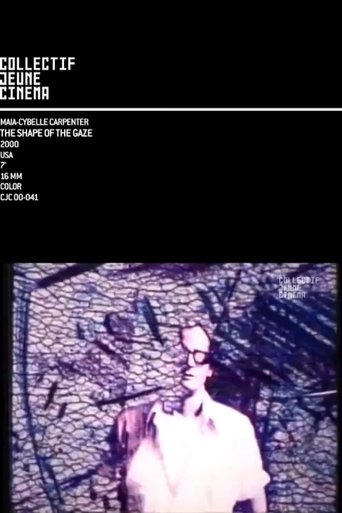
Optically printed, hand processed and painted: the film process is manipulated to disrupt viewing expectations on a textual and aesthetic level. This repositions the subject and discourse of gender ambiguity available in the gaze. By shifting the discourse of the gaze, the film implicates viewers in the gazes operating between the filmmaker and her self-identified lesbian butch subjects. -Canyon Cinema