
Buck Rogers 1950
In the year 2430 in a secret lab in a cave behind Niagara Falls, Buck Rogers battles intergalactic troublemakers.
In the year 2430 in a secret lab in a cave behind Niagara Falls, Buck Rogers battles intergalactic troublemakers.
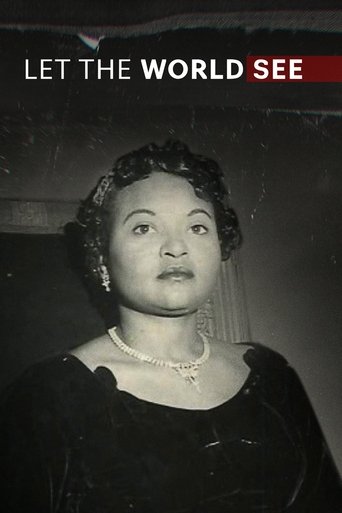
A chronicle of Ms. Mamie Till-Mobley's fierce quest for justice that sparked the civil rights movement after her son Emmett Till's brutal murder, inspiring heroes like Ms. Rosa Parks and others to stand up boldly for their rights.

In The Glass House, 14 contestants live and compete for a quarter-million dollars in a totally wired, state-of-the-art house, playing not just against each other, but also playing to win over the viewing audience each week. Both online and through their social networks, viewers will be encouraged to support and follow the contestants they like, their votes helping to determine which contestants are sent home and also which eliminated players will earn the chance to return to "The Glass House" to compete each week.
Treasure Hunt is an American television game show that ran in the 1950s, 1970s, and 1980s. The show featured contestants selecting a treasure chest or box with surprises inside, in the hope of winning large prizes or a cash jackpot.
To Save Our Schools, To Save Our Children is a three hours television documentary on public education that aired on ABC on September 4, 1984 . It focus on three critical elements of the education system: students, teachers, and the tax-paying members of local communities.
America's Funniest People is an American reality series on ABC that debuted on May 1, 1990 as an hour-long special, and later as a weekly half-hour prime time series from September 8, 1990 to August 28, 1994. It was hosted by Dave Coulier and Arleen Sorkin from 1990 to 1992. Tawny Kitaen replaced Sorkin in 1992. The announcer was Ernie Anderson. Dan Slider composed the theme song, which was performed by Peter Hix.
Number Please is a Goodson-Todman Productions game show hosted by Bud Collyer which aired from January 30 to December 29, 1961. It replaced Collyer's Beat the Clock when its ABC run completed, and was an early predecessor of Wheel of Fortune and other word-puzzle game shows.
Contestants competing match wits in a series of multiple choice questions, with one contestant being eliminated every round. But unlike any other game show in the world, the eliminated contestant will then be ejected from the show in spectacular fashion—i.e., being flown away strapped to the wing of a biplane, pushed off the top of a moving semi truck, dragged underwater by a one-ton anchor or yanked off a dock by a speed boat.
"Those Were the Days" is the second of three pilots shot by creator Norman Lear in what would eventually become All in the Family. The first pilot, "Justice For All", was rejected by ABC in 1968, so Norman Lear changed the script slightly from the original pilot as well as some of the actors. Chip Oliver was brought in to play Archie's son-in-law, whose name was changed from Richard to Dickie. Candice Azzara now played Gloria in the second pilot. The actor who played Lionel remained the same. This pilot shot in 1969 was again rejected by ABC and was never shown on television until TV Land in 1998 as part of an All in the Family marathon.
A look at some of the most compelling criminal cases in recent history through the lens of interrogations, unveiling the tricks of the trade detectives use to coax confessions from suspects.
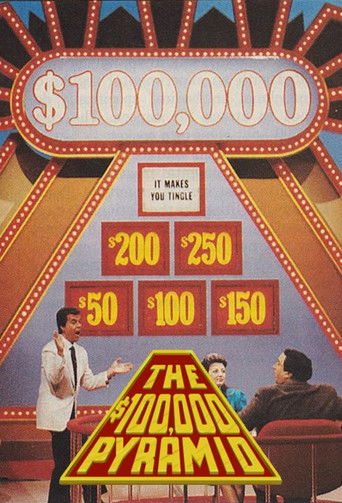
Two contestants are paired with celebrities in this remake of the word-association game show.
Queen for a Day was an American radio and television game show that helped to usher in American listeners' and viewers' fascination with big-prize giveaway shows. Queen for a Day originated on the Mutual Radio Network on April 30, 1945 in New York City before moving to Los Angeles a few months later, and running until 1957. The show then ran on NBC Television from 1956 to 1964. The series is considered a forerunner of modern-day "reality television". The show became popular enough that NBC increased its running time from 30 to 45 minutes to sell more commercials, at a then-premium rate of $4,000 per minute.
Back That Fact is a short-lived American game show that aired on ABC from October 22 to November 26, 1953. This was the first TV game show for creator/producers Jack Barry and Dan Enright. Borscht Belt comedian and syndicated columnist Joey Adams was the emcee, with actress Hope Lange and actor Al Kelly as his assistants and Carl Caruso as the announcer. Back That Fact was broadcast from New York City.
Foul-Ups, Bleeps & Blunders is the title of a comedy series that aired on ABC for two short seasons in the mid-1980s. The series is hosted by Steve Lawrence and Don Rickles. Produced as a response to NBC's TV's Bloopers & Practical Jokes, this series similarly focused on outtakes from popular television programs and movies. The series also included a Candid Camera-like segment showing people caught in amusing situations by hidden cameras. The word blooper was not allowed to be uttered, with the term "foul-up" substituted where applicable. The series debuted on January 10, 1984 as a mid-season replacement series, and returned at the start of the 1984-85 season, however after October 1984 the show ceased to be a weekly offering on ABC and instead aired at various times as filler for the next few months before resuming weekly broadcast in the spring, after which it was cancelled.
Who Said That? is a 1947-55 NBC radio-television game show, in which a panel of celebrities attempts to determine the speaker of a quotation from recent news reports. The series was first proposed and edited by Fred W. Friendly, later of CBS News.
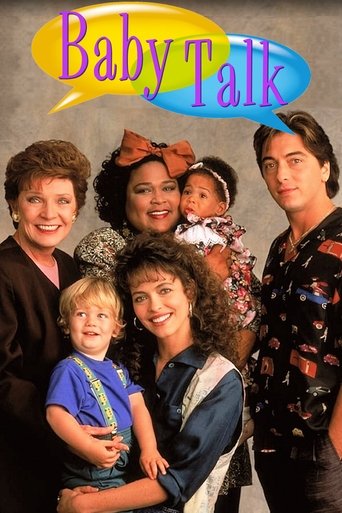
Baby Talk is an American sitcom that aired on ABC from March 8, 1991 until May 8, 1992 as part of ABC's TGIF lineup. The show was loosely based on the popular Look Who's Talking movies and was adapted for television by Ed Weinberger. Amy Heckerling created original characters for the series while using key creative and script elements from Look Who's Talking, which she had written and directed. Weinberger served as executive producer during the first season, and was replaced by Saul Turteltaub and Bernie Orenstein in the second season.
Based on the autobiography of Sonny Bono, this film focuses on the volatile relationship between Sonny (Jay Underwood) and Cher (Renee Faia) during the early 60's to their divorce in the late 70's.
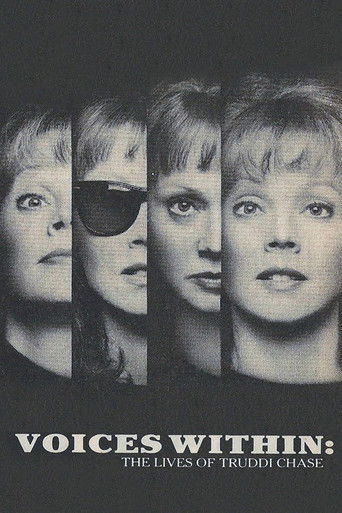
A woman who suffers from multiple personality disorder is found during therapy to have suffered child abuse in this fact-based story.

Pyramid is an American television game show that has aired several versions. The original series, The $10,000 Pyramid, debuted March 26, 1973, and spawned seven subsequent Pyramid series. The game featured two contestants, each paired with a celebrity. Players attempt to guess a series of words or phrases based on descriptions given to them by their teammates. The title refers to the show's pyramid-shaped gameboard, featuring six categories arranged in a triangular fashion. The various Pyramid series won a total of nine Daytime Emmys for Outstanding Game Show, second only to Jeopardy!, which has won thirteen. Dick Clark is the host most commonly associated with the show, having hosted every incarnation from 1973–88, save for a 1974–79 syndicated version, The $25,000 Pyramid, hosted by Bill Cullen. John Davidson hosted a 1991-92 version of The $100,000 Pyramid, and another version, simply titled Pyramid, ran from 2002–04 with Donny Osmond as host. A new version titled The Pyramid premiered September 3, 2012 on GSN. This version was hosted by Mike Richards. The show only lasted one season before being cancelled.
National Bingo Night is an American game show hosted by Ed Sanders which premiered on ABC on May 18, 2007 with a six-episode order. Sanders is known for his work on another ABC show, Extreme Makeover: Home Edition. The show was cancelled by ABC and was repackaged as Bingo America on GSN, first hosted by Patrick Duffy, and in October 2008 by Richard Karn. The creator of this program, Andrew Glassman, also created the reality television game Average Joe. The game is an interactive experience for both the studio audience and viewers at home. On NBN, members of the studio audience attempted to win a game of bingo while competing with a solo studio contestant. For Bingo America, it is played as a straight general knowledge quiz format with two players and a home viewer bingo game within. Home viewers play along with pre-printed game cards that are available from the network website just before each episode airs, and are also eligible to win prizes. The show was expected to return for a five-episode run during the week of December 17, 2007, but on November 13, 2007, ABC decided to replace it instead with its new game show, Duel. In 2008, the show was cancelled and was afterward shopped to other networks. Eventually GSN acquired the rights and the game was repackaged into a five-day-a-week 30-minute version with modifications listed below.
