
Ray Mears's Real Heroes of Telemark 2003
A three-part insight into an amazing wartime mission in Norway, undertaken in the early 1940s, which was immortalised by the Hollywood movie The Heroes of Telemark.
A three-part insight into an amazing wartime mission in Norway, undertaken in the early 1940s, which was immortalised by the Hollywood movie The Heroes of Telemark.

I Love the '70s is a television mini-series produced by the BBC that examines the pop culture of the 1970s. It was broadcast in ten hour-long episodes, one dedicated to each year, with the first episode, I Love 1970, premiering on BBC Two on 22 July 2000, and the last, I Love 1979, premiering on 23 September 2000. On the original broadcasts, each episode was followed by the host introducing a film from that particular year. The series proved successful and thus was followed by two similar series, I Love the '80s and I Love the '90s, both of which aired during 2001. The "I Love..."-series spawned a US version, aired by VH-1. Part of the series was repeated in the spring of 2012 on BBC Two as part of a special season dedicated to the 1970s. The episode 'I Love 1975" is the only episode that suffered technical problems, and as concluded as part of the years that the BBC suffered problems.
I Love the '80s is a BBC television mini-series that examines the pop culture of the 1980s. It was commissioned following the success of I Love the '70s and is part of the I Love... series. I Love 1980 premiered on BBC Two on 13 January 2001 and the last, I Love 1989, on 24 March 2001. Unlike with I Love the '70s, episodes were increased to 90 minutes long. The series was followed later in 2001 by I Love the '90s. The success of the series led to VH1 remaking the show for the US market: I Love the '80s USA.
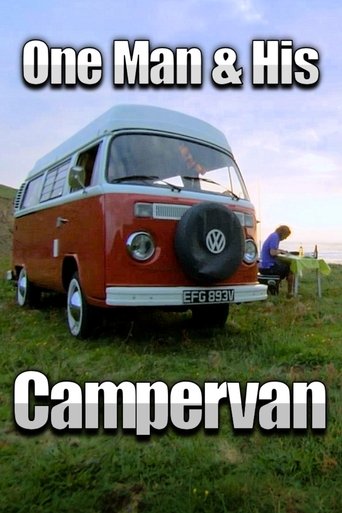
Martin Dorey, campervan lover and passionate foodie, journeys around Britain in his 1970s classic campervan on the ultimate escapist adventure.

Tom Kerridge and Cherry Healey celebrate our favourite takeaways.
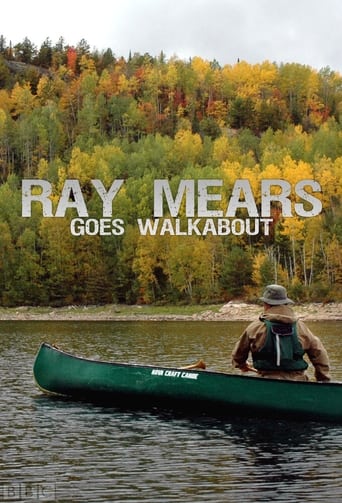
Ray Mears Goes Walkabout is a survival television series hosted by Ray Mears, showing Mears in Australia. The series airs on the BBC in United Kingdom, it is also shown on Discovery Channel in Canada, India, Italy, Brazil, New Zealand, Australia, Norway, Sweden, the Netherlands, Russia, and the United States. A book of the same title was released concurrently with the series. In the series Mears met one of his heroes: Les Hiddins.

Music writer Dylan Jones puts the case that the 1980s were the most radical, innovative and creative decade in the history of pop.

Berlin is a 2009 documentary series co-developed by the BBC and the Open University. Written and presented by Matt Frei, the series has three 60-minute episodes, each dealing with a different aspect of the history of Germany's capital city.

Michel Roux sets out on a personal mission to train eight young people as front-of-house superstars.

From Quo to Queen, relive one of history's biggest concerts. Iconic performances from Wembley and Philadelphia on a legendary summer's day featuring Bowie, Madonna, Sting and more.
Manhunters was a three-part TV Drama Series that aired on BBC Two in the United Kingdom in 2005. It tells the story of three cases of man-eaters through the memoirs of those who hunted them and, in the case of the third episode, accidentally unleashed them on their community. The first tells the story of Jim Corbett, played by Jason Flemyng and the Man-Eating Leopard of Rudraprayag. The second tells the story of George Rushby and the Lions of Njombe, and the third tells the story of the Wolf of Gysinge.
Comrades was a 1983-84 BBC television documentary series and the related book about life in the Soviet Union composed mainly of interviews and fly on the wall filming of 'normal' Soviet citizens. BBC producer Richard Denton was able achieve a largely unprecedented degree of freedom in selecting and interviewing people.
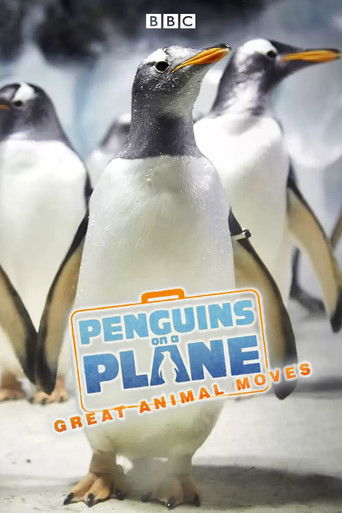
Penguins on a Plane: Great Animal Moves follows the expert handlers entrusted with transporting some of the world's most precious and challenging cargo safely to their destinations.
A Horizon presentation of seven programmes on animal life.

Dr Clare Jackson tells the story of The Stuarts in Exile and sheds new light on the political, military and cultural threat the Jacobite's posed to the embryonic British state. Although the '15' ultimately failed, it crystallised the stark choice facing those living in early 18th-century Britain. Are you for the Stuarts or are you for Hanoverian's?
In-vision Ceefax was first shown in March 1980, originally in 30-minute slots and by mid-1983 it was a common filler during daytime downtime. Transmissions were originally billed on-air as Ceefax in Vision but daytime transmissions were not listed in the Radio Times until 7 January 1984, under the title of Pages from Ceefax.
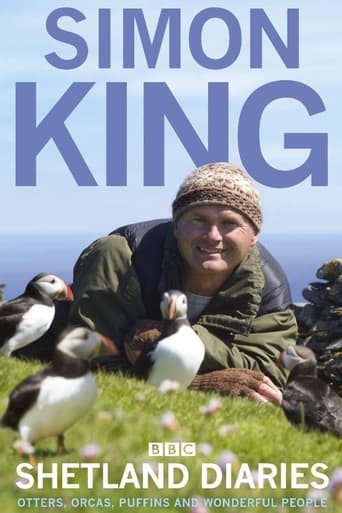
Wildlife cameraman and presenter Simon King sets off on an adventure to the Shetland Isles to live, through the changing seasons, with his family.
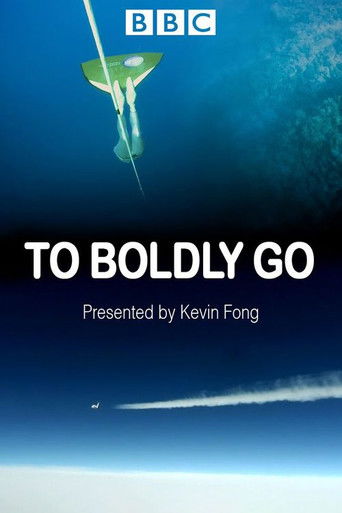
Doctor of extreme medicine, Kevin Fong uses his own body to demonstrate how unsuited our biology is to much of the planet - and how we have had to develop the technology to let us survive there

The Hairy Bikers head north on a big Baltic adventure in search of new cuisines to explore, travelling from Germany to Sweden via Poland, Russia, Finland, Estonia, Latvia and Lithuania.
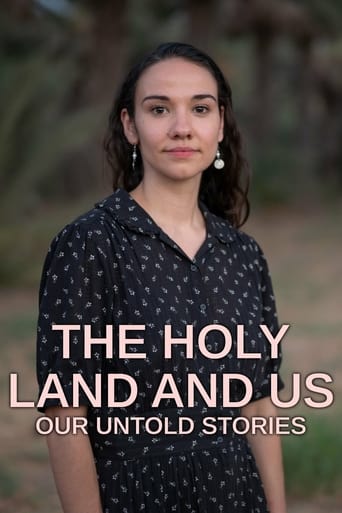
Rob Rinder and Sarah Agha, along with four other families of Jewish and Palestinian heritage, explore how their families' histories were impacted by the founding of the state of Israel in 1948.
