
ABC
Roman's Empire 1970
Roman's Empire was an American sitcom, set to air on ABC. Produced by Ashton Kucher and set to star Nick Thune as Leo, the series is based on the BBC comedy series of the same name.
Think Fast 1970
Think Fast was an American quiz show that ran on ABC from March 26, 1949 to October 8, 1950. The program revolved around a group of five panelists who would compete to see who had the most to say about a particular subject. They sat at a large table, each getting a chance to sit at the "King's" throne by out talking the others on subjects decided by the host. The regular panelists were Leon Janney, David Broekman, who was also the show's musical director, and Eloise McElhone. The moderator was Mason Gross for the first episodes, then Gypsy Rose Lee afterward. The series originally aired on Saturdays until April, followed by Fridays until September, then Sundays for the rest of its run.
The Mini-Munsters 1970
The Mini-Munsters was an animated one-hour telefilm that was aired as part of The ABC Saturday Superstar Movie in 1973, and was based on the characters from The Munsters.
Stand By for Crime 1970
Stand By for Crime is an American police drama that aired on ABC on Saturday nights from January 11, 1949 to August 27, 1949. The series stars veteran newsman Mike Wallace under his real name, Myron Wallace. The series is notable for being the first program to be transmitted from Chicago to New York.
The Object Is 1970
The Object Is is a game show which aired on ABC from December 30, 1963 to March 27, 1964. The series was the first game for host Dick Clark. Mike Lawrence was the announcer.
Focus 1970
Little Clowns of Happytown 1970
Little Clowns of Happytown is an American animated television series that aired on ABC on Saturday morning from September 26, 1987 to July 16, 1988.
Dollar a Second 1970
Dollar a Second is an American comedy game show hosted by Jan Murray which originally aired from September 20, 1953 to June 14, 1954 on the DuMont Television Network.
Shenanigans 1970
Shenanigans was a children's television game show that aired on ABC Saturday mornings from September 26, 1964 to March 20, 1965, and again from September 25 to December 18, 1965. The show was a revival of Video Village, produced by Merrill Heatter and Bob Quigley, and also featured a life-size game board. The series began as local programming in New York City and later aired nationally on ABC. Stubby Kaye, dubbed "the Mayor of Shenanigans", hosted the program, and Kenny Williams, known as "Kenny the Cop", was the announcer. Williams portrayed a similar role on Video Village.
Welcome to the Neighborhood 1970
Welcome to the Neighborhood is an American reality television series produced in 2005 by ABC that was notable for the amount of controversy it garnered before it was aired. It subsequently became one of the few American TV series to be cancelled before airing a single episode. The show was a contest to win a lush dream home in an exclusive cul-de-sac in Circle C Ranch in Austin, Texas. The catch is that the local families decide who will win, and while they are all conservative, white, upper-class Christians, all the contestants are not.
I-Caught 2007
I-Caught is an ABC News newsmagazine program hosted by Bill Weir which ran from August 7 to September 11, 2007 at 10:00 PM ET. Originally a midseason project, the series aired during the Summer and briefly aired in Australia on the Nine Network. i-CAUGHT featured news stories based on video images captured by cell phones, webcams, surveillance cams, and the internet – as well as looking at what happens to the people involved after their video is seen publicly. Among those featured in the premiere was liquid dancer David Bernal, better known to the video-viewing public as David Elsewhere.
The Beatles Revolution 1970
Celebrities explain how The Beatles (who only appear in archival footage) and their music touched their lives. Featuring Meredith Vieira, Tim Allen, Bono,, David Bowie, Garth Brooks, Dick Clark, Bill Clinton, Phil Collins, Cameron Crowe, Marianne Faithfull, Milos Forman, Peter Gabriel, Al Green, Matt Groening, Kate Hudson, Tom Hayden, Eric Idle, Peter Jennings, Stanley Jordan, Michael Kamen, Chris Kirkpatrick, John Lasseter, Mike Love, George Martin, Mike Myers, Bonnie Raitt, J.K. Rowling, Salman Rushdie, Martin Scorsese, Anoushka Shankar, Bruce Springsteen, Sting, Justin Timberlake, Pete Townshend, Christy Turlington, Wendy Wasserstein, Jann Wenner, Brian Wilson, and Albert Maysles.
Of Many Things 1970
Of Many Things is a half-hour panel discussion television series which aired on ABC from October 5, 1953, to January 11, 1954. It was hosted by Dr. Bergen Evans. Topics on the program ranged from practical jokes to popular music, with Mitch Miller as a guest. Another episode focues on the German submarine U-505, captured by the United States Navy in 1944 during World War II. The program aired at 8:30 p.m. EST on Mondays following Sky King on ABC. It aired opposite Arthur Godfrey's Talent Scouts on CBS and The Voice of Firestone on NBC.
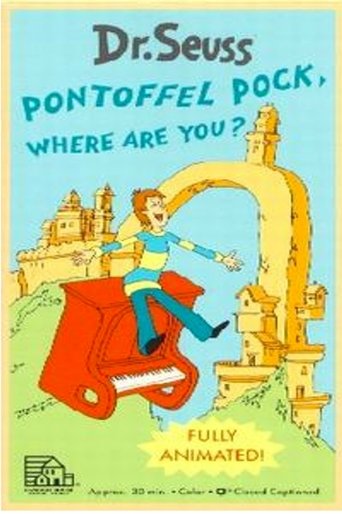
Pontoffel Pock, Where Are You? 1970
Pontoffel Pock, Where Are You? is an animated musical television special written by Dr. Seuss, directed by Gerard Baldwin, produced by DePatie-Freleng Enterprises, completed in 1979 and first aired on CBS on May 2, 1980. This was one of the final cartoons done at DePatie-Freleng as the studio would be sold to The Coca-Cola Company and become Sunbow Productions in 1981. The songs are by Joe Raposo.
100 Grand 1963
100 Grand is an American game show hosted by Jack Clark. The series ran for three episodes, weekly on Sunday nights from September 15 to 29, 1963 on the highly-touted "New ABC" as the network's attempt to bring back high-stakes game shows after the quiz show scandals of 1958. When 100 Grand made its debut, it had been two years since any large jackpots comparable to the quiz shows had aired on any broadcast network, and it would be over a decade more before six-figure jackpots returned to television.
