The Defilee of Army Orchestra, Carriages and Horsemen 1908
Early Balkan footage.
Early Balkan footage.

A short film starring Clément Mégé.
Short film about a magic ride

"Lejonjakten" is one of five films (three of which are now lost) that were made by students at the University of Lund, Sweden, as a part of their 1908 carnival. The film is a cruel parody on Danish producer Ole Olsen's "Løvejagten" (1907) which was at the time banned in Denmark (due to the fact that a lion and other animals were actually killed in the film) but shown in Sweden. In the student version two actors dressed up as a lion and a kangaroo get shot by hunters, but the hunters themselves soon get arrested by the police, an allusion to a recent conflict between the students and the local police.
A man gets cajoled into working as a sideshow wrestler.

Three burglars invade a house, kill two people, and blind a third person, a woman. The police arrest the wrong man.
When the entire kitchen staff falls asleep from exhaustion, a dwarf appears and animates various objects via stop motion -- including their hands, which he cuts off while they snooze -- to do their work.
In the lonely wilds of Southern California there stands a rural tavern, kept by an old trapper, who had been widowed years ago; his wife leaving him a most precious legacy in the being of a pretty daughter.
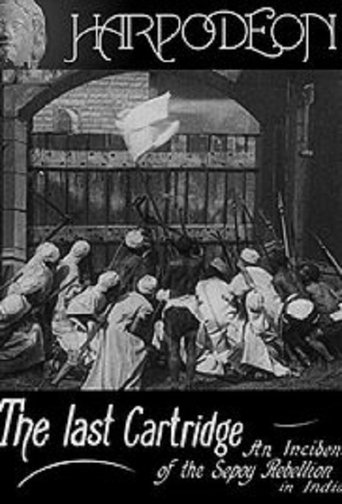
Caught off-guard by Indian mutineers, a British soldier saves his last bullet for his daughter, lest she be taken.

A good shepherdess is persecuted by an evil, tantrum-throwing princess. A good fairy decides to intervene, and dishes out quite a bit of retribution.
The Merchant, the Farrier, and the Roman accompany a mysterious woman into a magical cave full of terrors and wonders.
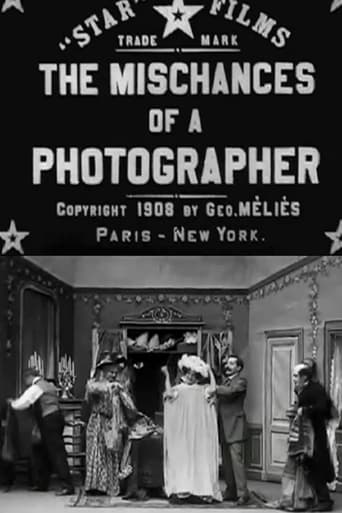
A family goes to a photographer. The photographer pushes the boy around, and no one seems to care. The boy gets his revenge.
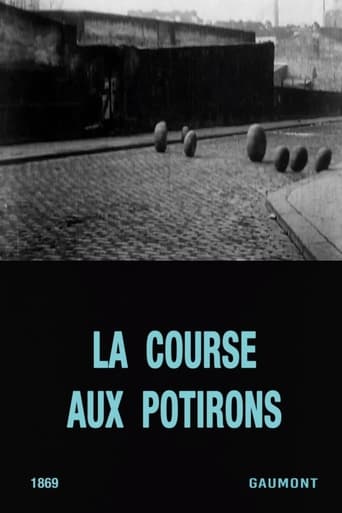
Early slapstick short from Louis Feuillade involving runaways, except that, instead of it being a runaway horse (see Griffith's THE CURTAIN POLE for an example), it is a cartful of what appear to be hundred-pound pumpkins that get away, rushing hither and yon, down sewers, up chimneys, pursued by the drayer, a couple of other people and a very unwilling donkey.
Irving Robertson, a successful playwright, has just received a message from out of town to witness the initial performance of one of his plays. As he is about to leave, Henderson, the manager, calls to pay a sum due him for royalties. At the same time, Frank Wilson, a friend of the family, drops in.
A stop-motion film from Émile Cohl with tin soldiers, children's drawings and cannibals.
The distressing plight of a young man who, dissatisfied with the food his wife serves him, eats horse meat, develops various equine mannerisms, and eventually lands in the hospital.
Hulda is a maiden fair to look upon. Her artless rustic simplicity, rivaling Hebe's gorgeous radiance, phlogisticates the susceptible hearts of the village swains. But alas, Hulda was a fickle maid, and seemed to have as many phases as the moon, with a smile for all and a frown for none. Her capriciousness was the cause of much unrest, both for herself and her lovers, for when her parents had departed for a visit, leaving her in charge of the kitchen, she received most effusively Jocular Jake, the village cut-up, only to hide him above stairs at the entrance of Previous-Hearted Pat, the hostler, who in turn is hidden in the Dutch oven at the approach of Handy Hank, the chore boy.
Fairy-tale adaptation.

