
Leave It to the Girls 1949
Leave It to the Girls is an American radio and television talk show, created by Martha Rountree, and broadcast, in various forms, from the 1940s through the 1980s.
Leave It to the Girls is an American radio and television talk show, created by Martha Rountree, and broadcast, in various forms, from the 1940s through the 1980s.

The Challenge is a 1970 made-for-television movie starring Darren McGavin and Mako. Director George McGowan chose to hide his involvement by using the pseudonym Alan Smithee.
Double Talk is an American game show that aired on the ABC network in 1986. Henry Polic II hosted this word game created by Bob Stewart, which contained elements of the previous Stewart-produced game show Shoot for the Stars. Bob Hilton was the announcer for the show's first two weeks and was replaced starting on the third week by Johnny Gilbert. Near the end of its run, the show was retitled Celebrity Double Talk. However, no format changes took place with the change in the show's title.
Get the Message was a television game show produced by Mark Goodson and Bill Todman. It aired on ABC's daytime schedule for nine months in 1964, with its last airing on Christmas Day. The show was first hosted by Frank Buxton, who was replaced by Robert Q. Lewis on September 28. The announcers were Chet Gould and Johnny Olson.

Hopkins is a seven-part documentary TV series set at the Johns Hopkins Hospital, a teaching hospital in Baltimore, Maryland. It premiered in the United States on June 26, 2008, on ABC and is currently airing in syndication on the We TV Network. The theme for the show "So Much to Say" was written by songwriter Matthew Puckett. The series won a Peabody award. Created as a real-life adjunct to the ABC medical drama Grey's Anatomy, it follows the professional lives of hospital caregivers and their patients. The show is a follow-up to the ABC Special Hopkins 24/7, from 2000. Boston Med, which aired on ABC in June–August 2010, was produced by the same team behind Hopkins.
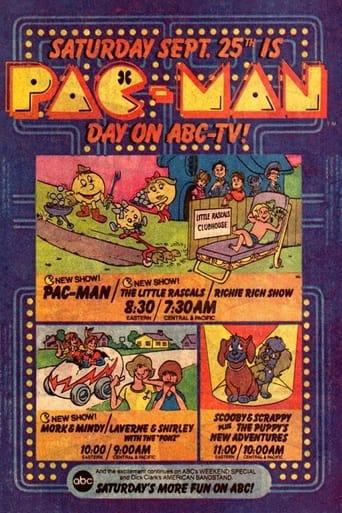
The Pac-Man/Little Rascals/Richie Rich Show was a package show produced by Hanna-Barbera Productions in 1982 for ABC Saturday mornings. In 1983, Pac-Man was given its own half-hour, and the program was retitled The Little Rascals/Richie Rich Show. The show contained the following segments: Pac-Man, Richie Rich, and The Little Rascals.
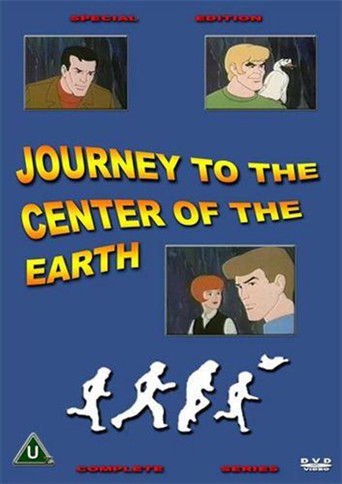
Journey to the Center of the Earth is an American science fiction animated television series, consisting of 17 episodes, each running 30 minutes. Produced by Filmation in association with 20th Century Fox, it aired from September 9, 1967 to September 6, 1969 on ABC Saturday Morning. It featured the voice of Ted Knight as Professor Lindenbrook. It was later shown in reruns on Sci Fi Channel's Cartoon Quest. It appears to have taken the 1959 film, Journey to the Center of the Earth, as its starting point rather than Jules Verne's original novel, e.g. including the character of Count Saknusssen and Gertrude the duck. However it moved even further away from Verne's novel than the 1959 film.
A series of specials highlighting Monaco's annual Festival of Magic, hosted by Princess Stephanie. Features magicians from around the world performing illusions, death-defying acts and mysterious escapes.
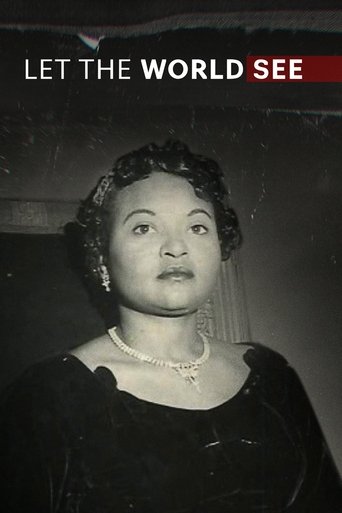
A chronicle of Ms. Mamie Till-Mobley's fierce quest for justice that sparked the civil rights movement after her son Emmett Till's brutal murder, inspiring heroes like Ms. Rosa Parks and others to stand up boldly for their rights.

A slightly cynical parody of Candid Camera where hidden cameras capture unsuspecting average people placed in awkward and uncomfortable scenarios, hosted by Bert Convy.
Missing Links is a Goodson-Todman game show hosted by Ed McMahon which originally ran on NBC from September 9, 1963 to March 27, 1964.

Geppetto is a 2000 made-for-television musical remake of the popular children’s book The Adventures of Pinocchio starring Drew Carey and Julia Louis-Dreyfus. It featured original songs written by Stephen Schwartz. Schwartz had developed the songs as a reunion for Mary Poppins stars Julie Andrews and Dick Van Dyke, but Andrews was undergoing throat surgery so the idea was dropped. Carey's role in the film became a recurring butt-of-jokes on his series Whose Line is it Anyway?, which also featured fellow cast member Wayne Brady as a regular performer.
Keep It in the Family is an American television game show hosted by Bill Nimmo and announced by Johnny Olson which ran on ABC from October 12, 1957 to February 8, 1958. The series was created by Leonard Stern and Roger Price. The show was produced by Frank Cooper Productions, and was replaced by Dick Clark's Beechnut Show, which ran until 1960.
Uncle Croc's Block was a short-lived, hour-long live-action/animated series on ABC, produced by Filmation Associates.
ABC's Wide World of Sports is a sports anthology series on American television that ran from 1961 to 1998 and was hosted by Jim McKay. The title continued to be used for general sports programs until 2006. As the title suggests, it aired on the American Broadcasting Company, primarily on Saturdays.

Turning Point is an ABC News program that aired from 1994 to 1999. Turning Point was an hour-long documentary program focused on a single topic, making it similar to CBS' 48 Hours, which it ran directly opposite for some of its run. The program tended toward sensational topics, such as former members of Charles Manson's "Family" and much coverage of the O. J. Simpson murder case, which was current for much of the program's run. ABC News figures appearing regularly on the program included Diane Sawyer, Forrest Sawyer, Meredith Vieira, Peter Jennings and Barbara Walters. This Turning Point is not to be confused with an ABC dramatic anthology series of the same title which ran during the 1952-53 television season.
Cartoon All-Stars to the Rescue is an American animated drug prevention television special starring many of the popular cartoon characters from American weekday, Sunday morning and Saturday morning television at the time of this film's release. Financed by McDonald's and Ronald McDonald Children's Charities, the special was originally simulcast on April 21, 1990 on all four major American television networks: ABC, NBC, FOX and CBS, and most independent stations, as well as various cable networks. McDonald's also distributed a VHS home video edition of the special, produced by Buena Vista Home Video, which opened with an introduction from President George H. W. Bush, and First Lady Barbara Bush. The show was produced by the Academy of Television Arts & Sciences Foundation and Southern Star Productions, and was animated overseas by Wang Film Productions Co., Ltd.. The musical number "Wonderful Ways to Say No" was written by Howard Ashman and Alan Menken, who also wrote the songs for The Little Mermaid, Beauty and the Beast and Aladdin. The plot chronicles the exploits of Michael, a teenager who is using marijuana and stealing his father's beer. His younger sister, Corey, is worried about him because he started acting differently. When her piggy bank goes missing, her cartoon tie-in toys come to life to help her find it. After discovering it in Michael's room along with his stash of drugs, the various cartoon characters proceed to work together and take him on a fantasy journey to teach him the risks and consequences a life of drug-use can bring and save the world.
Bargain Hunters is a game show that aired on ABC in the summer of 1987, hosted by Peter Tomarken, which combined elements of The Price Is Right with home shopping. The show was canceled after nine weeks and replaced by reruns of Mr. Belvedere.
Make Me Laugh is an American game show in which contestants watched three stand-up comedians performing their acts, one at a time, earning one dollar for every second that they could make it through without laughing. Each comedian got sixty seconds to try to crack the contestant up.
Foul-Ups, Bleeps & Blunders is the title of a comedy series that aired on ABC for two short seasons in the mid-1980s. The series is hosted by Steve Lawrence and Don Rickles. Produced as a response to NBC's TV's Bloopers & Practical Jokes, this series similarly focused on outtakes from popular television programs and movies. The series also included a Candid Camera-like segment showing people caught in amusing situations by hidden cameras. The word blooper was not allowed to be uttered, with the term "foul-up" substituted where applicable. The series debuted on January 10, 1984 as a mid-season replacement series, and returned at the start of the 1984-85 season, however after October 1984 the show ceased to be a weekly offering on ABC and instead aired at various times as filler for the next few months before resuming weekly broadcast in the spring, after which it was cancelled.
