
ABC
Tim Conway's Funny America 1990
Tim Conway's Funny America is a 1990 United States comedic television series starring Tim Conway. It aired from July 29, 1990, to September 2, 1990.
Little Clowns of Happytown 1970
Little Clowns of Happytown is an American animated television series that aired on ABC on Saturday morning from September 26, 1987 to July 16, 1988.
Double Talk 1970
Double Talk is an American game show that aired on the ABC network in 1986. Henry Polic II hosted this word game created by Bob Stewart, which contained elements of the previous Stewart-produced game show Shoot for the Stars. Bob Hilton was the announcer for the show's first two weeks and was replaced starting on the third week by Johnny Gilbert. Near the end of its run, the show was retitled Celebrity Double Talk. However, no format changes took place with the change in the show's title.
Downfall 2010
Played atop a tall building in the middle of a metropolitan landscape, the game has contestants quickly answer a series of trivia questions against the clock. If they play the perfect game, they could leave with a million dollars in cash and prizes. But if not, they could just as easily see their hopes and dreams slip through their fingers and off the side of the building—literally.
The Family Game 1970
The Family Game was a game show that ran on ABC for six months in 1967. Geoff Edwards was originally to host the pilot, but was dropped at the last minute and was replaced by producer Chuck Barris. Although ABC bought the series, they mandated that someone other than Barris be the host; Bob Barker, then hosting Truth or Consequences, was selected without a screen test or pilot. The Family Game was played similar to Barris' more popular ABC game show The Newlywed Game, except that instead of four married couples there were three families. The series is notable for being the last new black-and-white network series to air in America prior to the nationwide switch to color in 1968.
The Superstars 2009
The Superstars", a fresh take on an old favorite, is based on ABC's classic "Wide World of Sports" series, "The Superstars", which pitted athletes from all different sports against each other to determine the best athlete in the world. Eight celebrities are paired with eight professional male and female athletes to compete against each other in varying sporting events. Each week a team will be eliminated until one team is ultimately crowned the winner. Competitors' athletic prowess will be put to the test with events including swimming, biking, running and kayaking, in addition to other head-to-head athletic challenges that will test strength, speed, stamina, agility, as well as an element of strategy. The six-episode series will be shot entirely on location at the Atlantis Resort in the Bahamas.
Cartoon All-Stars to the Rescue 1990
Cartoon All-Stars to the Rescue is an American animated drug prevention television special starring many of the popular cartoon characters from American weekday, Sunday morning and Saturday morning television at the time of this film's release. Financed by McDonald's and Ronald McDonald Children's Charities, the special was originally simulcast on April 21, 1990 on all four major American television networks: ABC, NBC, FOX and CBS, and most independent stations, as well as various cable networks. McDonald's also distributed a VHS home video edition of the special, produced by Buena Vista Home Video, which opened with an introduction from President George H. W. Bush, and First Lady Barbara Bush. The show was produced by the Academy of Television Arts & Sciences Foundation and Southern Star Productions, and was animated overseas by Wang Film Productions Co., Ltd.. The musical number "Wonderful Ways to Say No" was written by Howard Ashman and Alan Menken, who also wrote the songs for The Little Mermaid, Beauty and the Beast and Aladdin. The plot chronicles the exploits of Michael, a teenager who is using marijuana and stealing his father's beer. His younger sister, Corey, is worried about him because he started acting differently. When her piggy bank goes missing, her cartoon tie-in toys come to life to help her find it. After discovering it in Michael's room along with his stash of drugs, the various cartoon characters proceed to work together and take him on a fantasy journey to teach him the risks and consequences a life of drug-use can bring and save the world.
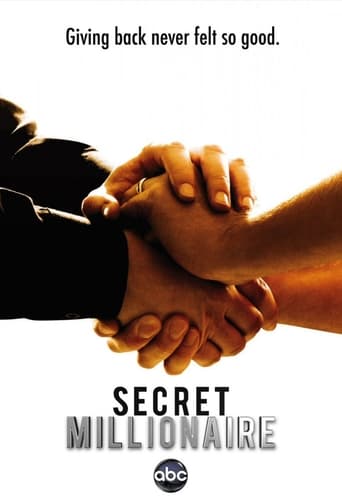
Secret Millionaire 2008
Some of America's wealthiest people leave behind their lavish lifestyles, sprawling mansions and luxury jets, conceal their true identities, and go to live and volunteer in some of the most impoverished and dangerous communities in America. Their mission is to discover the unsung heroes of America—deserving individuals who continually sacrifice everything to help those in need. At the end of the week, in an emotional and dramatic climax, they reveal their true identities and change lives forever.
The Comeback Story 1953
The Comeback Story is a half-hour drama reality show which aired on ABC from October 2, 1953 to February 5, 1954, in which celebrities explain how they overcame physical disabilities or other kinds of adverse fortunes in their lives.

The Challenge 1970
The Challenge is a 1970 made-for-television movie starring Darren McGavin and Mako. Director George McGowan chose to hide his involvement by using the pseudonym Alan Smithee.
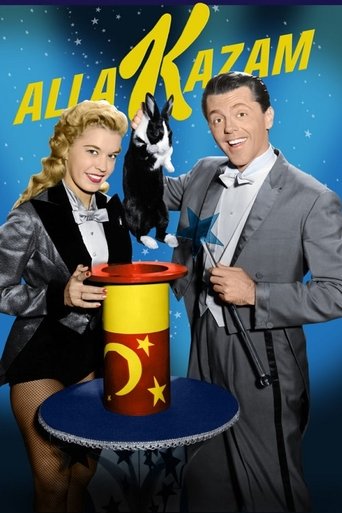
The Magic Land of Allakazam 1960
The Magic Land of Allakazam was the name of a groundbreaking series of network television shows featuring American magician Mark Wilson. It ran from 1960 to 1964 and is credited with establishing the credibility of magic as a television entertainment.
The Best of Everything 1970
The Best of Everything is an American daytime soap opera which aired on ABC from March 30, 1970 to September 25, 1970. The series was a spin-off of the 1959 film of the same name and the novel that spawned it.
Make Me Laugh (original) 1970
Make Me Laugh is an American game show in which contestants watched three stand-up comedians performing their acts, one at a time, earning one dollar for every second that they could make it through without laughing. Each comedian got sixty seconds to try to crack the contestant up.
Petals 1970
Petals is an Australian children's animated television programme produced and created by Mark Barnard and aired on the ABC. It ran from 1998 to 1999 consisting a total of two seasons and 55 episodes and was aimed at pre-school children aged 2–6. After it ended in 1999, the series was still continued to be repeated on the ABC and ABC1 until 2004.
A Quiet Word With ... 1970
A Quiet Word With ... was an Australian conversation television series originally broadcast by ABC TV in 2010 and 2011. Each episode featured New Zealand comedian and writer Tony Martin engaging in a twenty-six minute conversation with a local or international entertainer, mainly other comedians.
100 Grand 1963
100 Grand is an American game show hosted by Jack Clark. The series ran for three episodes, weekly on Sunday nights from September 15 to 29, 1963 on the highly-touted "New ABC" as the network's attempt to bring back high-stakes game shows after the quiz show scandals of 1958. When 100 Grand made its debut, it had been two years since any large jackpots comparable to the quiz shows had aired on any broadcast network, and it would be over a decade more before six-figure jackpots returned to television.
Keep It in the Family 1970
Keep It in the Family is an American television game show hosted by Bill Nimmo and announced by Johnny Olson which ran on ABC from October 12, 1957 to February 8, 1958. The series was created by Leonard Stern and Roger Price. The show was produced by Frank Cooper Productions, and was replaced by Dick Clark's Beechnut Show, which ran until 1960.
The Porky Pig Show 1964
Network (and later, syndicated) show which packaged classic Warner Bros. cartoons.

