
Layla 1970
In this animated short, Layla has always been made to keep her long unruly hair tied up and out of the way. As she reflects on her life, she realizes that she can no longer keep up the charade of her conformity.
In this animated short, Layla has always been made to keep her long unruly hair tied up and out of the way. As she reflects on her life, she realizes that she can no longer keep up the charade of her conformity.
Waiting for Godik chronicles the rise and fall of larger-than-life Israeli musical theatre impresario Giora Godik, one of the prominent icons of the country’s happy ’60s. Godik sought to bring the American dream to Israel through glamorous, first-rate productions of My Fair Lady, Hello, Dolly!, The King and I and the original smash hit Kazablan, among other musicals. Boasting archival recordings of these sensational productions as well as recent interviews with many Israeli theatre icons, Waiting for Godik offers a nostalgic trip through a time when Israel’s cultural boundaries were just beginning to open to the outside world.
This experimental animated short tells the story of the Dead Sea and its commodification within Israeli history.
Mika's boyfriend Nati puts an end to the relationship when Mika proposes marriage. Mika moves back home and becomes addicted to the ATARI video game still sitting in her childhood room. But going back to the past doesn't heal Mika's heartache. She will have to find another way of moving on.
Abed A-Salim is the Mukhtar of the Gypsy community in East Jerusalem. His family has been typing requests for visitors at the Israel Ministry of Interior Affairs for three generations.
A Private Death tells of the great love story between Haya Schreiber, a sixth-generation Jaffa-born Jew and Tewfic Hanania, a Christian Orthodox Jerusalem-born Arab that began in 1930s Jerusalem. Tewfic Hanania was a wealthy man who came from Jerusalem's Arab aristocracy. Haya was a kindergarten teacher from an orthodox Jewish family. Making use of rare archival footage alongside excerpts from films made by Hanania during the 1930s and interviews with historians and family members, the film portrays life in Jerusalem during the British Mandate. The wealth of materials and this intimate story show how history can ultimately impact a private story and private death.
Night, a shared apartment. Art and sexuality intersect in the lives of Geffen and Amit, and the two cross the lines no roommate would want to cross. Or would they?

When Gruf, a graffiti character, falls in love with the street artist who created him, he tries to find her in the shabby streets of Tel Aviv but discovers that inter-dimensional love is not easy.
A story about five lone wolves who do not find their place in the forest, unite for one reason - their wish to fly. A poetic and allegorical story about parting.

Evyatar, a teenager with a tendency to curse (a lot), falls in love with Shani, the new girl in class, and finds redemption through her. Will love make Evya change his behavior?
A love-story between the iconic Gordon Pool located on the coastal shore of Tel-Aviv and the people who freguent it. For over 4 years, | tracked and recorded the musings of some of the eccentric characters, their thoughts, their feelings, their individual stories, and their obsessions, revealing how the pool and the rituals around bathing are a temple for their souls.
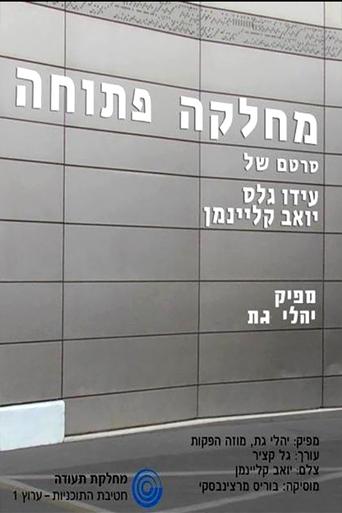
An unprecedented view of the Abarbanel Mental Health Center in Israel allows a film crew to document its patients' lives.Three of them present their fears and most importantly- their dreams-and for the first time, they might fulfill them.
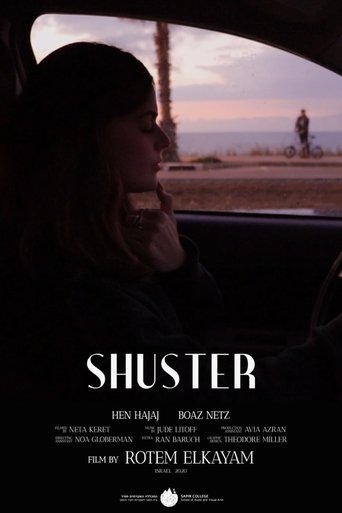
A quiet evening road trip becomes a clash between two drivers' desires, one of them who enjoys the ride, and the other trying to get to his destination as fast as possible.


This beat must be on the spectrum.

Following an illegal foreclosure order issued against his partner, Attorney Barak Cohen started a fight against the heads of the banking system, and created a new model of civil resistance demanding personal responsibility from the decision makers. The public uproar caused by the campaign led the heads of the banks, the attorney's office and the police to try to stop the activity of Barak and his friends in any way possible. The culmination of this attempted silencing was the "trial of the bankers" which included serious charges, as if taken from the world of organized crime. Barak and his friends did not panic and turned the trial into a serious indictment against the heads of the banking system, a move that was hailed as a resounding success and has since inspired all civil struggles in Israel.
The Angel of History deals with the troubling presence of unsolved past events in actual and imagined realities. It takes place in various public and private arenas like the artist's studio, the arena of murder, the photographic frame, the museum, the body or the cemetery. The Angel of History offers new perspectives for understanding the complex relations which are spun around the museal space. The movie probes beyond the standard and limited museal relationships between artist and work or viewer and work, exposing the fragile, troubled and intimate relations between the various protagonists who participate in the becoming-public of the work of art: between a daughter and her mother, between an analyst and his patient, between father and son, between photographer and photographic subject, between a ghost from the past and contemporary figures, and between hangman and victim.

Anastasia is trapped in an abusive relationship with Noam – a talented pianist haunted by his past. At the steps of the Rape Crisis center, Anastasia meets the pop-star Libby. Their encounter helps her to break free from the constraints of Noam, but also results in her adopting aggressive patterns of her own.

Cousins Gabriel and Omer spend the end of their summer break working in a packing warehouse owned by Omer’s dad, Elisha. The film follows the two teenagers, during another routine day at the warehouse from Gabriel’s perspective. Gabriel is a bit of an outsider. He is a slim boy, who likes to observe what’s happening around him while Omer is a much more masculine figure. They play innocent games that become masculinity tests. For the first time in their lives, they will have to understand that every act has consequences.
