Wszyscy dla wszystkich

Wszyscy dla wszystkich 1976

1

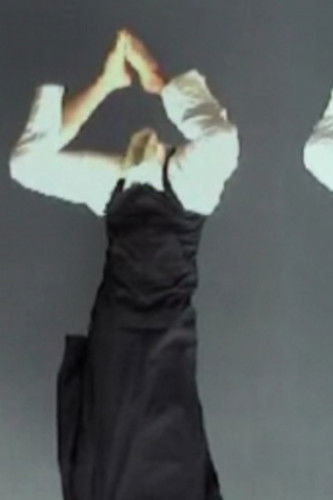
The employees of a tailor's workshop portrayed by him make their working hours more pleasant by chatting, during which the work itself sometimes comes to the background. Their conversations regularly cover the subject of the various issues that tailors and seamstresses have to deal with in their everyday lives. But when customers make complaints and comments about tight jackets and crooked jackets, they can only count on aggression or saying it can’t be helped. All for all is the title of a poem by Julian Tuwim, starting with a stanza: "A bricklayer builds houses, / The tailor sews clothes, / but where would he sew if he didn't have a flat". Kindergarten children learn from the poem that every job serves some purpose and we need each other. Paweł Kędzierski in his documentary ironically shows that the devil is in the details.
1976

Boleslaw Bierut Passed Away

Boleslaw Bierut Passed Away 1956

1

A special episode of the Chronicle commemorating the death of Bolesław Bierut. He died in Moscow, March 13, 1956. The President of Poland, the President of the Council of Ministers of the Polish People's Republic, the First Secretary of the Central Committee of the Polish United Workers' Party, was a guest of the earth-shattering 20th Congress of the Communist Party of the Soviet Union, at which Khrushchev delivered a secret speech on the crimes of Stalinism. Obviously, the film does not mention that because in our country Bierut's death began the thaw period. An honor guard was set next to the coffin in Moscow. The funeral was attended by PUWP delegates, marshals of the USSR, family and workers. The last journey led through Moscow to the airport, where the Bulgarian Prime Minister gave his farewell speech. The funeral march created by Fryderyk Chopin accompanies the images in the production.

1956

Island of Feathers and Fluff

Island of Feathers and Fluff 1959

1

A documentary about a small island in the Glacial Ocean, which during the Arctic summer becomes a kingdom of singing birds.

1959

Sailing the

Sailing the "Gift of Pomerania" towards Stockholm 1938

1

A film report from the Dar Pomorza (Pomeranian Gift) sailing ship's training voyage to Stockholm to celebrate King Gustav V's 80th birthday. The film shows the daily life of the sailors on board the ship, including physical exercise, entertainment and playing with the crew's mascot, the anteater Bear. "Dar Pomorza" was a ship of the Polish merchant navy in the 1930s and at the same time a training ship of the Maritime School in Gdynia - in 1930 it replaced the former sailing ship "Lwów". It was on this ship that the future sailors of the Second Republic of Poland gained experience. Thanks to the reportage "Dar Pomorza to Stockholm", it is possible to see the ship at the time of its greatest glory. The film was reconstructed in 2022 based on two copies found after the war in the USA and the Soviet Union.

1938

Polish Pioneers in the Black Continen

Polish Pioneers in the Black Continen 1936

1

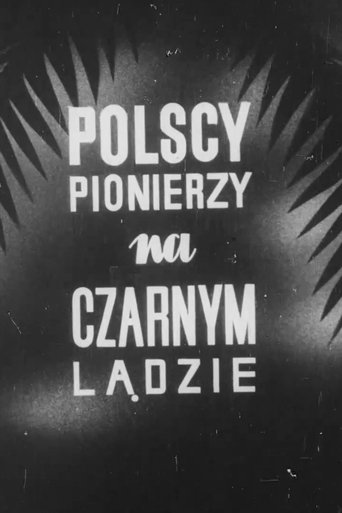
A group of Polish plantation managers embarks on a voyage to West Africa to establish trade relations between Poland and Liberia. The film shows the journey across the ocean, the local people and their customs, and preparations for plantation expansion.

1936

In the Country of the X Muse

In the Country of the X Muse 1930

1

An actor tells and demonstrates what it was like to work on a film set in the silent era, while a sound recordist shows how much things have changed with the advent of sound cinema, demonstrating what sound recording is and what it looks like on film. The reportage is a unique opportunity to take a look behind the scenes of a pre-war film studio.

1930

Coronation of the Icon of Our Lady of the Dawn Gate

Coronation of the Icon of Our Lady of the Dawn Gate 1927

1

The coronation ceremony of the Icon of Our Lady of the Dawn Gate took place on 2 July 1927. It was a grand celebration, not only religious, but also national, attended by state dignitaries headed by President Ignacy Mościcki and Marshal Jozef Pilsudski. Despite a storm and rain, Vilnius was visited by thousands of pilgrims, including Poles from the Kaunas region, which is part of Lithuania, for whom it was also a patriotic manifestation. Just 2 days later, on 4 July, a film account of the ceremony was screened at Warsaw's Colosseum cinema. In 2023, the film was reconstructed based on three incomplete copies.

1927

Przyłączenie Górnego Śląska do Polski

Przyłączenie Górnego Śląska do Polski 1992

1

A reportage of the official ceremony join Upper Silesia to Poland iin 1922. The film shows the General Szeptycki and Speaker of the Seimas Trąmpczyński in Katowice, meeting with government officials, mass, speeches, signing to join the act, the parade of delegations from all over the country and the military parade on the streets of Katowice.

1992

Tatras in Snow

Tatras in Snow 1939

1

The film is a reportage, until recently unknown, found in 2015, showing the beauty of the mountains bathed in snow and the tourist attractions of Zakopane and its surroundings, including the Gubałówka cable car and the cable car to Kasprowy Wierch. Currently (2023), this is the only surviving pre-war reportage by Zbigniew Jaszcz, a cameraman who made documentaries in England and Scotland during the Second World War.

1939

Before the Battle of Warsaw

Before the Battle of Warsaw 1945

1

This short film depicting Bolesław Bierut and Michał Rol-Żymierski visiting the troops of the 1st Polish Army was produced by the Polish Army Film Studio.

1945

H.I.T.

H.I.T. 1991

1

An animation describing the madness of war, which runs forward like an unleashed dog. The passing time explodes with blood until history comes full circle and gradually fades away.

1991

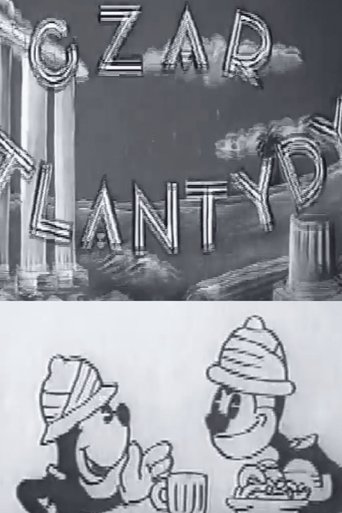
Czar Atlantydy

Czar Atlantydy 1935

1

Advertisement created for Herbewo company

1935

Gypsy Gadji

Gypsy Gadji 2024

1

The Roma* in Poland are the largest and the most marginalised ethnic minority. Roksana identifies as both Roma (Gypsy) and Polish (Gadji). Employed as a teaching assistant, she works to keep Roma children in school as more than half leave education before the age of sixteen. She could be the perfect bridge, but each culture wants her to reject the other. Roksana, however, desires to belong.

2024

Mlekołak

Mlekołak 1970

1

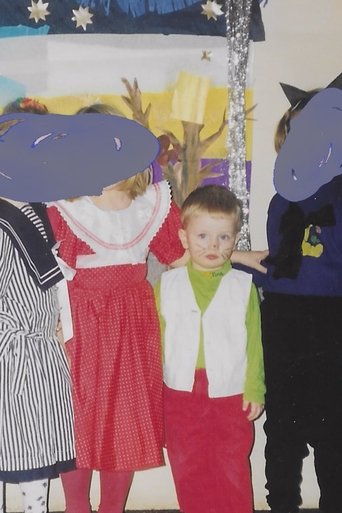
Set against a backdrop of nostalgia for the 2000s, this experimental autobiographical documentary explores childhood memories and the fluidity of gender identity. Through animated family photographs and satellite images, it contrasts the soft, tactile nature of analog photography with the rigidity of digital definitions. The film examines how masculinity and social conventions shape the self, leading the protagonist into the darker corners of Poznań in a search for meaning and freedom.

1970