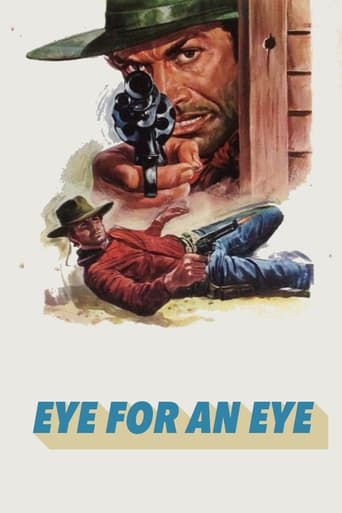
Eye for an Eye 1971
A vengeful widow hires a professional killer to train her son so that he can hunt down and kill the men who murdered her husband. The quest for revenge soon becomes an obsession.
A vengeful widow hires a professional killer to train her son so that he can hunt down and kill the men who murdered her husband. The quest for revenge soon becomes an obsession.

"PRIMARIES is a simple film which merely establishes a definition of 'politics'. Its narrative moves in paragraph blocks, with each sentence accompanied by different pictures of a young woman's hands, feet, torso, face… A TURNING POINT IN LUNATIC CHINA provides a critique of the methods of communication employed by my fellow Leftists. The ritualistic posturing and sloganeering I had used myself and seen in action in Chicago and San Francisco State, the seizing of exotic foreign figures (Mao, Che) and ideological rhetoric (SDS debates on Stalinism)–all struck me as mistaken and useless... [TURNING POINT] initiates a conscious probing of the means and techniques of mass communication, particularly film. 1, 2, 3, FOUR... delivers a critique from within of the... ideologies... of the 'counter-culture'... [It] provides no answers, but rather it allows the internal dynamics of the 'left' generate its own questions."

Lena is a young woman in need of excitement and sexual satisfaction. Torn between her meek and innocent boyfriend Jan and the sadistic partygoer Helge, Lena‘s life is turned upside down when Helge take some nude photographs of her. These photos could destroy her life.
A failed actress wants to go back to her husband, who has fallen into alcoholism.
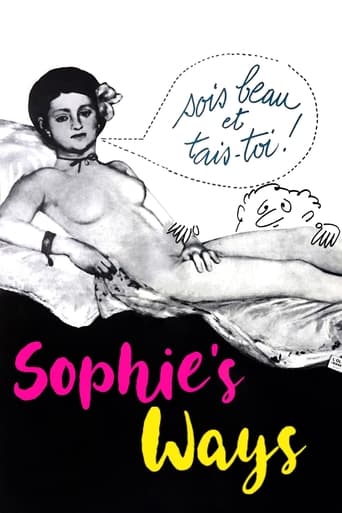
Céline is a free-spirited woman is married to a dull, middle manager Philippe. Her husband's co-worker pegged her as a household ornament because of the union. She befriends a woman who shows her how to juggle the couple's living expenses to get what she wants. As she asserts her independence and gradually frees herself from her husband's claustrophobic world, she turns to painting and writing about the inequity between genders.
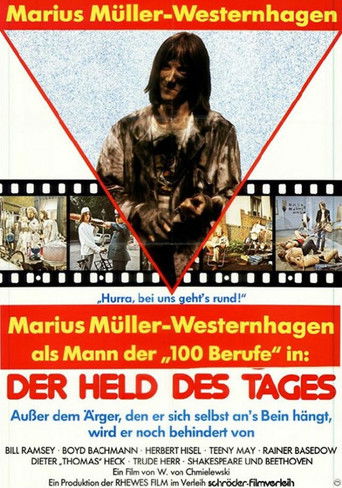
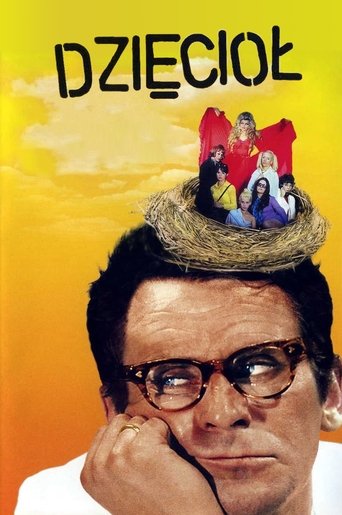
A man approaching middle age gets more than he bargained for when he tries having an extramarital affair while his wife is away.

Based on the Greek myth of Narcissus and Echo, Foldes employed live-action photography and visual feedback synthesizers from France's Computer Image Corporation to tell the tale in a disquieting, psychedelic manner.
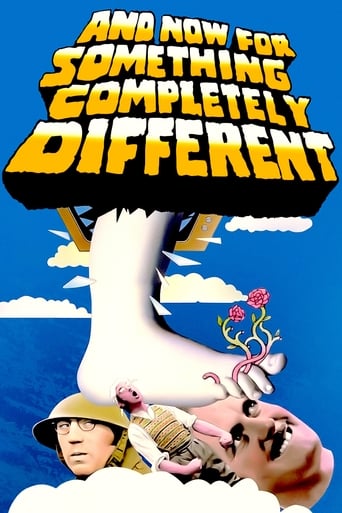
A collection of Monty Python's Flying Circus skits from the first two seasons of their British TV series.
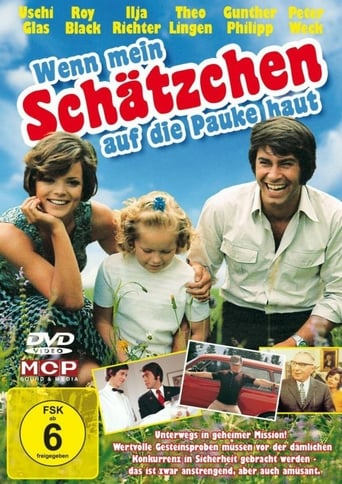
The composer Kristian Wernher is supposed to transport uranium-containing rock samples from Brazil to Austria, specifically to Lake Wörthersee, for his father, the head of “Internationale Berg AG”. Everything is carried out in the strictest secrecy, but soon two agents are after Kristian. But that is not his biggest problem. An unpleasant surprise awaits Kristian at the delivery point.
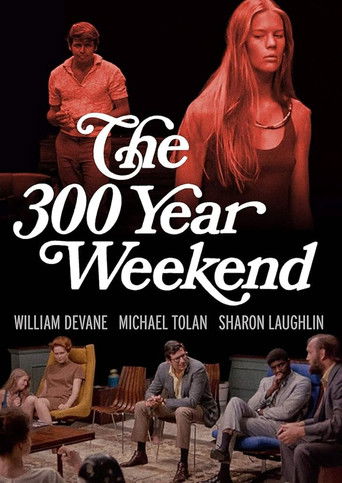
A doctor spends 24 hours in a clinic with a group of patients. Each character has his or her own story to tell, about their fathers, mothers, or spouses who don't understand them, and how they've turned instead to drugs.

An amusingly drawn cartoon about a highly proficient lady bricklayer, graduate of Specialists' School, whose work takes her high up in the world, and her erstwhile friend, whose equally dedicated professionalism brings him lower. She builds towers of bricks while he tunnels down below ground. What develops in the story involves other unlikely characters, plausible enough in this cartoon context.
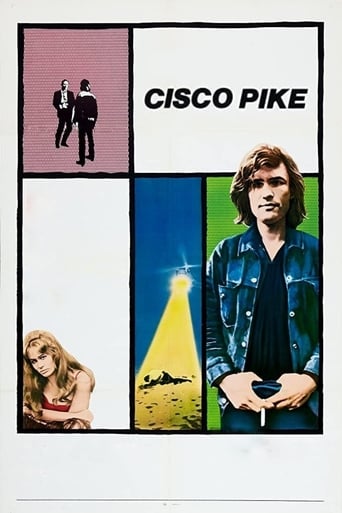
A down on his luck former drug dealer is forced by a corrupt LAPD policeman to sell 100 kilos of confiscated marijuana in one weekend.
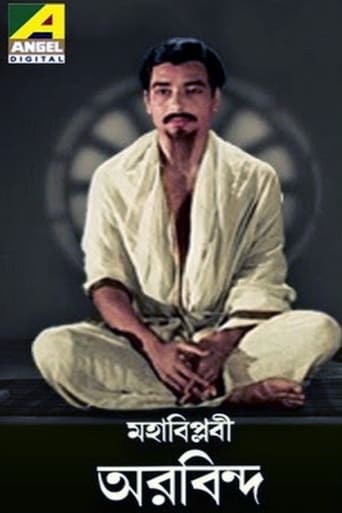
Inspired by the life of Rishi Aurobindo, it’s a Bengali classic portraying the life of Sri Aurobindo Ghosh beginning from his return to India in 1892 to his life in Pondicherry in 1910. This film shows a detailed narration of his early life, marriage, interaction with Sister Nivedita, contributions in India’s freedom struggle and activities in Jugantar, Alipore bomb blast case, and the subsequent trial.
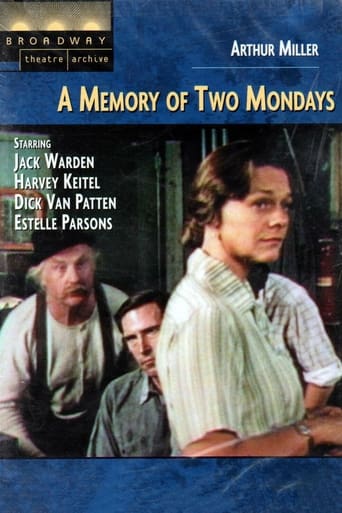
Workers in an auto parts warehouse in 1933 New York City inhabit a bleak, dead-end world in the depths of the Depression where, at least, they have jobs. Introduced by its playwright, Arthur Miller, it was the first in a series of NET Playhouse programs concerning life in America during the Depression years.
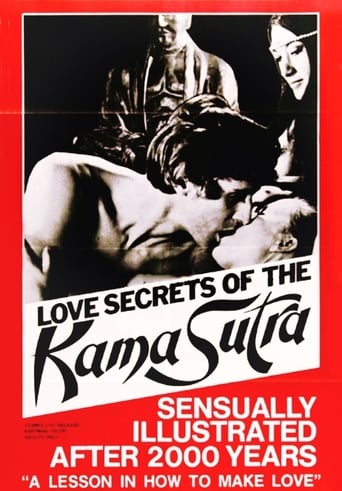
A young couple having problems with their marital/sex life visit an Indian 'guru' at his reserve and ask him for help in this soft-core drama.
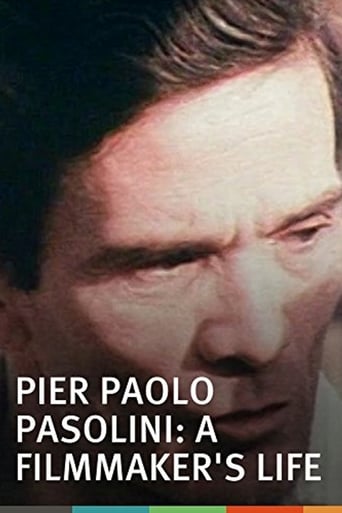
Documentary about Italian movie director Pier Paolo Pasolini, with interviews with some of his actors and friends.
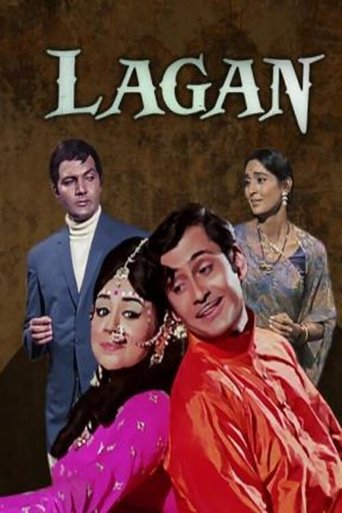
Burma-based widow, Parvati, along with two sons, Prem and Rajesh, re-locates to Bombay to live with her late husband's friend and widower, Sewakram, and his two daughters, Shanti and Durga. He returns some cash and jewelery to her that was entrusted to him, and she re-locates to live in a big bungalow. Shortly thereafter, Prem and Rajesh get married to Shanti and Durga respectively. The entire family live harmoniously until Parvati is told by Mrs. Pereira that Prem has been physically abusing his pregnant wife. Parvati and Rajesh undertake to rein-in Prem - and it this overture that will not only shatter their idyllic lifestyle but force both brothers to take up arms against each other.
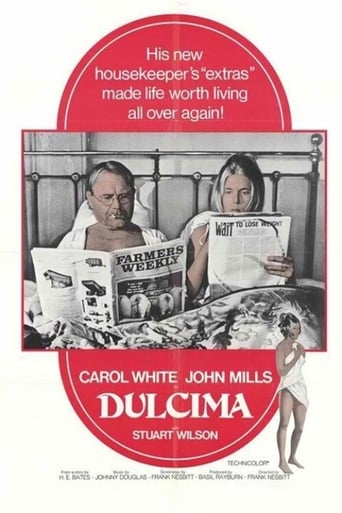
Dulcima, treated as a drudge by her family, becomes a housekeeper to Parker, a curmudgeonly widower living in drunken disarray on a neighbouring farm. When she sees the amount of money he has stashed around the place, Dulcima is happy enough to indulge his growing desire for her, and a strange, yet mutually beneficial, relationship develops. But a handsome young gamekeeper, newly arrived on a nearby estate, also catches Dulcima's eye...
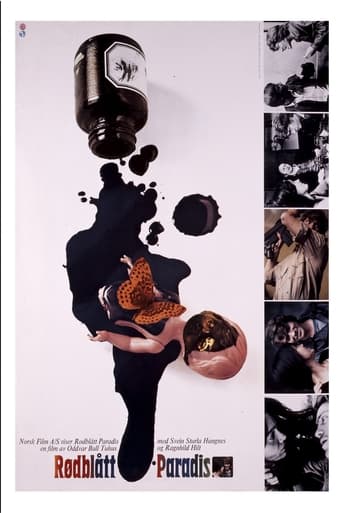
Per is a newly qualified social worker entering professional life. Through Per, we are confronted with welfare Norway in 1970. Over the course of a couple of short summer months, we get to know Per. He is a fairly ordinary, intelligent person. He has his problems in relation to himself and the opposite sex. He is in the process of becoming an adult. He is testing his attitudes and perceptions. He must find answers to questions that could be crucial to his future place in society.

The story chronicles the life of Yagyū Munenori.

The Hui Brothers Show is a Hong Kong sketch comedy television series produced by TVB and hosted by and starring brothers Michael Hui and Samuel Hui that ran for 52 episodes from 1971 to 1973.
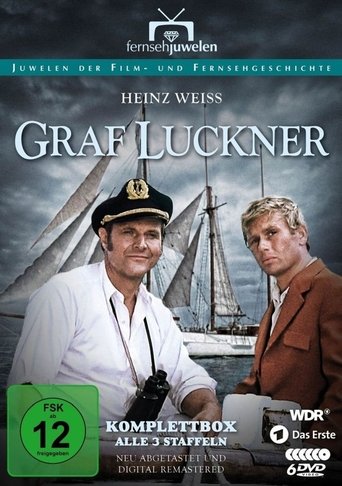
Between the first and second World Wars, we portray glorified and renown naval sea officer Felix Graf von Lucker and his fictitious ship Niobe, which is the 1887 built Amphitrite from Southampton. Von Luckner is famous for his tactical genius in the first World War, especially sinking 14 enemy ships and only losing one crewman, whilst always seeking a peaceful outcome - making him the ideal seaman.

The science and faith programs is a TV program presented by the late d. Mustafa Mahmoud for twenty-eight years on Egyptian television, and he aimed to address science on the foundations of faith. The program reached a large degree of fame and Dr. Mustafa Mahmoud presented more than 400 episodes over twenty-eight years.

Intimate concerts for the new breed of singer-songwriter.
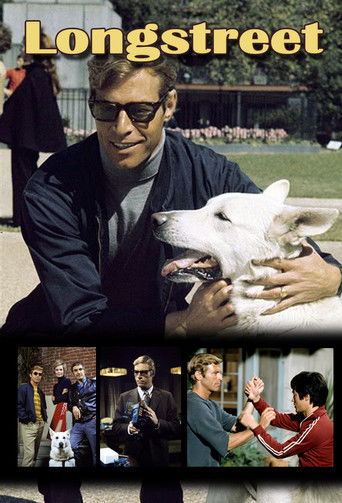
Longstreet is an American crime drama series that was broadcast on the ABC in the 1971-1972 season. A 90-minute pilot movie of the same name aired prior to the debut of the series as an ABC Movie of the Week.
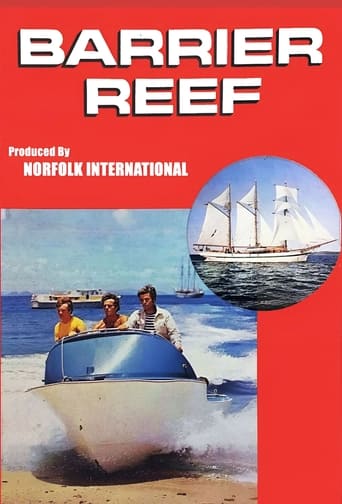
Barrier Reef was an Australian television series that was first screened in 1971. Barrier Reef centred around a group of marine biologists on board a ship called the New Endeavour, researching around the Great Barrier Reef, off Queensland, Australia. "It was the first series in the world to feature extensive colour underwater filming on location". It was also a unique location for a TV show. The Great Barrier Reef is "The only living organic collective visible from Earth's orbit."
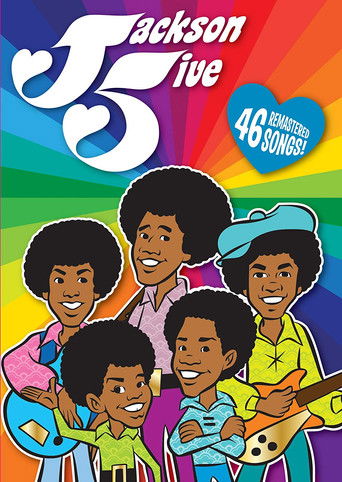
The Jackson 5ive was a Saturday morning cartoon series produced by Rankin/Bass and Motown Productions on ABC from September 11, 1971 until 14 October 1972; a fictionalized portrayal of the careers of Motown recording group The Jackson 5. The series was rebroadcast in syndication through Worldvision Enterprises during the 1984–1985 Saturday morning season, during a period when Michael Jackson was riding a major wave of popularity as a solo artist. The series was animated mainly in London at the studios of Halas and Batchelor, and some animation done at Estudios Moro, Barcelona, Spain. The director was Spanish-American Robert Balser.
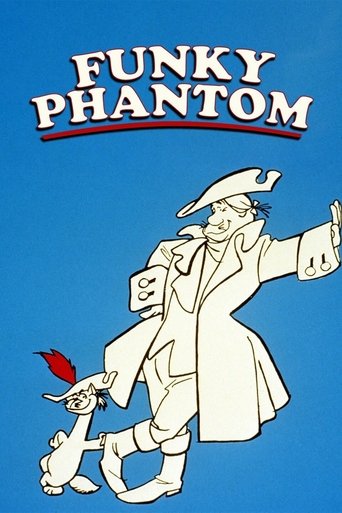
Three teenagers and their dog solve mysteries with the help of two ghosts from the 18th century.
Barlow at Large is a British television programme created by Troy Kennedy Martin and Elwyn Jones. It broadcast from September 1971 to February 1975, with a total of 29 episodes across four series. Stratford Johns reprises his role of DCI Charles Barlow from Z-Cars, Softly, Softly, and Softly, Softly: Taskforce. Barlow at Large originated as a three-part self-contained spin-off from Softly, Softly in 1971 with Barlow co-opted by the home office to investigate police corruption in Wales. Johns departed in 1972, but returned for a further series of Barlow at Large in the following year, Barlow having gone on full-time secondment to the Home Office. In 1974, the series was rebranded Barlow and two further series of eight episodes each followed, introducing DI Tucker. After the finale's transmission in February 1975, Barlow was next seen in the programme Second Verdict in which he, alongside a former colleague, investigates unsolved cases and unsafe historical convictions.
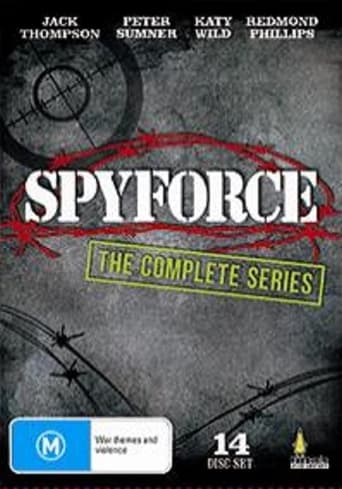
Spyforce was an Australian TV series produced from 1971 to 1973, based upon the adventures of Australian Military Intelligence operatives in the South West Pacific during World War II. It was produced by the Nine Network in conjunction with Paramount Pictures. The series centres on the action and adventures of lead actor Jack Thompson's character Erskine, and his main support character, Peter Sumner's Gunthar Haber. It was the first lead role for Jack Thompson. The two are part of an elite unit of special operatives, the Special Intelligence Unit, and their adventures are loosely based upon those of the real Services Reconnaissance Department who often operated behind Japanese-held lines during the war. Unlike most previous war films, Spyforce deliberately steered away from the notion that the United States was solely responsible for Japan's defeat, and highlights the important role Australian forces played in the defeat of the Imperial Japanese Army. Producer Roger Mirams was also careful to avoid stereotypes of the genre, and tired formulas for the battle scenes. The idea appealed to American producers Paramount Pictures, who backed creator Roger Mirams to begin production without having seen a script. He made the pilot episode, "Spy Catcher", which impressed Paramount, and the Nine Network immediately bought the local rights. The first episode aired in Sydney on 8 August 1971, and the rest of Australia on 26 August 1971. It was originally intended to produce 26 episodes, but following the success of the first series, Mirams held talks with both Nine Network and Paramount Pictures, who backed him for a second series. In all 42 episodes were produced. The series was last aired on Australian television in Adelaide on 21 September 1976, but has been re-run several times since.

The adventures of three fun-loving hippie bears, who always find a way to escape the Wonderland Zoo.
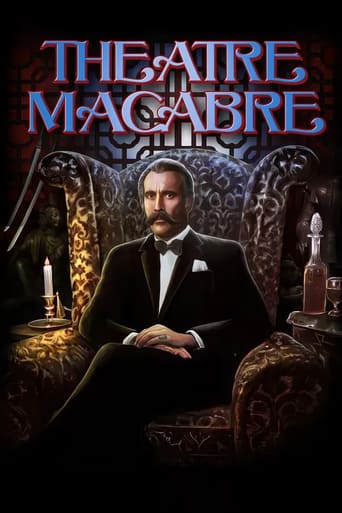
Christopher Lee hosts this horror anthology series from Poland with stories from various classic authors.

After Professor Kasuga is killed by fiendish aliens for plans to a super-rocketship, his children trek across Japan, protected by the second-oldest brother, Koji, who transforms into the super-cyborg, Silver Mask.
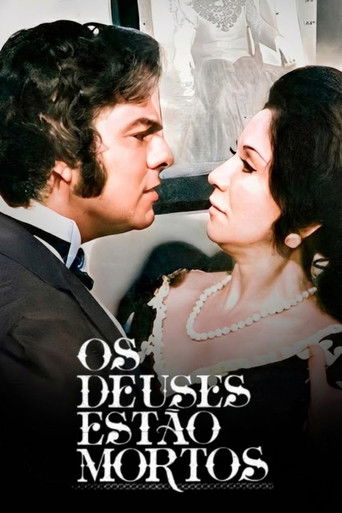
In 1889, a conflict arose between the decadent and ruined rural aristocracy following the liberation of slaves and a new class of wealthy individuals, comprised of entrepreneurs emerging from the republican industrial class, interested in free labor. In the city of Ouro Negro, in the interior of São Paulo state, the conservative, aristocratic, and monarchist Almeida Santos family, which traditionally dominated the region, began to lose ground to the Lobo Ferraz family, representing the nascent progressive and republican bourgeoisie.
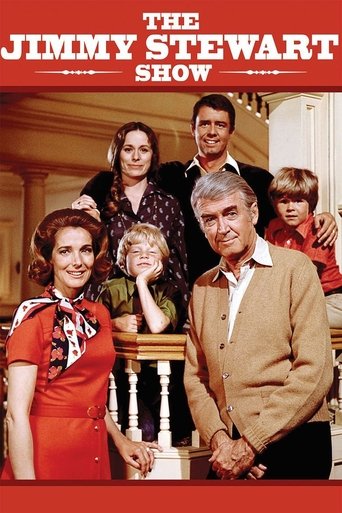
The Jimmy Stewart Show is an American sitcom starring James Stewart. Twenty-four episodes of the show were broadcast in the 1971–1972 season on the NBC network's Sunday night schedule, under the sponsorship of Procter & Gamble.
Hem till byn, written by Bengt Bratt, is Sweden's longest running TV series and one of its most popular. It is a realistic drama about people in a rural Swedish village and their daily life and romances and fights but also the consequenses of agricultural policy and other changes in the society. The series was first aired in 1971 and has since then been shown in eight seasons with three to five years between them, except a 14-year long intermission between 1976 and 1990. The 2006 season was likely the last. All the characters were played by the same actors throughout the series' run, and thus aged naturally with the actors. As the actors grew older and eventually died during the years, the characters that they played had also died at the start of the following season. The seven seasons between 1971 and 2002 were directed by Jackie Söderman and the eighth season of 2006 by Gun Jönsson, who herself portrayed one of the main characters in the series.
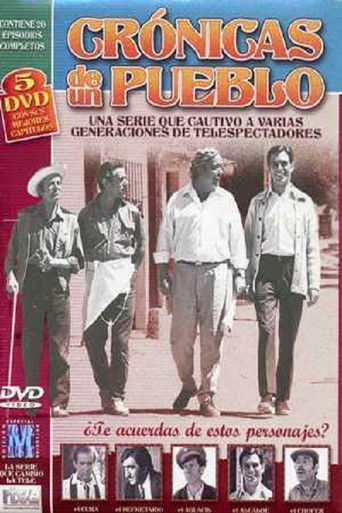
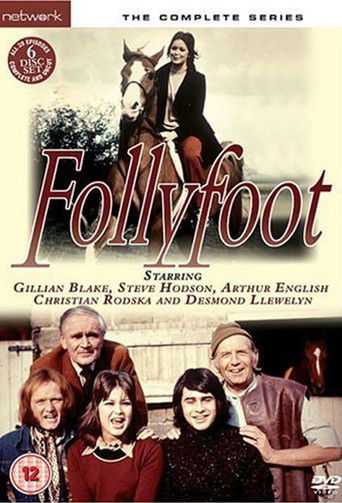
Follyfoot is a children's television series co-produced by the majority-partner British television company Yorkshire Television and the independent West German company TV Munich. It aired in the United Kingdom between 1971 and 1973, repeated for two years after that and again in the late 1980s. The series starred Gillian Blake in the lead role. Notable people connected with the series were actors Desmond Llewelyn and Arthur English and directors Jack Cardiff, Stephen Frears, Michael Apted and David Hemmings. It was originally inspired by Monica Dickens' 1963 novel Cobbler's Dream; she later wrote four further books in conjunction with the series—Follyfoot in 1971, Dora at Follyfoot in 1972, The Horses of Follyfoot in 1975, and Stranger at Follyfoot in 1976.
