
Sa'adia: Roots in the Homeland 1951
Set during the immigration waves of 1950s Israel, we follow Sa'adia, an immigrant child from Yemen, and Ruti, a young Gadna instructor who helps Sa'adia integrate into society.
Set during the immigration waves of 1950s Israel, we follow Sa'adia, an immigrant child from Yemen, and Ruti, a young Gadna instructor who helps Sa'adia integrate into society.

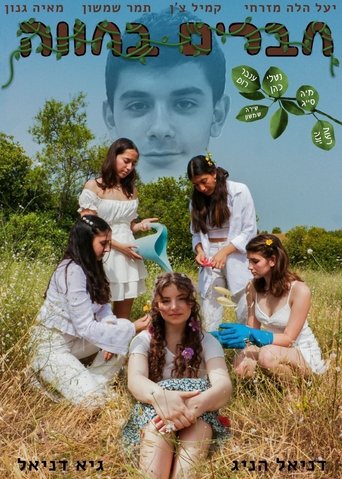
A group of young women sends a countless number of voice messages to one busy friend. While they complain to her about anything you can imagine, she tries to figure out how to be there for all of them.

Danny Kushmaro embarks on a thrilling journey in the highest city in the world, located in Peru in South America. At an altitude of 5,300 meters, a place without law and without infrastructure - everyone who lives there is looking for only one thing: gold

Danny Kushmaro arrives at the most mysterious and isolated place in the world, the Amazon. What happened in the 48 hours he was there? What did the tribe he met there by chance do to him? And what was in the potion they gave him to drink?
The film documents the last year of World War II and the Holocaust in Budapest, as depicted in the diaries kept by Jewish citizens living in the city and their neighbors. The diaries describe the daily degradation of the situation, the persecution of the Jews, the battles that destroyed the city and the disillusionment that marked the end of the war.

On October 4, 2001, Oksana Zelser, aged 38, boarded a flight from Israel to Russia for a family visit. A long-range missile fired at the plane caused it to crash into the Black Sea, claiming the lives of everyone on board, including 51 Israeli citizens. Oksana’s son, Iliya, was only 13 years old when he received the devastating news. And he can’t remember anything from that day. 20 years later, now married, Iliya decides to unlock his well-sealed Pandora’s box and find out: Who fired the missile that led to the plane crash, and why? Is Israel’s collective amnesia about this tragedy linked to the fact that most victims were new immigrants? And will he succeed in reclaiming the lost memories of his mother?

In Jerusalem, a performer dressed as a clown officer appears at rallies and high-pressure locations. She safeguards the protesters and fearlessly confronts armed situations while distributing heart-shaped stickers. During a volatile rally, she is incarcerated and her costume is forcibly removed. Despite her widespread recognition, her true identity remains a mystery. Following her release from prison, her motive is revealed.

The death of Jacob Israel de Haan is commemorated annually by both the ultra-Orthodox Jews of Neturei Karta in Jerusalem, and the LGBTQ community in Amsterdam. He is a pioneer for both. In the early twentieth century, he published the first LGBTQ novel in the Netherlands. He then returned to his Jewish roots, migrated to Palestine as a Zionist, but became the spokesperson for the Orthodox community, spearheading its fight against Zionism. He was still publishing queer poetry in Dutch. He was killed in Jerusalem in 1924, and his assassins were never caught. Today, never-before-heard audio recordings shed new light upon the mystery of the first Zionist political assassination.
In Neot-Semadar, every couple of years everybody switches houses. Nobody knows in advance to where he will move. The whole community is getting into a very personal and shaking journey, where packing the house and renovating is arousing an inner journey of self-observation and questioning about existential aspects of life.

Classic Israeli children's songs covered by Yael Bar Zohar, presented by a comedic pair of radio hosts who constantly bicker.

Based on the stories and songs of Haya Shenhav.

Based on David Grossman’s Itamar Stories series.
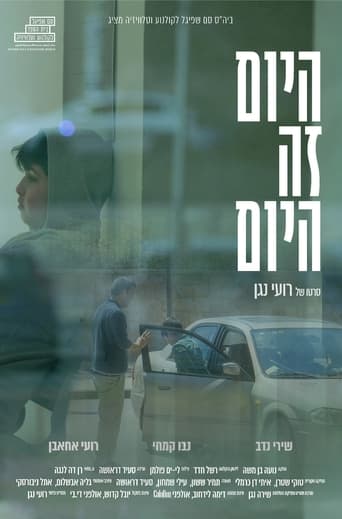
During an ugly divorce battle, Oded takes his son to the police station to file a complaint. When his son refuses to go into the station alone, Oded insists on finding a way for his voice to be heard too – even if it means sacrificing his son.

Dani accompanies her mother Gabi to plastic surgery. With sensitivity and courage she observes her older mother, who refuses to come to terms with her age. They argue about looks and beauty without reaching an agreement. Will Dani manage to shake off the legacy of conservative femininity that her mother is trying to instill in her? And will Gabi agree to accept her daughter as she is?
Talia, an outstanding soldier in the officers' course, goes on a navigation trek and is forced to cooperate with an unmotivated soldier.

