
Those who don't give up win 2025
A young, underestimated team unexpectedly transforms into an unstoppable force, staying undefeated for months and fighting for promotion until the final whistle.
A young, underestimated team unexpectedly transforms into an unstoppable force, staying undefeated for months and fighting for promotion until the final whistle.

A man wakes up and begins his morning routine while the radio plays the day’s news.
Armed with a gun he finds thrown in the corner of the block of flats where he lives, Nae sets off on a nocturnal adventure through the city. Influenced by his cinephile imagination, the reality of the almost deserted streets merges with a noir drama atmosphere he obsessively watches. Projected into the grey landscape of Bucharest in the late 1990s, the tragic and absurd action of Cristian Lucian Dobrovicescu's short film is cut out and stylized in the manner of comics.

A documentary which aims to dig deeper into the origins and meanings of traditional Moldovan ornaments.
A father and his children are preparing for the New Year. The eldest daughter is almost 30 years old and is used to playing the role of mother to the others, sacrificing her education to raise them, after the death of her real daughter. The second daughter is in high school and has difficulties in physics, for this reason she is punished to stay at home and solve problems in this subject. Of the two boys, one is the pride of the father, being the first and only student in the family. In a cordial atmosphere, punctuated from time to time by surprising musical fragments, the story develops around daily events. But the very next day, the appearance of a young woman who is important to the eldest son inspires the father to reconsider the sometimes too authoritarian relationship he has cultivated with his children.
The film begins as a cultural reportage of the most conventional kind, with a series of frames filmed around Peleș Castle, set to classical music and accompanied by a commentary describing the museum's ceramic collection. What is surprising in this construction is the unusual effect that the natural setting, chosen as the original backdrop of the presentation, has on the exhibits. Removed from the museum and displayed outdoors, the objects fail to resonate with nature and stand out like anomalies in the wintery, postcard-like landscape. But the romantic surplus of Chopin's music, which is added to the increasingly abstract visual compositions, with vases, trinkets and precious tableware fancifully placed in the water of a stream and among snowy fir trees, represents an at least extravagant attempt to deviate from the aesthetic norm.
Two identical hotel rooms, two phone conversations, a single door and a single point of view from which all these glimpses of days in the lives of two strangers are captured: a man in transit through an unidentified provincial town (we only get to know that it's somwehere in the mountains) and a woman who came from far away to seek a better life, who makes love for money every night. The film's visual minimalism, the elliptic, fragmented narrative structure, the lack of a clearly-articulated theme turn this experiment into an early exemplar of a certain type of modernism, which would reach its peak in Romania only two decades later.
Fired from the editorial board of a humor magazine because he isnțt funny enough, protagonist Vică remains unemployed until he accidentally reunites with an old acquaintance on the muddy streets of Bucharest in winter.
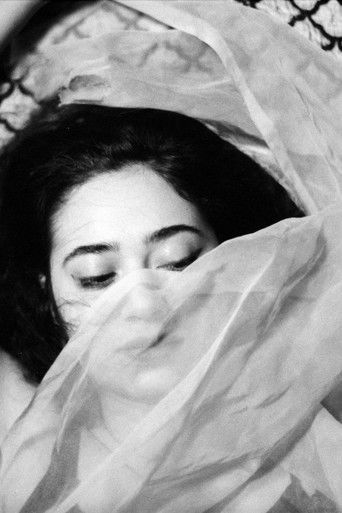
Through an oneiric and experimental lens, the filmmaker confronts her own experiences of harassment and institutional control, exploring how these encounters shape perception, body, and agency. Inspired by the photography series of the Romanian visual artist Geta Brătescu, the film navigates opacity and vulnerability, creating a reflective space where trauma is both embodied and mediated through artistic practice. By blending personal narrative with abstract black and white analogue photography, the work opens a dialogue about witnessing, control, and resilience, offering a meditation on the subtle violences that mark professional and intimate spaces.
In the aftermath of a hunting expedition gone wrong, three men must reconsider their friendship, revealing each other’s strange and twisted secrets.
Bridges are built to connect people, unless it is forbidden to cross them. The towns of Sighet in Romania and Ukrainian Slatina are separated by the river Tisza. A recently rebuilt bridge is supposed to not only reunite the two towns but also bring back together friends and relatives who have been divided throughout history by various political decisions. The former bridge was destroyed by German troops in 1944. After WWII, the border was closed. For 50 years there was nothing but silence between the inhabitants of Romanian Sighet and the city of Slatina, which then belonged to the Soviet Union. The film documents the long, often absurd and eventually vain struggle of the local inhabitants and politicians to reconnect the two communities.

“Cinema, Poetry, and Trains in Tîrgu Neamț” might serve as the subtitle for this film, which Copel Moscu composes in a deliberately atomised manner, capturing the rhythm of a small provincial town in late-1980s Romania: cinema as escapism, pouring rain à la George Bacovia, and a vague love story between a woman projectionist and a railwayman come one after the other over the course of this somewhat comical elegy, whose meanings do not achieve the poignant depths of Moscu’s other films.
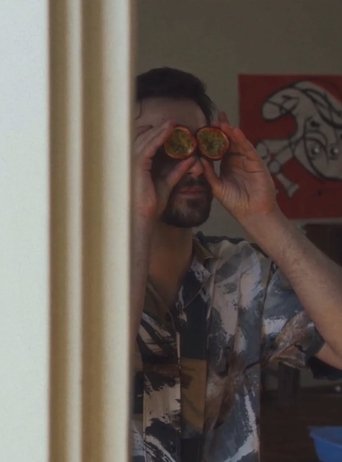
What do you see when you listen to the radio? What do you hear when you look at the image of water? Like a crossword, this film is made up of a series of questions and answers that, viewed from a distance, seem chaotic and meaningless, but put into relation to each other become simple truths.
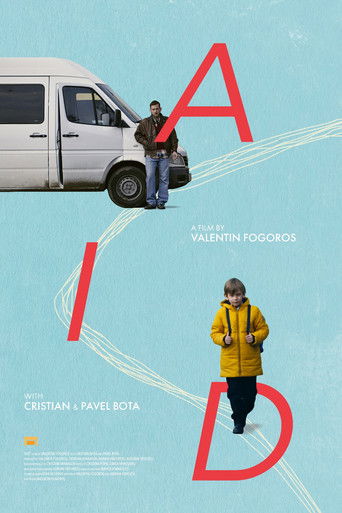
Disguising his smuggling operation as humanitarian aid, Fane ventures into Ukraine to retrieve contraband cigarettes. His mission is complicated when a young refugee, Oleh, sneaks into his van with no way for them to understand each other.
Claudia confronts her phobias and fears, and a bathtub filled with water will convince her that, in the end, everything can turn out all right.
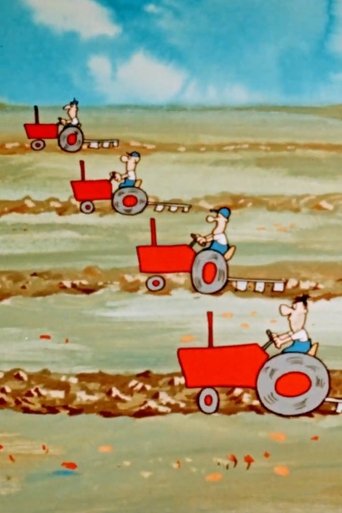
Animated labor protection film about the dangers of driving a tractor while in a state of ebriety or tiredness. Produced with the support of the Ministry of Labor.
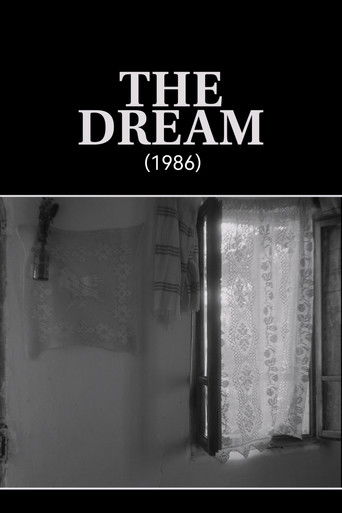
Dreamlike and experimental film essay.
On a brief visit to her home country, Gabi learns she can only see her son for one day instead of three.
