
Sanger Circus Passing Through Inverness 1900
The parade of carriages, costumed riders, and exotic animals passing over the bridge at Inverness, Scotland, has attracted a crowd, despite the rain.
The parade of carriages, costumed riders, and exotic animals passing over the bridge at Inverness, Scotland, has attracted a crowd, despite the rain.
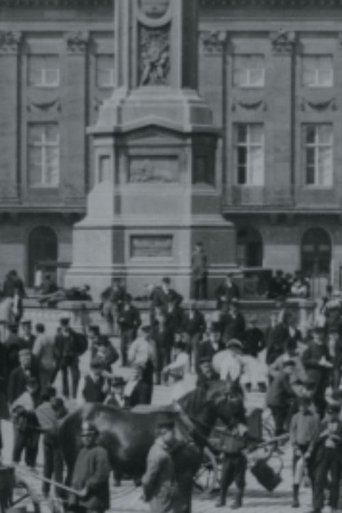
Dam Square in Amsterdam, bustling with pedestrians and horse trams.
Pennsylvania's historic Horseshoe Curve, photographed by an Edison cameraman in 1900.
unknown director

Spanish lost film directed by Ángel García Cardona. There is, however, a fragment that could correspond to this film.

A "lady" undresses for bed.
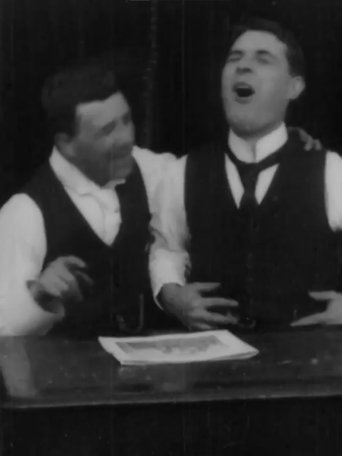
Two men lose it laughing at something in a magazine

A couple of clowns try to ride a pennyfarthing around a stage, while fighting.
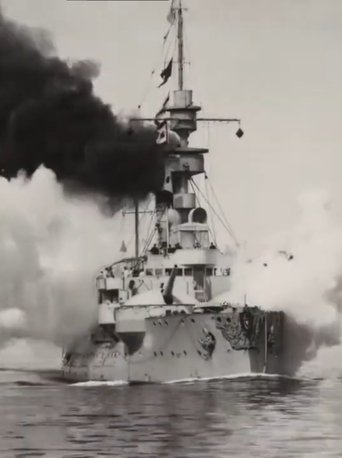
This British Bioscope short from 1900 is a crackerjack piece, on an order with 1903's FIREBOAT 'NEW YORKER' ANSWERING AN ALARM. It's little more than a perfectly framed picture of the Odin slowly leaving harbor, with all her guns ablaze in the roiling clouds and flashes of cordite.

A short film

A short film
A scene takes place in front of a cafe; only one performer.
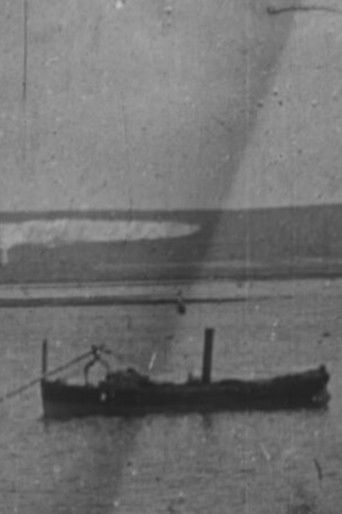
An explosive bit of early war film. These two exciting snippets were potentially part of a much larger action extravaganza. Originating from Alfred West's early blockbuster (two million people had seen it screened at Regent Street - by West's own count), they may have come from a series called 'Our Navy At War'. As the catalogue boasts, "It was shown... before an audience consisting of Naval officers and men from the various ships, who spoke in the highest praise of the truthfulness and realism of the various scenes." These excerpts are perhaps from the film described thus: "There is a terrific explosion. The battle rages in detail."

An astonishing display of synchronised gymnastics. The looping, synchronised vaults on display here are truly mesmerising - thanks both to the skill of the gymnasts and the shrewd positioning of the camera. Military and athletic displays were a popular subject for film from its earliest days, and this demonstration works as visual spectacle and study of movement.
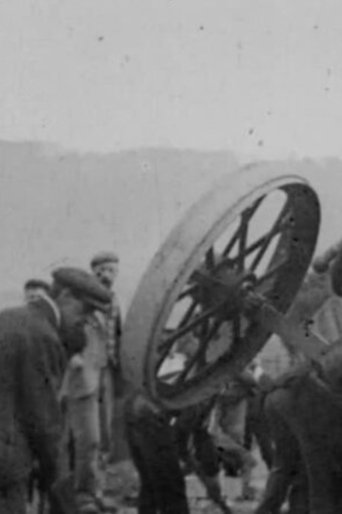
In the early days of films, most regional film showings happened at the fairground. The Travelling Cinematograph of Bioscope was a popular attraction, so it is no wonder that a camera was on hand to record this salvage operation. The film shows a Burrell's Showman's Road Locomotive - used for hauling fairground equipment from site to site - being rescued from a ditch. The sophistication of the shot sequencing suggests either a later filming date than 1900, or at the very least some fortuitous in-camera editing. As a record of an incident of life on the road for the early champions of film, it is invaluable.
It's a demolition derby, as two giant industrial chimneys come crashing down to earth. Although this is dynamite footage, no explosives are used - the chimneys are shored up by pit props which are then set aflame. The scurrying figures from the base of the chimney in the first scene offer a real sense of the scale of events.
Victorian filmmakers loved few sights more than crashing waves. Who those filmmakers were in this particular case is not documented, but they have chosen two fine vantage points from which to capture the scene. Unfortunately the excellent compositions are not well served by the exposure – moreover, sadly the nitrate print was decaying by the time it arrived at the BFI over forty years ago. The unsteadiness of the image was in that original print and therefore also in the copies made from it. For all its photographic flaws, the excitement of the film is still palpable.
Panorama of the quai de la Seine and the foreign pavilions of the Exhibition: Sweden, Monaco, Romania, Spain.
