Kean

Kean 1910

1

The film is loosely based on Alexandre Dumas’ play about the celebrated actor Kean, who moves effortlessly through all walks of life in 1830s London. One evening he’s in the company of counts and princes, and the next he’s enjoying the company of poor artists at the city’s pubs. A series of infatuations drive him into a complicated love drama. (stumfilm.dk)

1910

The Abyss

The Abyss 1910

6.30

Magda, a piano teacher, meets Knud, a parson’s son, who invites her to spend the summer at his parents’ parsonage. When a travelling circus stops in the village, Magda leaves the meek Knud for the dashing circus rider Rudolf. But circus life with Rudolf quickly turns out to be anything but happy, and Magda comes to a tragic end.

1910

Her Indian Mother

Her Indian Mother 1910

10.00

The scenes are laid in the Hudson Bay country in comparatively recent years and cover the life of a Hudson Bay factor, showing him as a young man assuming his business in the wilderness and, as was common in those days, taking an Indian wife that he had purchased of her father in Indian fashion.

1910

Bonsoir

Bonsoir 1910

5.00

A woman becomes slowly visible in front of a black space. She points a wand and spells the word “Bonsoir” in colored letters formed from flowers.

1910

Frankenstein

Frankenstein 1910

6.10

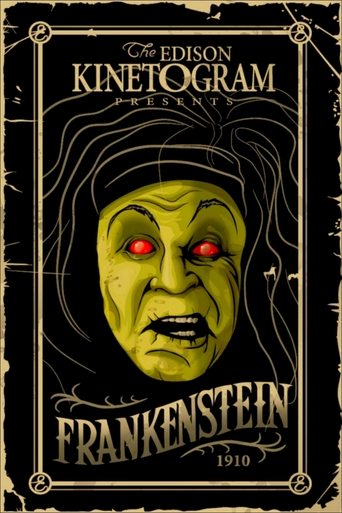
Frankenstein, a young medical student, trying to create the perfect human being, instead creates a misshapen monster. Made ill by what he has done, Frankenstein is comforted by his fiancée; but on his wedding night he is visited by the monster.

1910

Emigrants

Emigrants 1910

1

A short, cautionary tale of emigrating to America.

1910

Salomé

Salomé 1910

5.40

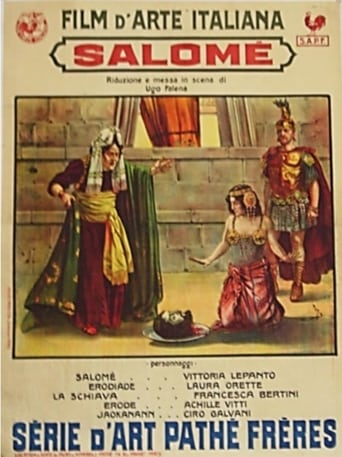
Based on Oscar Wilde's version of the story, what is noteworthy is the sheer luxury of the production, an attempt to capture the wild and weird Aubrey Beardsley illustrations that transfigure the work. The sets are elaborate, with stonework and palm trees and draperies. There seem to be dozens of dress extras, courtiers at Salome's dance and soldiers.

1910

In the Bath

In the Bath 1910

4.43

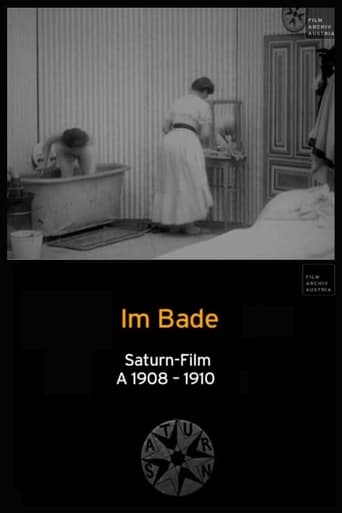
A woman undresses, takes a bath, gets a massage, and relaxes.

1910

His Last Burglary

His Last Burglary 1910

1

Mired in poverty and no longer able to endure the hardships that this situation brings upon their baby, a young man chooses, with his wife, to give up the child by abandoning it in a rich household. A burglar who himself has just lost a child, breaks into this house and decides to ease the mourning of his wife by stealing the abandoned baby. Soon after, the young man and his wife receive word of their sudden fortune. They then try to find their child, but their search is in vain. Faced with the desperation of his wife, the young man calls a doctor whose coachman is none other than the burglar, since reformed. When the burglar learns the cause of the young woman’s misery, he realizes the gravity of his crime and convinces his wife that they must return the baby to its parents.

1910

White Roses

White Roses 1910

1

Harry loved Betty, and vice versa, but Harry was very shy. No matter how he tried, he never could muster up sufficient courage to propose, despite the fact that Betty always endeavored to help him out. An idea! He writes his proposal, and invents a sentimental code of signals. The letter reads: "If you will accept me, wear red roses; if you are in doubt, the pink. If you do not love me and reject me, wear the white."

1910

The Smile-O-Scope

The Smile-O-Scope 1910

5.20

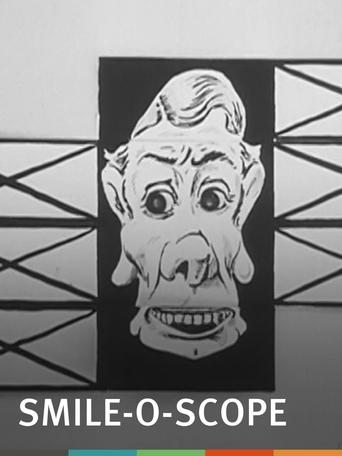
A British clown invents a device which shows all people in grotesque sizes.

1910

The Kid

The Kid 1910

1

To Walter Holden since the death of his wife, falls the responsibility of raising his only child.

1910

A Western Welcome

A Western Welcome 1910

1

A short silent film produced by Gaston Mèliès in San Antonio.

1910

Sumurûn

Sumurûn 1910

1

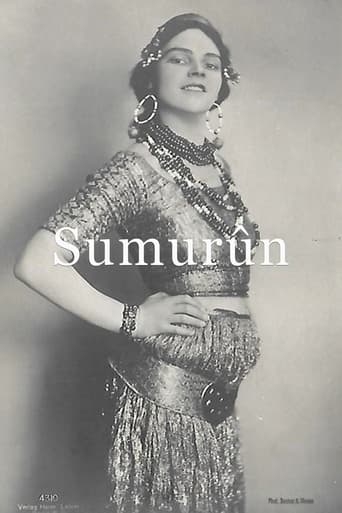
Earlier version of Reinhardt Orientalist pantomime, later remade by Lubitsch: a pathetic hunchback performer and a flirtatious dancing girl get involved at the court of a despotic Arabian desert sheikh, complete with sinister eunuchs.

1910

Mr. Crack

Mr. Crack 1910

5.00

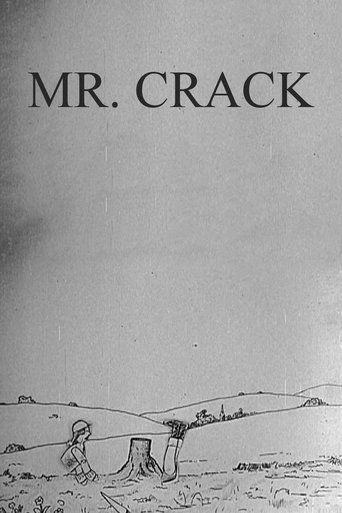
In the course of various unfeasible adventures, Monsieur de Crac finds himself comfortably installed in Mount Etna, smoking a pipe, when he is confronted by the Monster of the Volcano, who throws him down into the bowels of the earth and out into an ocean on the other side of the world

1910

A Christmas Carol

A Christmas Carol 1910

6.41

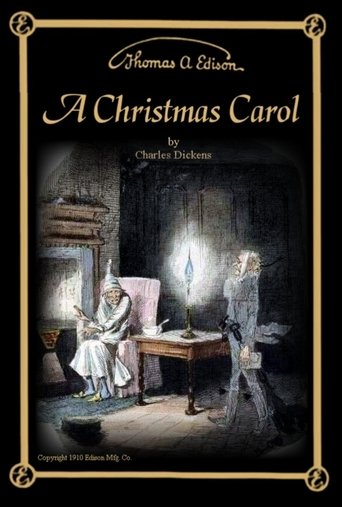
Miser Ebenezer Scrooge is awakened on Christmas Eve by spirits who reveal to him his own miserable existence, what opportunities he wasted in his youth, his current cruelties, and the dire fate that awaits him if he does not change his ways. Scrooge is faced with his own story of growing bitterness and meanness, and must decide what his own future will hold: death or redemption.

1910

The Impalement

The Impalement 1910

1

Bored by a doting wife who is too eager to please (she even puts a cigar in his mouth and lights it), Mr. Avery falls for a dancer, and is invited to a party she is throwing in his honor. Over her husband’s shoulder, the wife reads a letter from the dancer, with the telltale salutation "My dear boy", and threatens to poison herself if he goes. To show that he is not to be deterred by such a melodramatic trick, Avery takes the vial and pours the poison into a wine glass, saying if she decides to do this, why not do it with style? He then leaves, but not without misgivings. At the party the dancer offers him wine in a glass which looks exactly like the one he had handed to his suicidal spouse. This triggers an attack of conscience, and Avery rushes home, to find his wife in a swoon which he takes for her threat fulfilled. Madly, he bursts into the dancer’s party, confesses assisted suicide, and dies.
1910

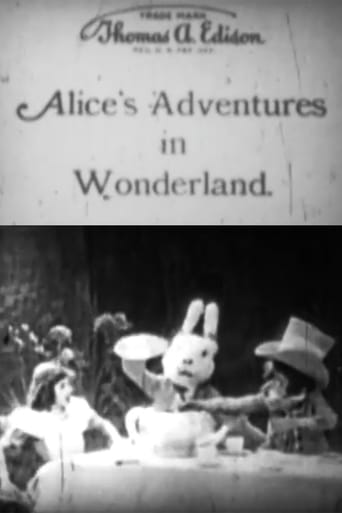
Alice's Adventures in Wonderland

Alice's Adventures in Wonderland 1910

6.19

Made by the Edison Manufacturing Company and directed by Edwin S. Porter, the film starred Gladys Hulette as Alice. Being a silent film, naturally all of Lewis Carroll's nonsensical prose could not be used, and, being only a one-reel picture, most of Carroll's memorable characters in his original 1865 novel similarly could not be included. What was used in the film was faithful in spirit to Carroll, and in design to the original John Tenniel illustrations. Variety complimented the picture by comparing it favorably to the "foreign" film fantasies then flooding American cinemas.

1910