The Songs Sung on the Frontline

The Songs Sung on the Frontline 1971

1

In this courageous and lyrical story about war and love, written by screenwriter Kim Seul Yun and director Min Den Shik, one can feel both the rich plastic culture of the Koreans and the peculiar authenticity of folk melodies.

1971

Yellow Brotherhood

Yellow Brotherhood 1971

1

Color UCLA Student Film, Preserved by the UCLA Film and Television Archive. A short documentary featuring the Yellow Brotherhood, a revolutionary Asian-American group inspired by the Third World Liberation Front and the Black Panther Party. Offering services to Los Angeles Asian-American young people, the group believed strongly in self-determination. The documentary also features an Asian-American motorcycle gang and interviews with members about white supremacy and Internment Camps. Possibly filmed at Ats Sasaki shoot pool at Holiday Bowl, a Japanese American bowling alley. Made as an Ethno-Communications film production.

1971

Im Märzen die Bäuerin

Im Märzen die Bäuerin 1971

1

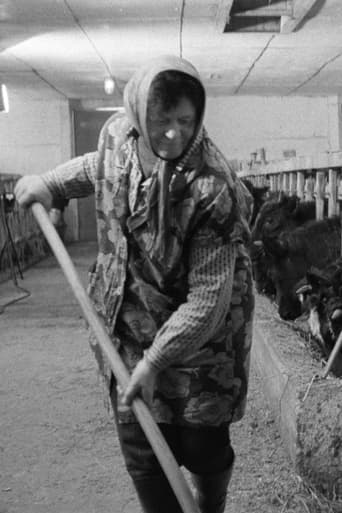
Documentary focuses on women farmers from the village of Worin. Even on International Women's Day, March 8, these women do not want to hand over responsibility for their animals to the men. Everyday observations are explored in depth in conversations with the LPG chairman Bernhard Grönert.

1971

The Son Worshipers

The Son Worshipers 1971

1

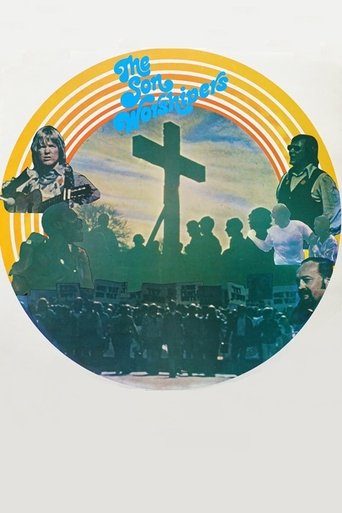
Documentary captures the moving of the Holy Spirit in the hearts of youth who call themselves "The Jesus People." It tells the story of their changes lives.

1971

Sisyphus

Sisyphus 1971

1

An animated cartoon of the Greek legend, which interprets the mood and style of Robert Garioch's poem.

1971

U-Bahnbau: Offene Bauweise

U-Bahnbau: Offene Bauweise 1971

1

Documentary short about the construction of a subway tunnel in Berlin, using the cut-and-cover method.

1971

Steel Ring

Steel Ring 1971

7.00

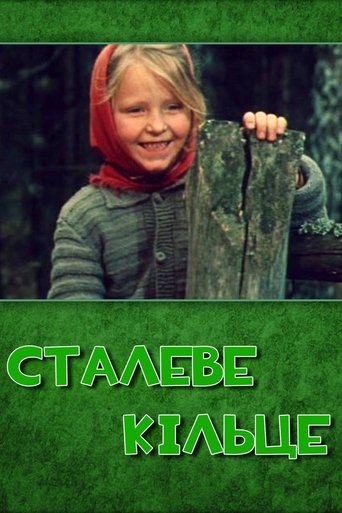
About how a girl believed in a miracle, and it happened.

1971

Vertical Room Pan

Vertical Room Pan 1971

1

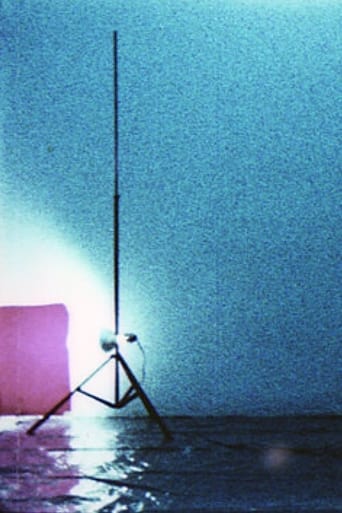
Vertical Room Pan was made in Haxton's San Diego studio in 1971. A device was made that allowed the camera to rotate around a horizontal axis. The resulting film is a 360 degree rotation of the studio in a vertical direction. This is somewhat analogous to the way the film passes through the camera. The film was first shown in the 5th Avenue space in downtown San Diego. The installation forced the audience to view the film over a six foot wall. The film was projected near the ceiling on a wall at the rear of the space The film is about the way the camera describes space and the control of the way the viewer is oriented to the film projection.

1971

Aai Ude Ga Ambabai

Aai Ude Ga Ambabai 1971

1

Director: Anant Mane; Writer: Anant Mane, Amrut Gore, Vyankatesh Madgulkar, Jagdish Khebudkar; Producer: Shivaji Gaikwad, Ashok Gore.

1971

Kasa Kai Patil Bara Hai Ka

Kasa Kai Patil Bara Hai Ka 1971

1

Directed by Datta Mane. With Jayshree Gadkar, Jayamala Kale, Jaisingh Mane, Gulab Mokasi.

1971

Adhikar

Adhikar 1971

1

Directed by Arun Vasudev Karnataki and Dinkar D. Patil. Starring Shammi.

1971

Mai Mauli

Mai Mauli 1971

1

Directed by Yeshwant Pethkar. With Chandrakant, Sulochana Latkar, Vikram Gokhale, Sushma Shiromani.

1971

Bajiraocha Beta

Bajiraocha Beta 1971

1

Directed by Raja Thakur. With Mandakani Bhadbhade, Amol Palekar, Surekha, Sharad Talwalkar.

1971

Circles of Satan

Circles of Satan 1971

1

A group of teens try a ritual but soon after get freaked out. In the coming days, the ritual starts to unexpectedly complete itself putting them in greater danger.

1971

Barguzinsky Reserve

Barguzinsky Reserve 1971

8.00

About the Barguzin Biosphere Reserve, located on the northeastern coast of Lake Baikal, among the attractions of which are the unique Siberian pine pine, hot mineral springs, rare grayling fish, Baikal seals and, of course, the famous Barguzin sable.

1971

Echo

Echo 1971

10.00

A jewel of Italian artist cinema long considered lost, Echo by Gianfranco Pardi was presented for the first time in 1971 at Studio Marconi. The music from the film, created together with the artists Mino Ceretti, Carlo Ruffini and Davide Mosconi, will then flow into the album Uno zingaro di Atlante con un fiore a New York, released by RCA in 1973. As Franco Quadri had already noted at the time, the structure of the film unfolds in three moments which, although contrasting, blend into each other harmoniously, from a visual and musical point of view. The first is of an exquisitely conceptual nature and focuses on the constructive values ​​of the architectural measurement of space; the second is characterized by a convulsive explosiveness bordering on pop and, finally, the third brings the gaze back to the natural order.

1971