Program #7

Program #7 1978

1

Between 1976 and 1982, Jane Veeder traveled the western mountains of the United States with Phil Morton. On these road trips the two would shoot video of their surroundings using a portable video recorder. Some of these video recordings of the western mountain terrain were used to produce the televised video piece known as Program #7. Program #7 was produced as a part of a larger group of videos known as The Electronic Visualization Center: A Television Research Satellite to the School of the Art Institute of Chicago. Program #7 was televised on Chicago Public Television as a part of a program which ran work by independent video creators. Program #7 was created using a Sandin Image Processor and a Bally Home Computer. Graphics generated using a Bally Home Computer would be overlaid overtop of the video recorded by Veeder and Morton using the Sandin Image Processor. The Sandin Image Processor would also be used to add varying patterns to the image.

1978

City Withered in Winter

City Withered in Winter 1978

1

An elaborate screenplay and an orthodox direction that avoids waste. And the right technique and actors to support it. The staff of the Keio 8mm Cine Club put all their energy into this 8mm feature film. The performance of Oyama Saiko, an actress with a strong presence, is rare for an independent film.

1978

Swimmer

Swimmer 1978

1

The swimmer is presented as a simple, genderless and isolated identity making new appearances natural, but which nevertheless contain a contradiction: swimming as a way of survival. The pictorial potential has been linked above all to a graphic preoccupation, and the sound illustration represents an important support to the basic idea.

1978

Arbitrary Fragments

Arbitrary Fragments 1978

1

Using highly-manipulated and over-processed images, Latham investigates the process of video as inherently fragmented. Weaving together various people’s impressions of the artist and her work, the work demonstrates important parallels between video, storytelling, and the formation of identity — all processes of active fabrication that blend “lies” and truth in the construction of a certain reality, history, or past. Labeling an image of herself talking as “her most recent explanation,” Latham addresses “the construction of her video personality” as an identity outside of herself.

1978

Resistance

Resistance 1978

1

Animated short film showing a hammer stymied by a nail that won't be hammered down.

1978

Forward

Forward 1978

1

The filmed image is liberated from the shackles of representation of an external reality, becoming autonomous and spatial; the sound drifts and is regenerated by its asyncronous but nevertheless intimate relation to the image. Here, the sound is not reduced to the secondary role of accompanying the image. It constitutes the sensory experience just as much as does the image. Fast motion, slow motion, superimposition, reflection, colorization, filtering and synthetic composition: a combination of effects that produces a long audiovisual perspective within just one sequence.

1978

The Stool Becomes the Ladder

The Stool Becomes the Ladder 1978

1

The Stool Becomes the Ladder was made in 1978, using techniques of video feedback, quantizing levels and chroma, and simple downstream text. The stool is transformed into a ladder.

1978

VICTOR HUGO ROJAS

VICTOR HUGO ROJAS 1978

1

Victor Hugo Rojas destroys a Warhol painting, as a sacrifice.NYC 1978

1978

Witblits & Peach Brandy

Witblits & Peach Brandy 1978

1

The story takes place in the Lowveld and is about the illegal burning and marketing of the sacred moisture, popularly known as Withond. A drinking war breaks out between two grumpy old men - A farmer against an Englishman. Uncle Koos and his daughter, Sopie, make a good profit from the sale of their white blitz, which they secretly heat in the valley and sell to the local hotelier. But one day Solly refuses to buy their stock. He has a new supplier, and this peach brandy is just as delicious as Oom Koos' white blitz - just cheaper. Oom Koos is shocked and it turns into a drinking competition to see whose moisture is the best. Very soon, Oom Koos and the Colonel are together, and Sopie and Peter, the Colonel's son, have to cheer each other up just before their father and get the local sergeant sniffed.

1978

The Record Collectors

The Record Collectors 1978

1

The psychology of collecting records - whether they be Classical, Jazz, Popular or Rock is seen in interviews with both dealers and collectors all entwined with Devensky’s visual and sound obsessions. A powerful Documentary which shortly shows that it really doesn’t matter what one collects, for their ‘missing needs’ are all the same. The final incident is an interview with a disgruntled 78rpm record dealer who tells an unforgettable story of why in enter this business culminating, when, in otter frustration, he proceeds to destroys his stock of recordings.

1978

Vasulka Video

Vasulka Video 1978

1

In 1977 the Vasulkas were commissioned by public television to create six half-hour programs (Steina, Objects, Digital Images, Transformations, Vocabulary, Matrix) for broadcast on WNED in Buffalo, New York. The resulting series, entitled Vasulka Video, is innovative and informative television. The Vasulkas introduce and contextualize their works and discuss their processing techniques, providing invaluable insights into their groundbreaking experiments with electronic image and sound manipulation.

1978

Organisation III

Organisation III 1978

1

First works with pure color. The slits are organized into vertical Yellow-Red-Blue strips which move laterally across the screen according to a pre-calculated order.

1978

Néroïcal

Néroïcal 1978

1

Women, multiple images, ironic metamorphoses of sea, land and air - bodies that flow, crumble, evaporate...

1978

Der Graf von Rü

Der Graf von Rü 1978

1

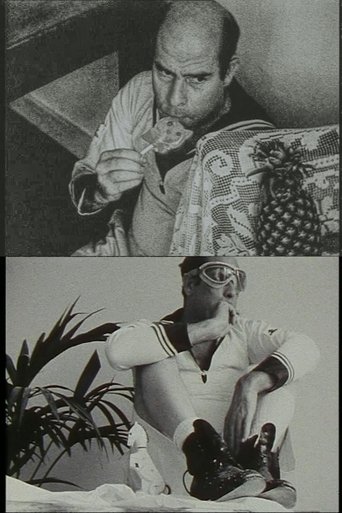
A man sits in his room. He is wearing clothes and combat boots. He listlessly sucks on a cat-shaped lollipop. The cat wears a red bow. A pineapple comes into play, later a porcelain horse. Outside, the train screeches through the snow. A version of the German folk song “Der Graf von Rüdelsheim” plays in the background.

1978

Fishs Eddy

Fishs Eddy 1978

1

Between ever-present splices, a circular mirror reflects a pendulating tire swing.

1978

Arrowcatcher

Arrowcatcher 1978

1

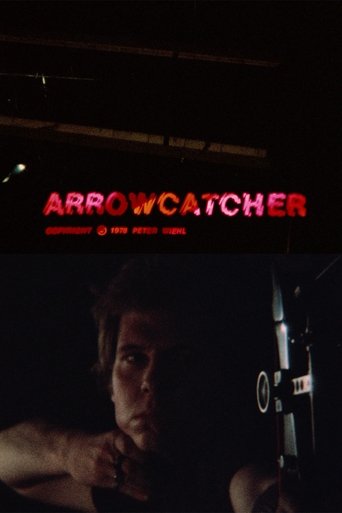
At venues such as Southern Exposure in San Francisco and Some Serious Business in Venice, California, Wiehl performed Arrowcatcher, creating a sculpture through shooting arrows into a rectangular structure that would visibly suspend their movement in time. He explored variations of form and multi-layer, parallel panes of material – cloth, Plexiglas, and glass with mirror base. Filmed with a high-speed military camera, the slow-motion film Arrowcatcher (1978) was screened prior to his live performance at the San Francisco Museum of Modern Art. The sculpture remained on view as part of Exposures, one of the group exhibitions presented within the major overview The Floating Museum: Global Space Invasion II (1978). The Floating Museum (1975-78), founded and directed by Lynn Hershman Leeson, worked with Wiehl on his site-specific project A Month Becomes An Hour at The Foothills Community Planetarium in Los Altos, California.

1978