
Attack And Destroy 1981
Philipino War Movie Trash frin the 80s
Philipino War Movie Trash frin the 80s
Via the New York Times: "[This documentary] deals with... the fiscal problems facing American cities as exemplified by what has happened in recent years in New York City and Cleveland."

Port Adelaide to Point Pearce. Cars, cops, cattle stations and driving rock and reggae. Two days in the lives of Aboriginal bands, US MOB and NO FIXED ADDRESS. These were two of the first Aboriginal bands to be writing in a contemporary style about their own lives and playing to a wide audience. In the film the band members play themselves and the events of the film are based on their real life experiences and those of their community.
Followers of the Rastafari way of life bring tales of Haile Selassie, Jah and Zion to the streets of inner-city Birmingham. Actor Hilary Minster turns reporter to discover the way of life for the Rastafari community of Handsworth.
Humoorikas film clip about fashion as a social phenomenon, the various functions of fashion, the relationship between fashion and people today, as well as the quirks and advantages of fashion. What was worn on the body, head, and hands in the 1980s, and how it was all obtained under the conditions of the Soviet era. The fashion illustrations are by artist Mari Kanasaar. The narrator text is read by Jüri Krjukov.
A short film by Wendy Hershey
The popular ceremony for the deceased which is still celebrated in Magasa di Valvestino (Brescia) in the manner of the 18th century.
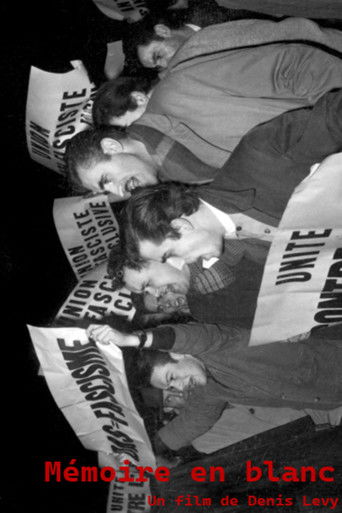
A moment of transition—from office to office: the administration and production of ship propellers gives way to the administration and production of films, the film office. The new Hamburg Filmhaus consists of a wide variety of rooms, staircases, corridors, and halls. Its new use by filmmakers is beginning to spread: posters, telephones, large tables with many chairs, full ashtrays...
Facelifts 1981. ETC experimental Tv Center wobbulator David Jones colorizer

Some Women of Marrakech is an ethnographic documentary that explores the everyday lives, social roles, and personal experiences of Muslim women living in Marrakech, Morocco. It was made by an all-female film crew, which was unusual for its time, allowing access to women’s private, domestic, and social spaces not typically filmed by male crews.
A man is stalked by a flying cape in this short film with multiple endings.
In 1981, the city wanted to tear down the house at Billrothstrasse 55 - the bulldozers were already ready. The house was occupied for a short time, the police appeared and cleared. Afterwards interviews with Walter Seeler (SPD), the then legendary renovation commissioner in Altona, the press spokesman of the SAGA, the construction senator, etc. The house, built in 1857, when Altona was still Danish, was rescued, renovated, yellow facade, blue window frames, a residential project. The filmmakers now live there themselves.
A house squatting at the Green Hunter in the Schanzenviertel on May 29, 1981. The following night the house was cleared by the police.
The great Brokdorf demonstration 28.02.1981. “The media do not miss an opportunity to set the waves of mind in motion: The battle for Brokdorf! Despite the ban on demonstrations: 100,000 people in Brokdorf. All criminals? Our film is an examination of television reporting and its consequences. We, a group of nuclear power plant opponents, made this film because we got angry. The anger when looking at the television screen, where the coverage turns the world upside down; the anti-nuclear power plant movement is defamed and criminalized; - Dissidents are dismissed as utopians, Stone Agers, enemies of the state and perpetrators of violence. What drives the responsible editors, the “makers” to this kind of reporting?
The intermittently heard voice-over talks about a woman's self-awareness - being unable to know if she has really changed or not. The images are esoteric and hard to interpret: young women in black in various urban settings, something moving rhythmically. A personal, yet intriguing film.
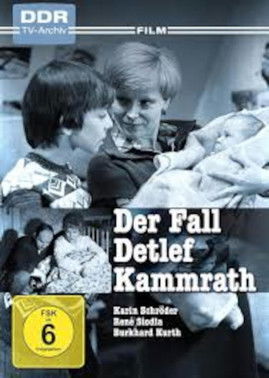
Until he was 11, Detlef Kammrath (René Siodla) had a carefree childhood. But now his parents have decided to go their separate ways and divorce - a catastrophe for the boy. The court awards custody to his mother (Karin Schröder), but Detlef harshly rejects his mother's new partner (Gerd Grasse). He sees him as the person responsible for his unhappiness. Hoping to improve the family atmosphere, his mother forbids the boy from meeting his biological father; this leads to Detlef's absolute despair, and he becomes a "case" for child welfare services.
The film begins as a portrait of a man classified as "mentally ill." During filming, the dynamics shift, and the film becomes the story of a relationship.
Documentary on the Atlanta Boy Choir's tour of Italy during the summer of 1981.
