
From Iceland to Brazil 1982
A documentary about Icelandic immigrants who moved to Brazil in the 19th century. Their path is traced and a visit paid to some of their descendants.
A documentary about Icelandic immigrants who moved to Brazil in the 19th century. Their path is traced and a visit paid to some of their descendants.
A monster goes on a rampage!!!!!!
The concern here is to try to make the space between the wall and the puddle to be connected. The image of the person on the wall picking up pebbles and tossing it to the area of the puddle having ringlets of water appearing.
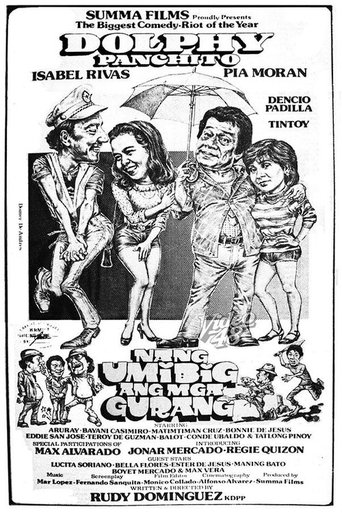
MAY-DECEMBER AFFAIRS TAKE A COMIC TWIST IN THIS COMEDY.
INVISIBLE is based on the prologue of the classic novel, Invisible Man by Ralph Ellison. In adapting this portion of the novel, the film spotlights the nch variety of Black culture upon which it draws, simultaneously transmitting the underlying rhythms of the prose. The film deals experimentally with internal and external; that is, what the narrator sees as reality on the outside is at the same time being felt (and shown) from the inside of his being. This is also a techmgue characteristic of Ellison's novel.
Part one of Edwin Cariati's Diary of an Autistic Child cycle.
A film by David Gerstein
This film was originally shot with unusual Fuji single 8mm film and developed from the maker’s experiments with unconventional projection speeds that were made possible with the Bolex “toaster” projector. By incorporating a serendipitous laboratory event, the resulting film emerged from the maker’s submission to a constructed accident. She ultimately rephotographed, enlarged and altered the small gauge footage using an optical printer.
A rebuttal to the Ntozake Shange play For Colored Girls Who Have Considered Suicide When the Rainbow is Enuf, which inferred that Black men were the cause of their women considering suicide. My film takes the position that everyone is ultimately responsible for him or herself, and women, just as men, can be the cause of a relationship's breakup. The film's structure is similar to a television commercial, but unlike a commercial, the actor sells a point of view rather than a product.
"In Zdravic's film we see imagination reconstitute Nature through Technology. The process is complicated; cruel, yet caring, beautiful and grotesque. The result– a hand, let us say, whose missing thumb is now a toe– is at one and the same time magnificent in its revobered grave and monstrous in its form. Looking at such an image, we must question all 'natural' sentiment and aethetic 'givens,' for Zdravic's film has shown us the deeper beauties of imperfection." -Dick Blau
A film about three blind women struggling to survive in Paraíba.
A film about the consumption of crab in Paraíba.
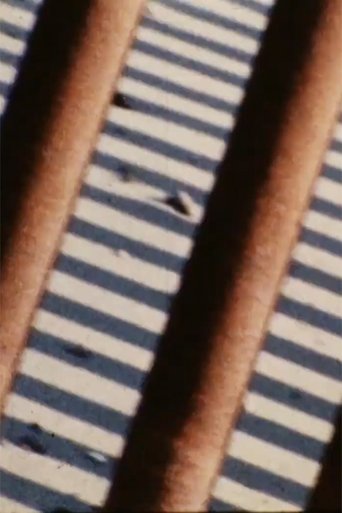
East Coast responds to the textures, forms and elemental light play observed along a stretch of coastline in Happisburgh, Norfolk. It was first screened on BBC 2 television in the UK, where it was likened to the work of visionary film maker Pat O'Neil and his innovative multilayering of images using optical printing. This film creates similar effects by exposing each roll of film up to five times, using a Bolex 16mm camera. The film opens at Wells Next the Sea, and observes beach life in the gaps between the long row of beach huts. A fast film stock adds an intense painterly grain to the scene. The movement of waves drying on sun bleached sand are overlapped and rendered as kinetic abstractions. Each sequence is accompanied by a montage of natural sounds, which seek to suggest a musical equivalence of treatment, alongside the visuals.
8mm film by Swiss artist Roman Signer.
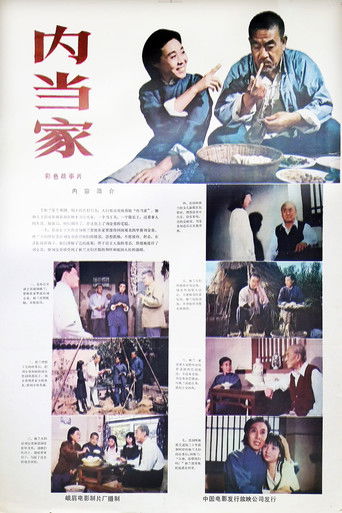

A film by the legendary cinema studio KyivNaukFilm, which popularized complex science concepts, and the explanation of what cybernetics is, not just as a “science, but also as a certain position, attitude to the world.
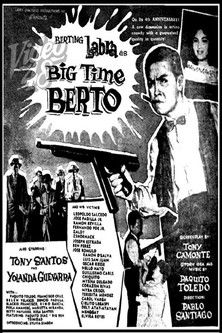
Bigtime Berto: Directed by Angel Labra. With Vivian Velez, Berting Labra, Paquito Diaz, Rodolfo 'Boy' Garcia. A loveable small man is a big spender.
The daily lives of a group of mentally disabled adults in Chita, Aichi Prefecture. 45 year old Toki strictly observes a daily working routine of simple tasks, straightening books on shelves in a book store, and visiting a regular circuit of pachinko parlors in order to empty their ashtrays. Yanagisawa introduces us to each of the film's subjects in a similar manner: 51 year old Kayo for instance, who fends off everyone with a bamboo stick. The community came into existence quite gradually, inspired by an exchange set up by some of the parents. Overcoming the objections of the local government association, the residents move into a rented building and, working with their guidance staff, they decide to create a facility based on plans they themselves have drawn up. The group then figures out who should be assigned what task as they remodel and finally complete work on the building turning it into a communal work place they dub "Popeye House."
Japanese avant-garde, experimental short film.

