Three People Overpass the Mountain 1981
A small village during World War II. Due to deep poverty, some villagers engage in trade of goods, contraband, across the mountain border. A great gap opens between the villagers and those fighting the enemy.
A small village during World War II. Due to deep poverty, some villagers engage in trade of goods, contraband, across the mountain border. A great gap opens between the villagers and those fighting the enemy.
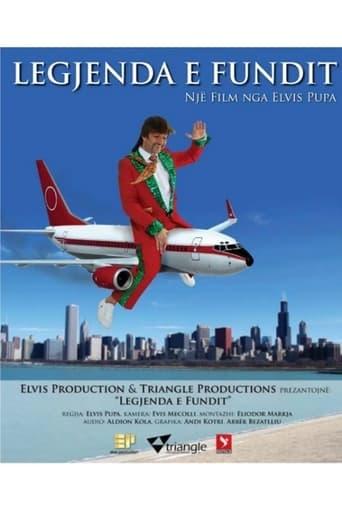
The adventures of an Albanian who landed in America.

Three different women talk about their relationship with makeup, its mundaneness, what it reflects, and how it affects them.
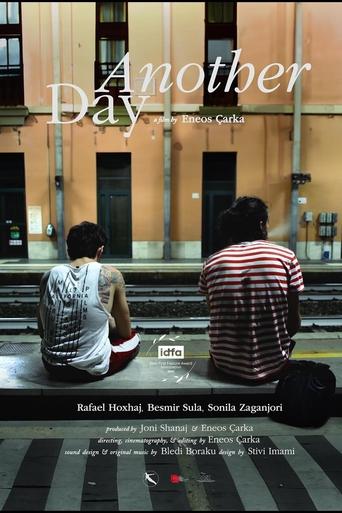
The two Albanian street performers and close friends, Besi and Rafael, have been traveling through Italy for years with their mime and acrobatics act as Ping and Pong. Sometimes they have trouble with the police, but more often they receive enthusiastic applause from their audience, who are eager to have their picture taken with the two likeable performers.
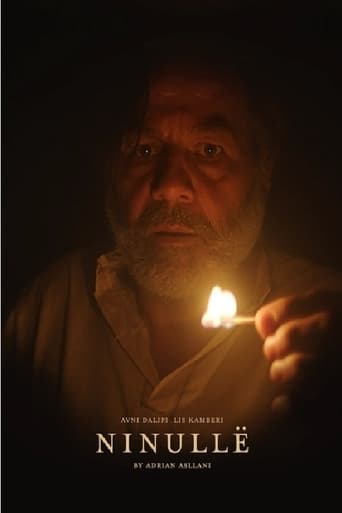
A passionate puppet-maker and his sick son live in a remote house. The boy can hardly sleep because he is afraid of the King in Black. The father is convinced that these are just fever dreams – until locked doors suddenly burst open.

Fran and Verka are the sole inhabitants of Vërnakollë - the place they first met many years ago, got married and have been living ever since. After the 1999 war in Kosovo, everyone but Fran and Verka left the village. Their story is a testament to the unbreakable bonds that tie us to what we call home and to where we belong.
44 years after the name of Albania’s dictator was painted on the Shpirag mountain, a group of villagers take the effort to climb the mountain and change the letters by overwriting a new word, referring to the past dictatorship and the current government.
Aleksandra is in constant conflict with society's norms and her own self. Every day, she rethinks how she ought to act in the modern world and what sort of impression she makes. I AM NOT JUST A… is an honest portrait of our reality.
When it left, death didn't even close our eyes centers on the testimonies of laborers working in Kosovo’s construction industry. They attest to how this precarious and unregulated labor market has serious human costs to those that have to seek its employment. Speaking of how they are expected to work hours—from 12, 13, 15, even up to 24 hours—and in conditions far beyond prescribed regulations or normal human expectations. One of the primary consequences is a high rate of injury, which then precludes future work in the industry—some workers even admit that they would rather face death than lose the ability to earn a living.
A short documentary focusing on the narratives and lives of 5 different women of different generations, offering an anthropological overview of traditions, customs and gender relations in Kosovo.
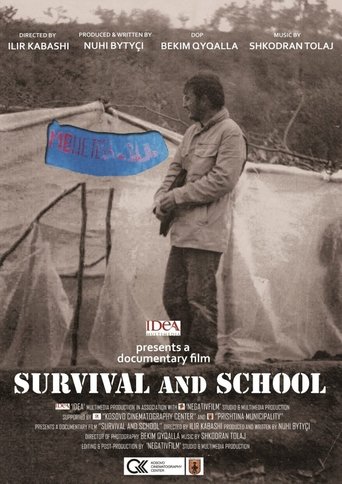
“Survival and School” is a beautiful story about the bad and evil times. An oasis of peace in war time. A nylon school built in the Berisha Mountains (Kosova) that had gathered around 200 pupils of the surrounding villages. The fate of people seen in the twenty-year-old authentic and timely shooting in quite different circumstances reveals the best the bad fate of man.

Three young people from Prishtina discuss what's it like to not be able to travel due to visa liberalization issues in Kosovo and what it means for them to have never been on an airplane.
Made during the violent civil unrest that rocked Albania in the 1990s, directors Nova and Faja have handcrafted a searing vision in which a demonic appearance brings chaos to a quiet hamlet.
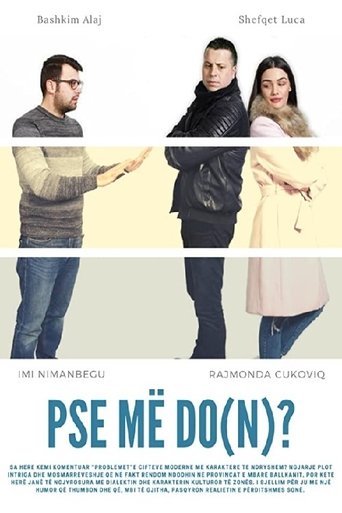
How many times have we commented on the "problems" of modern couples with different characters? Events full of intrigue and controversy that in fact commonly occur in the provinces throughout the Balkans, but this time are colored by the dialect and cultural character of the Ulcinj area.
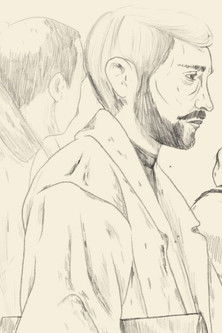
Through stark, intricate animation, Those Who Drown Cling to Foam illustrates the devastating personal account of a family forced to flee their home during the 1999 NATO bombings of Kosovo.
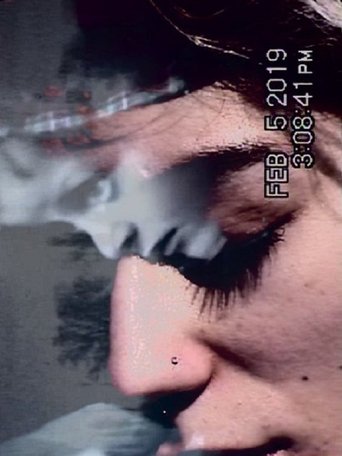
Helena was five years old when the Kosovo War began in February of 1998. She and her family were forced to flee their homes as Serbian soldiers swept the countryside, massacring ethnic Albanians and destroying their land. «Days of War» is a meditation on these experiences of war and displacement.
Four women, four heroines, who share a common fate. They have been brutally stricken by misfortune. It is not their shared past that brought them together, but it is “Hope” that keeps them alive, encouraging them to move on. “Hope” presents the different but powerful stories of Ferdonije, Auntie, Makfirete and Valentina. Although life can sometimes be very difficult, one must always try to find something to hold onto. Without hope, these four characters’ lives would have ended a long time ago. “Hope” has a power that even magic does not.
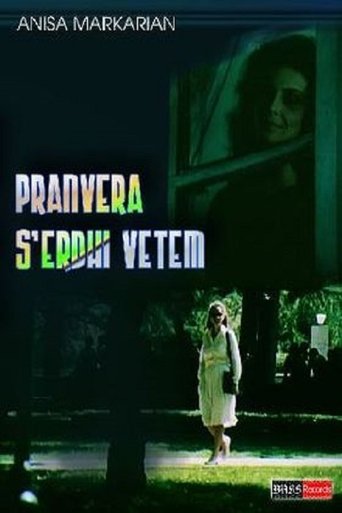
Irena, a young physicist, along with two of her colleagues, undertakes an important study far from home. She goes for a health check-up at the city hospital and learns that she suffers from leukemia. After recovering from her spiritual depression, she begins to come to terms with reality, appreciating every second of her life and the love she tries to avoid.
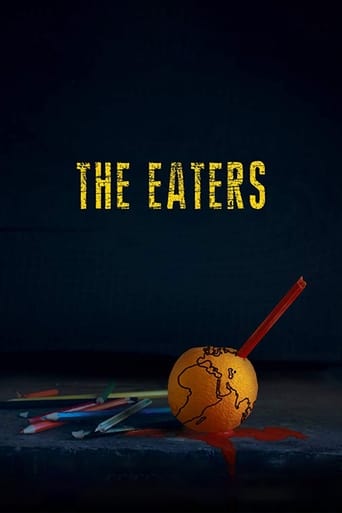
Nowadays, human race, all it wants is to eat, eat everything, and in a selfish world keep everything only to themselves. But things are about to take a different turn when the intelligent youth aspires to freedom and bright future.
