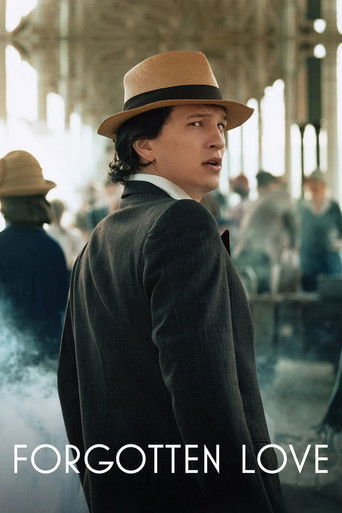
Forgotten Love 2023
A once-respected surgeon who's lost his family and his memory gets a chance at redemption when he reconnects with someone from his forgotten past.
A once-respected surgeon who's lost his family and his memory gets a chance at redemption when he reconnects with someone from his forgotten past.
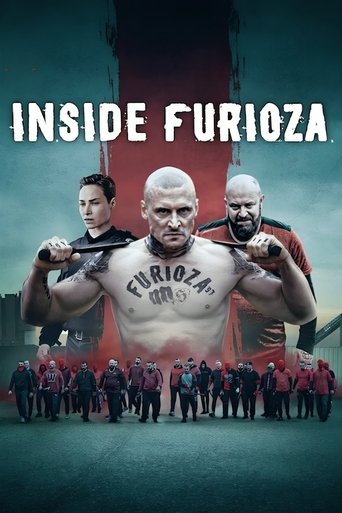
In the wake of murder, new Furioza leader Golden claims the reins of his violent and formidable hooligan gang and takes on a new focus across borders.
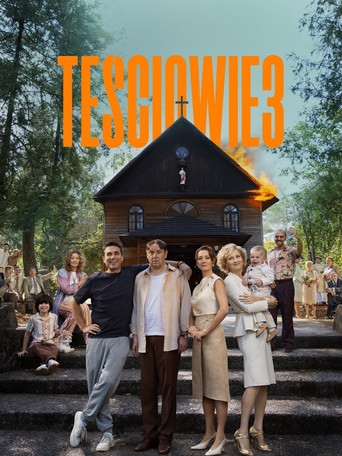
Wanda and Tadeusz host a christening for their granddaughter, tension simmering as they reluctantly invite Małgorzata and her psychotherapist friend Grażyna. Just when the family braces for a fraught gathering, Andrzej returns to Poland, stirring old conflicts and transforming the warm celebration into a battleground where no one is willing to back down.
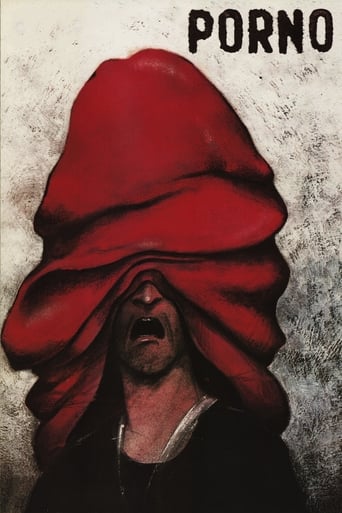
Michał, a mature man and father, is full of bitterness, regret, and longing for unfulfilled youthful dreams of true love. He reminisces about all his past lovers. With his first, Asia, he went on a seaside camping trip. He was 19 at the time, and she was two years younger. Despite his unambiguous advances, the girl resisted for a long time. Eventually, however, she gave in. For Michał, it was the proverbial pebble that caused an avalanche.
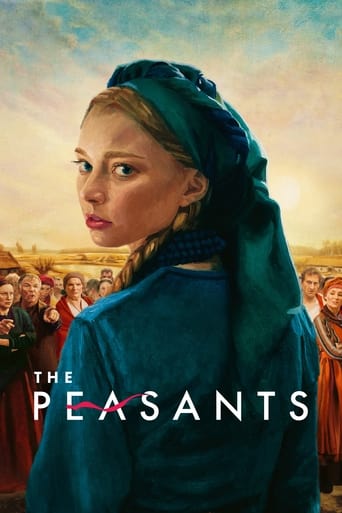
Peasant girl Jagna is forced to marry the much older, wealthy farmer Boryna, despite her love for his son Antek. With time, Jagna becomes the object of envy and disdain with the villagers and she must fight to preserve her independence.
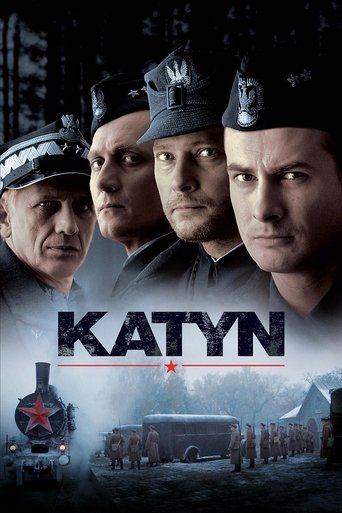
On September 1st, 1939, Nazi Germany invades Poland, unleashing World War II. On September 17th, the Soviet Red Army crosses the border. The Polish army, unable to fight on two fronts, is defeated. Thousands of Polish men, both military and government officials, are captured by the invaders. Their fate will only be known several years later.
In a rural Catholic village, young Gosia tends cattle and lives an innocent, sheltered life. One summer day, while bathing in the river, she is unknowingly observed by a mysterious painter. When he later reveals his portrait of her, Gosia’s initial shame gives way to curiosity, drawing her into an awakening of desire and a confrontation with temptation.
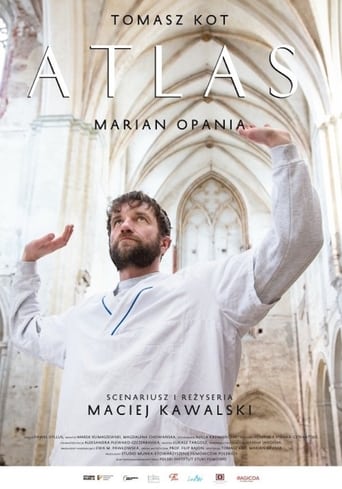
A remote, and a bit crazy to be honest, psychiatric hospital receives a curious patient —one who he doesn’t move nor speak but spends his days standing with his hands up. The only thing known is his nickname — “The Atlas”. In a word, he is a riddle and riveting one at that, like an itch you cannot quite scratch. Theories and informed-and-fact-based-gossip flourish all around the place. As luck would have it, so does the conflict as what to do with him. The situation is close to exploding, but the Atlas won’t stir. Or will he?
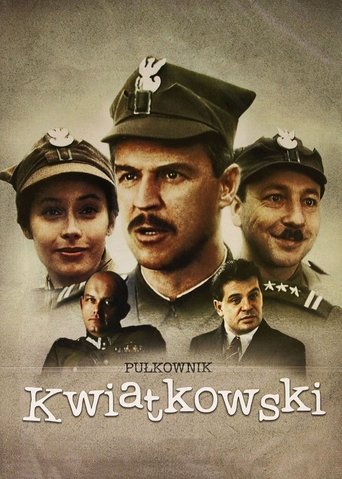
Military doctor Kwiatkowski, serving in a barracks hospital on the Western Territories, is rewarded with a week’s leave after successfully operating on Colonel Kiziora of the UB. He and his friend steal a truck bound for Warsaw, where among the ruins of his former home he meets his prewar neighbor Krysia, instantly falls in love, and, after a brawl with a Russian officer at a dance in the surviving “Polonia” hotel, pretends to be a high-ranking UB colonel to save face.
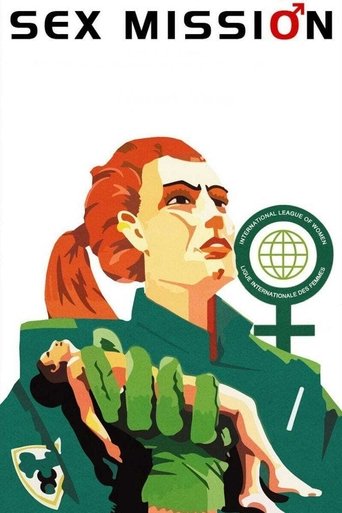
Two scientists are chosen as guinea pigs for a time experiment: they are placed in hibernation and should be brought back to life after three years. In the meantime, however, World War III breaks out and life has been wiped off the surface of Earth. When they wake up, it turns out that not only 50 years have passed but also that they are the only living specimens of the male sex in a new, underground society composed exclusively of women.
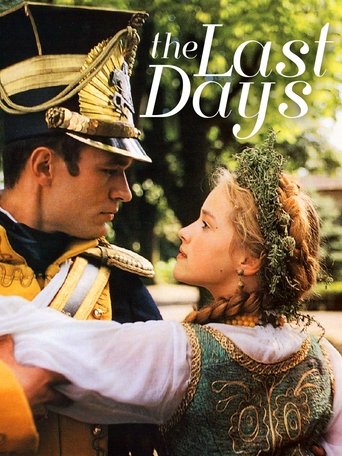
Romance brings two warring families together in this historical drama. As citizens fight for independence in 1810s Lithuania, Tadeusz, the son of a murderer, and Zosia, a young woman, come together for a wedding against a backdrop of changing politics, ancient traditions, and the uncertain future of a country.
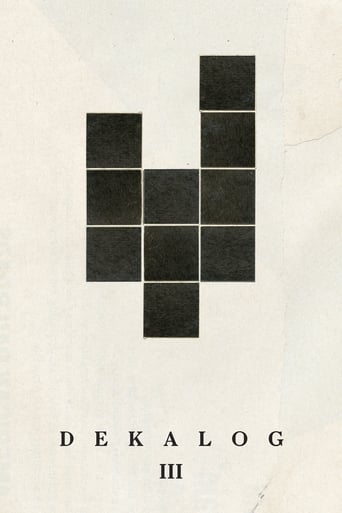
It’s Christmas Eve, and Ewa has plotted to pass the hours until morning with her former lover Janusz, a family man, by making him believe her husband has gone missing. During this night of recklessness and lies, the pair grapple with choices made when their affair was discovered three years ago, and with the value of their present lives.

Warsaw, Poland. Kamil, a street rapper who spends his time going from party to party, begins a love affair with Iwona, a wealthy married woman.
A father and daughter, Michał and Anka, have a unique intimacy, which the college-aged Anka is beginning to feel conflicted about. When she finds an unopened letter from her deceased mother, it seems to justify her attraction to Michał, who may not in fact be her father.
The film deals with the a clandestine Olympiade held in a German POW camp during WW II, housing many Poles, but also French and Brits. A spit and a Polish German lieutenant is added to the staff of a prison camp. He sees a Pole, the acknowledged leader of the Polish prisoners, against whom he had competed during the Berlin Olympics in 1936. He asks the Pole to train with him but is refused; the Pole points out out that he is a prisoner and nothing more. But that plants the seed and the Pole proposes and Olympics 40 to be held among the prisoners. They ingeniously make a flag and medals, set up a number of races; a croaching hop race is unwittingly organized by a German prison guard who uses it as a torture. The German lieutenant knows that something is going on but cannot find out. Finally the Germans realize the idea and the Polish chief is sent to concentration camp but the others disobey the orders.

In 1945, as Stalin sets his hands over Poland, famous painter Wladislaw Strzeminski refuses to compromise on his art with the doctrines of social realism. Persecuted, expelled from his chair at the University, he's eventually erased from the museums' walls. With the help of some of his students, he starts fighting against the Party and becomes the symbol of an artistic resistance against intellectual tyranny.

The main character of the documentary is a 16-year-old Kurdish girl who, after the tragic death of her mother on the Polish-Belarusian border, has to become a mother to her 4 younger brothers.

In an incendiary story of love, desire, and betrayal between siblings, the rebellious young Tadek returns to his half-sister Anka’s home in search of solace and affection. Bound together by a painful shared family history, brother and sister must find a way to break free in order to survive. This formidable debut fearlessly yet tenderly explores one of society’s last taboos.
The dramatic story of a woman's struggle to discover the identity of her grandchild's father. The grandmother becomes obsessed with discovering the identity of the man who fathered her daughter's child.The naive daughter is of little help with her mother with the search, which turns into a dangerous journey, filled with unexpected events. The mother is forced to face and overcome her own dark secrets and deepest fears, and her struggles provide her daughter with a new sense of hope and understanding of her own life.
A businessman is accidentally mistaken for a murderer of an important person and becomes a fugitive.
Na Wspólnej is a Polish soap opera. It has been running since 2003 on the TVN channel as its flagship primetime weekday soap opera. It is loosely based on the German production Unter Uns and it follows the lives of the inhabitants of an apartment block in Wspólna Street, Warsaw. Episodes tend to last around 20 minutes. It is a Polish version of the Hungarian "Barátok közt". The series is shot almost entirely in Warsaw and produced by the Polish branch of Freemantle Media. On 9 September 2008 it celebrated its 1000th episode; "Na Wspólnej" was the fourth Polish television series ever to achieve such status. A special episode was broadcast in which characters from some other of TVN's most popular shows visited Wspólna Street.

Family is the most important thing, and the children of Władysław and Maria Lubicz from Warsaw can always count on each other, no matter what surprises life offers.

M jak miłość is a Polish soap opera, revolving around the multiple generations of the Mostowiak family. The series premiered on November 4, 2000 on TVP2, primarily as a weekly drama, and after one season shifting into a new timeslot and extending to two episodes per week. For the last few years the show has been the most watched drama on Polish television. Its popularity led to a Russian adaptation, entitled Lyubov kak Lyubov. The series is also broadcast on the international channel TVP Polonia with English subtitles.
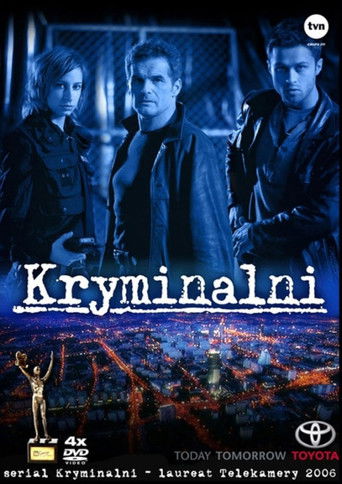
Kryminalni was a Polish crime drama television series that aired on TVN network from September 18, 2004 until May 24, 2008. It ran for 8 seasons and 101 episodes were broadcast in total. It was created by Polish director and screenwriter Piotr Wereśniak and produced by MTL Maxfilm studio. The series followed life and work of police officers from the elite Criminal Terror and Murders Division of the Warsaw Metropolitan Police; the title refers to police officers in the crime section. The three main characters were Adam Zawada, an experienced, tough cup, his younger colleague Marek Brodecki and Barbara Storosz, an ambitious female officer who in the first season joins the team just after graduating. Although none of the main actors had had star status before the series debuted, all three of them rose to prominence and popularity during the 5-year-long run. Many of Poland's best known actors guest starred, usually playing roles of people involved in just one particular investigation. The serial was one of the most popular in Poland: each week it had an audience of 4 million.


Follow the life of a dysfunctional Polish family from Wrocław, who live in an old apartment in Wrocław on 3/4 Ćwiartki street. The show is centered on Ferdynand Kiepski, who tries to make various schemes to improve his financial or life situation, all of which ultimately fail.
The story of the residents of a tenement house on Złota Street in Warsaw from 1945 to 1980.

Four thirty-something women who met in highschool continue to maintain a strong friendship despite the passing of time. Although very different, they also have much in common, each earnestly trying to find themselves and their place in the world.

Follow a woman's fight for justice for victims of sexual assault – and her own autonomy – in pre-WWII Poland.

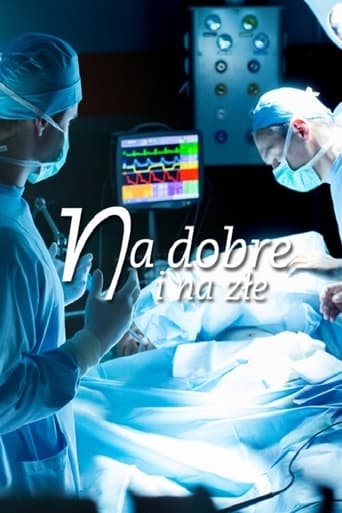
Na dobre i na złe is a Polish television medical drama series, broadcast on TVP2 since November 7, 1999. Currently in its 15th season and with over 520 episodes, it is the longest-running primetime drama on Polish TV. The show revolves around the lives of doctors and patients of a hospital in Leśna Góra near Warsaw. Na dobre i na złe has been very popular among the viewers, despite recent criticism on its lack of originality. It won the "Telekamery" award for the best TV series in 2001, 2002 and 2003.


The dark world of crime: murders, racketeering, drugs, kidnappings. There are no rules here. Working in this world makes cops cynical and ruthless. There is a fine line between them and criminals - will any of them cross it? The main characters are officers from the Department for Counteracting Criminal Terror and Homicides. The action of the series is an extension of the threads that appear in the feature film. It presents in a realistic way the brutal and dark world of crime that officers encounter on a daily basis. They're not just tracking down murderers. They fight racketeering, kidnapping, drug trafficking while struggling with their own day to day life and problems.
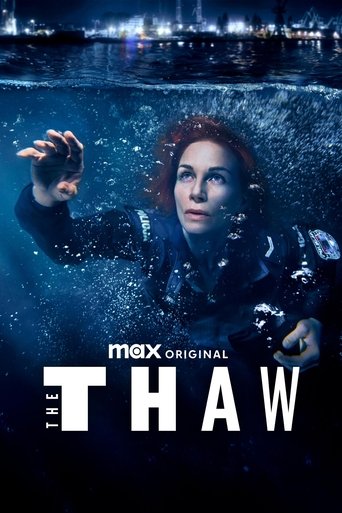
Set in Szczecin, Poland, the series begins after the body of a young woman is discovered under the melting ice. It asks ‘Who was she? Why did she die? Who did she leave behind?
A small-town policewoman is chasing a vicious serial killer; at stake is first a country girl's life, and then her own life.
Piasts' reign is coming to end on Casimir the Great, who have no sons. Polish throne comes to Anjous. Thanks to the marriage of Saint Jadwiga of Poland with Lithuanian Grand Duke Jogaila, an alliance is made and a new dynasty - Jagiellons, who rule Poland for next two hundred years
