
The Torrent Of Nothing 2021
A poetic visualization of nature without the presence of man.
A poetic visualization of nature without the presence of man.
Found footage, visual postcards written in the 1990s on VHS, fragments of a new life abroad passed on, sent by planes or buses to Kosovo, and pictures sent back from the country. Hugs on platforms, cars leaving, weddings and birthdays. Dancing and tears: lots of tears of joy and despair. Repeatable situations create chronicles of torn lives, uncertainty, and suspended existences.
A short documentary focusing on the narratives and lives of 5 different women of different generations, offering an anthropological overview of traditions, customs and gender relations in Kosovo.
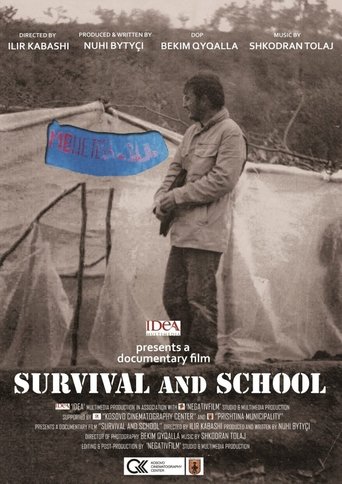
“Survival and School” is a beautiful story about the bad and evil times. An oasis of peace in war time. A nylon school built in the Berisha Mountains (Kosova) that had gathered around 200 pupils of the surrounding villages. The fate of people seen in the twenty-year-old authentic and timely shooting in quite different circumstances reveals the best the bad fate of man.
“What if women could move a house?” In “As If Biting Iron” (2019), Rizaj uses the medium of film to challenge this very question as we witness the walls of a brutalist building, situated in the forests of Kosovo, being moved by the forces of over 100 anonymous women. Pushing against the deadweight of the concrete, the burden of oppression literally and figuratively comes undone.
Four women, four heroines, who share a common fate. They have been brutally stricken by misfortune. It is not their shared past that brought them together, but it is “Hope” that keeps them alive, encouraging them to move on. “Hope” presents the different but powerful stories of Ferdonije, Auntie, Makfirete and Valentina. Although life can sometimes be very difficult, one must always try to find something to hold onto. Without hope, these four characters’ lives would have ended a long time ago. “Hope” has a power that even magic does not.
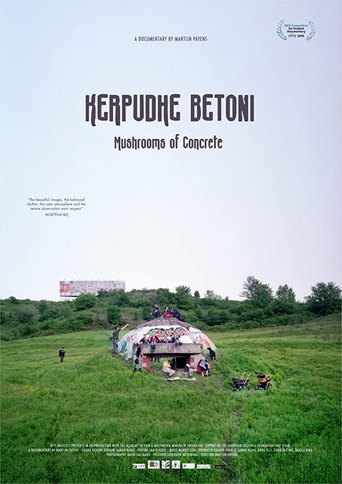
Over 750,000 bunkers were build in Albania for a war that never came. Building them drained vital resources and crippled Albanian industry. Presently, Albanians struggle to put the abandoned hollows to productive, creative use.
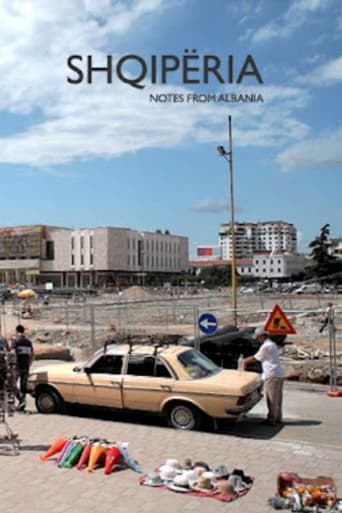
Mad dictators, trigger-happy mobs, archaic blood feuds - this pretty much sums up what Western Europeans know about Albania. But reality in this long forgotten Balkan country is much more complex and multilayered. SHQIPERIA - NOTES FROM ALBANIA offers a flow of stories from and about Albania, displaying the country in its true diversity, unspeculatively illuminating its conflicts and discovering this blank spot on the map of Europe in all its contradictions.

Four female voices interweave a polyphonic narration of the tragic story of “Katër i Radës,” the boat that sank in 1997 due to the naval blockade imposed by the Italian government on migration flows from Albania. The relatives of the victims that were amongst the first to die, in their attempt to cross the borders of “Fortress Europe,” sail along the Strait of Otranto following the route of the doomed ship only to pose the questions ignored by the media and the judicial authorities.
Kosovo 1988. Two young boys, a Serbian and an Albanian, raised together in a small town of Kosovo. As they grow up they find themselves in a war between two countries and on different fronts.
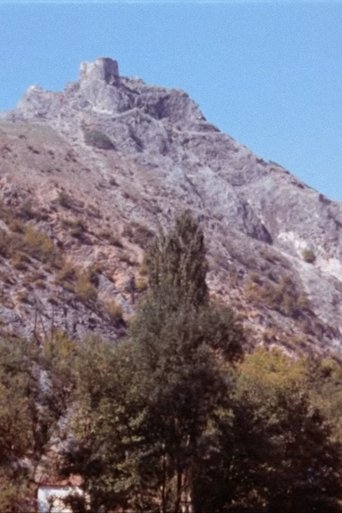
“Prizren - the City of Resources and Beauty” is a documentary directed by Zvonimir Saksida and produced by Zastava Film in 1972, which presents the history, traditions and beauties of Prizren with the aim of promoting the touristic potential of the city. Discovered in the Lumbardhi Cinema archive, it was screened for the first time during the exhibition “At Once Vague and Unavoidable: Modernities 1945-1989” produced as part of the partnership between Lumbardhi Foundation and Oral History Initiative within the project “Prizren Urban Memoryscapes” supported by Franco-German Cultural Fund, the French Embassy, the German Embassy, Municipality of Prizren and Sharrcem. The restoration and digitization of “Prizren - the City of Resources and Beauty” was made possible by the partner of the project, the French National Audiovisual Institute - INA and the French Embassy.
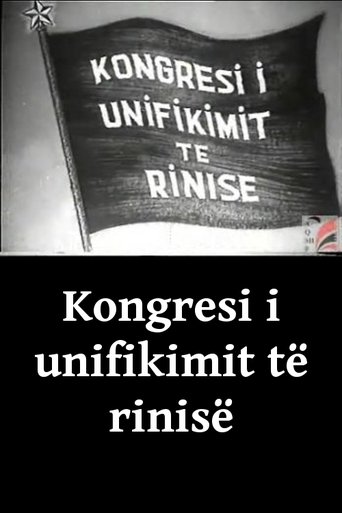
Congress for the unification of youth.

Documentary about the building of the Durres-Tirane railway.
Sala didn’t paint the Tirana facades in Dammi i Colori (Give Me the Colors), in his current show. Others did, as part of an ongoing project initiated by Edi Rama, the city’s mayor and a former artist.
