
The Cosmic Game 2000
Animation short by Robert Turlo.
Animation short by Robert Turlo.

Colorful impression for the youngest spectators explaining the differences between the circle and the ball, and showing the possibility of turning the circle into an ellipse.

The adventures of a plush dog that take place in a child's room.

A small pocket knife causes chaos in the house, and it is up to a stick man made of fruits and his trusty horse to stop him.

Experimental animation by Janek Koza


Musicians and jazz lovers come to Zakopane to relax and make music together. Kalatówki is the location where the jazz campsite takes place. Andrzej Trzaskowski's band “Jazz Believers” is the star of the film.
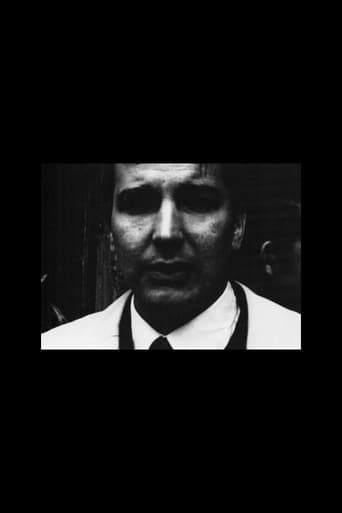
There's no April 31 and May the 1st is a Labour Day - the most important communist holiday. A gritty morning in the city of Lodz seen through the eyes of a worker who spends it with his colleagues drinking and talking about shady businesses. He's proud of his proletarian roots, but the reality is rather bitter than sweet for him. However, he seems to be happy living in his simple world of dreams, TV programs and drinking cheap wine. The viewer is left with a dissonance between the backyard and the facade, bwetween "normal" existence and the ideology and content of TV programs.

Experimental animation short from Poland.

A man's face appears on the screen with his eyes covered by a black strip. After a while, the strip covers his mouth, and when it covers his eyes again the man begins to say something.
The Nurse of the Poznan Hospital takes care of the newborn babies. From time to time she meets very lonely newborns that are taken away from their parents or are unwanted. All these situations are very sad. The Nurse takes care of these lonely newborns, even staying after work to make their first day better by giving them a heart therapy.
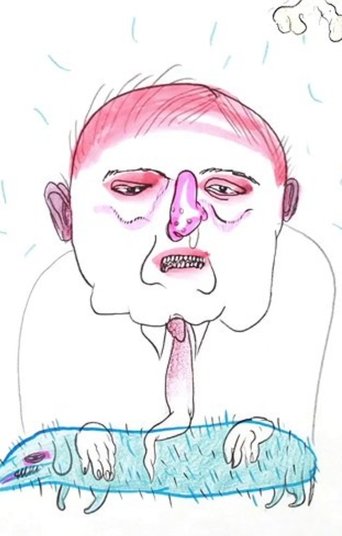
The reality presented in the film Oh God might be described using such terms as inertia or chaos. The characters feature lack of willingness to take any action, they are passive and indifferent, unable to create their own reality. The author presents a world that loses its original shapes and loses its identity. Groaning “oh God” as a main theme combines it all: grimace, sigh and a quiet whisper of despair over our own impotence.
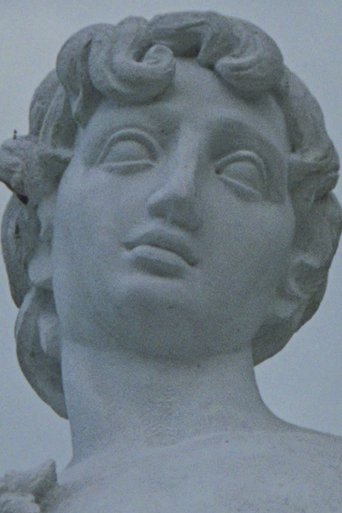
“Can a fascist say "I love you" in another language?” asks Johannes Gierlinger the director of Remapping the Origins. The polish city of Bialystok is the birthplace of Ludwik Lejzer Zamenhof a Polish medical doctor, inventor, and writer mostly known for creating Esperanto in 1873 while still in school, a constructed language that he believed could be a universal tool to help bridge the gap between different languages. But Bialystok is also the birthplace of David Abelevich Kaufman, known worldwide as Dziga Vertov, one of the most important cinema theorist ever, Soviet pioneer, revolutionary filmmaker, documentary, and newsreel director. The city is also the place where anarchistic communes were organized during the Russian Revolution and where the Nazis build a ghetto for Jews.

Alexandra can't accept that her girlfriend left her. The confrontation with her ex-girlfriend and a special table and an encounter with a policeman help her understand that loss always will be a part of life.
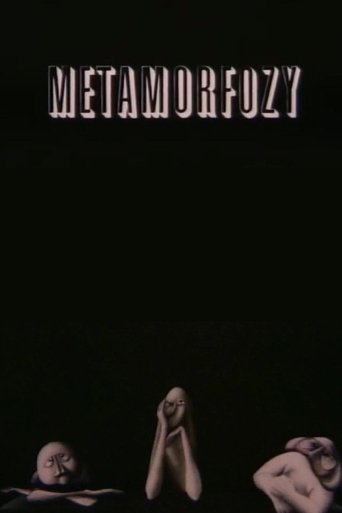
Nightmarish fusion of Francis Bacon and Gerald Scarfe in this perverse and disturbing game of spite and malice between three grotesque figures. A striking and unusual work by Łucja Mróz-Raynoch, a lesser known figure in the world of Polish animation.
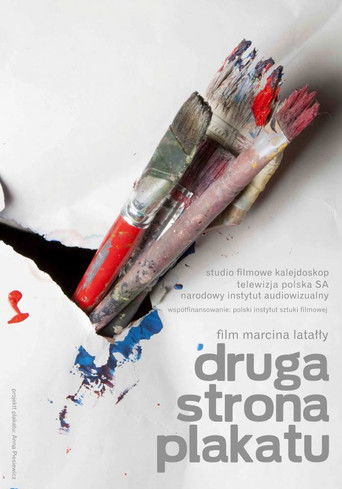
The "Polish Poster School" is as widely known around the world as the Polish Film School. Beginning with the post-World War II era, the poster became a key tool for popular communication. In Communist times, the poster also offered colorful accents to an otherwise overwhelmingly gray public space. Ironically, during the 1950s, '60s and '70s (when several Polish graphic designers rose to worldwide prominence), the advertising of films was not a necessity. A frustrated and hopeless populace regularly relied on cinema for escape. It was in that time of massive unrest that artists like Julian Pałka, Jan Lenica, Roman Cieślewicz and Henryk Tomaszewski created the most expressive and unique images of the form. Marcin Latałło's lauded documentary film is a double-layered construction, telling both the story of the movement and, in parallel, following the footsteps of Ania, a young designer who faces an extremely tricky challenge: she must create a poster for the film itself.
