Francis Albert Sinatra Does His Thing

Francis Albert Sinatra Does His Thing 1970

1

Francis Albert Sinatra Does His Thing was an Emmy-nominated television special starring Frank Sinatra, Diahann Carroll and The 5th Dimension recorded in November 1968 and broadcast on NBC. The title references Sinatra's attempts at engaging with the youth culture of the late 1960s. Don Costa was the bandleader.

1970

Continental Classroom

Continental Classroom 1958

1

Continental Classroom is a series of college credit courses that ran on NBC from October 6, 1958 to 1963.

1958

The Adventures of Mark & Brian

The Adventures of Mark & Brian 1991

6.00

The Adventures of Mark & Brian is a comedy television program that was broadcast by NBC as part of its 1991 fall lineup.

1991

The Wanted

The Wanted 2009

1

The Wanted is an American television series that aired on NBC in 2009. It was promoted as a groundbreaking television event that sets forth on an international hunt for an accused terrorist.

2009

Great Western Theater

Great Western Theater 1959

4.00

Western Theater is an American western anthology that aired on NBC in the summer of 1959.

1959

The American Frontier

The American Frontier 1970

1

The American Frontier is a series of short videos, hosted by Charlie Jones and Merlin Olsen, depicting the colorful legends and history of the Old West, as well as its important characters and events.

1970

Family Secrets

Family Secrets 1993

1

Family Secrets was a daytime game show, running on NBC from March 22 to June 11, 1993. Bob Eubanks hosted, and Orlando-area disc jockey Dean Miuccio announced. The show was taped at the Disney-MGM Studios in Orlando, Florida in front of a live studio audience consisting of theme park guests.

1993

Winning Streak

Winning Streak 1974

1

Winning Streak is an American television game show hosted by Bill Cullen and announced by Don Pardo. It aired daily on NBC from July 1, 1974 to January 3, 1975 and was produced at the NBC Studios in New York's Rockefeller Plaza.

1974

Fame

Fame 2003

1

Fame is a television series that ran on NBC in the summer of 2003. The show was essentially NBC's attempt to duplicate the success of mega-hit American Idol, right down to their selection of judges. Former pop star Carnie Wilson was similar in her judgements to American Idol's Paula Abdul, Johnny Wright, the veteran music producer, was the show's analogue of Randy Jackson, and JoJo Wright was, like Simon Cowell, the judge who says things to stir people up. The show retained the original Fame theme music, as well as producer Debbie Allen. Former boy band member Joey Fatone was the official host of the show, but Allen also made frequent appearances. The show was based on the Italian show Saranno Famosi, where young talented dancers, singers and actors attended a school to became real superstars. The main goal of the show was to make all the challengers able to dance, sing and act and so to be complete. It still airs in Italy.

2003

Club Oasis

Club Oasis 1957

1

Club Oasis is a 24-episode half-hour comedy-variety show, set in a chic simulated nightclub, which appeared on NBC in the 1957–1958 television season. The series alternated with The Polly Bergen Show in the 9 p.m. EST time slot on Saturday evenings. Though several entertainers appeared as hosts on Club Oasis, the program became most closely associated toward the end of its short run with the bandleader Spike Jones, who became its permanent host, and his City Slickers. After their performances, the Club Oasis guests were interviewed by Hy Gardner. In the series premiere, Van Johnson acted as host, and the singers included Jo Stafford and the four Ames Brothers. In the second episode, Kay Starr sang "Wheel of Fortune", "When You're Smiling", "That's What the Good Book Says", and "Three Letters". On December 21, 1957, the program featured Fred Waring and the Pennsylvanians performing "Holiday", "Auld Lang Syne", "When Irish Eyes Are Smiling", and "Easter Parade", as well as some traditional carols. Other Club Oasis regulars were comedienne Joyce Jameson and midget comedian Billy Barty. Among the many well-known guest stars, some of whom made multiple appearances, were Andy Griffith, Joe Besser of The Three Stooges, Edie Adams, Jeannie Carson, Jimmy Durante, Eddie Fisher, Stan Freburg, Phil Harris, Peter Lawford, Gisele MacKenzie, Dean Martin, the Nelson Riddle Orchestra, Martha Raye, Jimmie Rodgers, and Frank Sinatra.

1957

Frances Farmer Presents

Frances Farmer Presents 1958

1

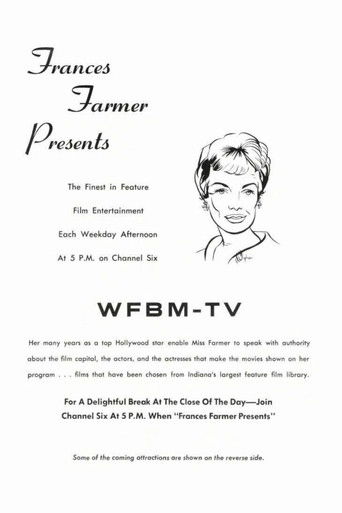
Frances Farmer Presents is an American anthology series that aired on Indianapolis station WFBM-TV. The series premiered on October 13, 1958 and ended in September 1964.

1958

Missing Links

Missing Links 1963

1

Missing Links is a Goodson-Todman game show hosted by Ed McMahon which originally ran on NBC from September 9, 1963 to March 27, 1964.

1963

Beggarman, Thief

Beggarman, Thief 1979

1

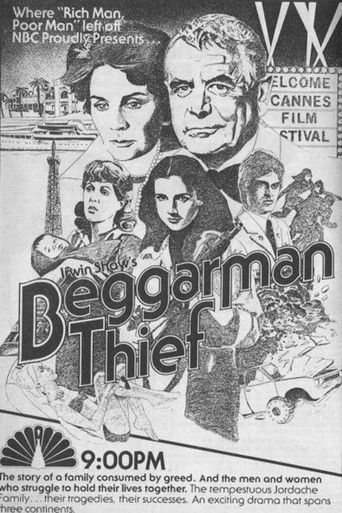
In this sequel to “Rich Man, Poor Man,” moviemaker Gretchen Jordache, the until-now unseen sister, strives to pull the family together after the murder of brother Tom and the disappearance of brother Rudy by first reestablishing contact with her soldier son, and then patching things up with her sister-in-law, Kate, Tom’s widow.

1979

Hawkins Falls, Population 6200

Hawkins Falls, Population 6200 1950

5.00

Hawkins Falls, Population 6200 is the first successful American television soap opera. Sponsored by Unilever's blue detergent, Surf, the program began as a one hour comedy-drama on June 17, 1950, and ran in prime time on the NBC network until October 12, 1950. On April 2, 1951, the series was moved to a fifteen-minute daytime slot, where it was retitled Hawkins Falls: A Television Novel, and developed into a soap opera format. Hawkins Falls ran until July 1, 1955, making it NBC's longest running soap opera until The Doctors exceeded it in 1967. The town of Hawkins Falls was patterned after the real-life town of Woodstock, Illinois.

1950

Baffle

Baffle 1973

1

Baffle was a revival of the game show PDQ that aired on NBC from March 26, 1973 to March 29, 1974.

1973

High Rollers

High Rollers 1974

7.00

High Rollers is an American television game show based on the dice game Shut the Box. The show aired on NBC from July 1, 1974 to June 11, 1976 and again from April 24, 1978 to June 20, 1980. Two different syndicated versions were also produced, a weekly series in the 1975–1976 season which ran concurrently with the daytime version, and a daily series in 1987–1988. Heatter-Quigley Productions packaged all versions of the series except the 1987 revival, a co-production of Merrill Heatter Productions and Century Towers Productions.

1974

Three on a Match

Three on a Match 1971

1

Three on a Match is an American television game show created by Bob Stewart that ran on NBC from August 2, 1971 to June 28, 1974 on its daytime schedule. The host was Bill Cullen and Don Pardo served as announcer on most episodes, with Bob Clayton and NBC staffers Wayne Howell and Roger Tuttle substituting at times. The series was produced at NBC's Rockefeller Center in New York City. The program's title is wordplay on the superstition of the same name.

1971

Take It All

Take It All 2012

2.50

Take It All is an American game show hosted by Howie Mandel. It premiered on NBC on December 10, 2012, as part of the 2012–13 television season. In April 2012, NBC placed a seven-episode order for the show under the original title Howie Mandel's White Elephant. Contestants on the show participate in a game similar to a white elephant gift exchange, attempting to win or steal more-valuable prizes each round to avoid elimination. The final two contestants participate in a variant on the prisoner's dilemma in which one decision by each of the two finalists determines whether they both go home with prizes, one winner takes everything, or they both go home with nothing.

2012

Go

Go 1973

1

Go is an American television series for children that aired late-mornings on Saturdays on NBC between September 1973 and September 1976. It had the shortest title for a TV series until V debuted in 1984 on the same network. The first two seasons of Go explored various occupations. For the third season, the emphasis shifted to America's Bicentennial observance of 1976, therefore Go became Go-U.S.A. from September 6, 1975 until the series ended the following year.

1973