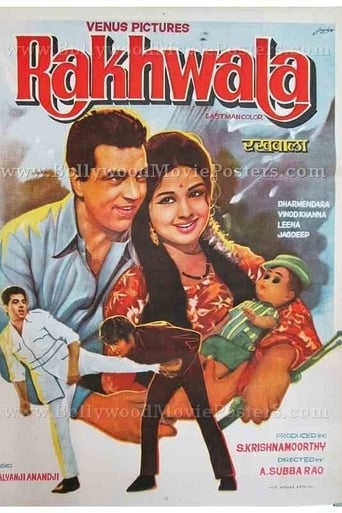
Rakhwala 1971
After Deepak's widowed mother passes away, she leaves him with the responsibility to protect his younger brother Suresh. Deepak finds himself in trouble when he is framed for Suresh's murder.
After Deepak's widowed mother passes away, she leaves him with the responsibility to protect his younger brother Suresh. Deepak finds himself in trouble when he is framed for Suresh's murder.

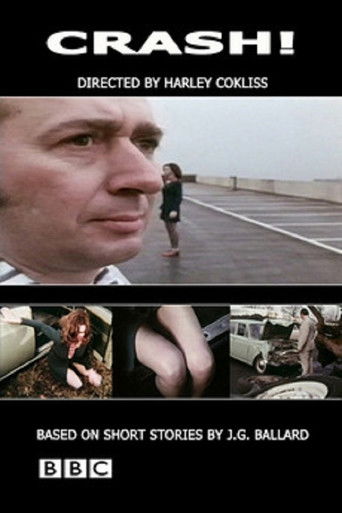
Short film produced by the BBC about JG Ballard's Crash. “The film was a product of the most experimental, darkest phase of Ballard’s career. It was an era of psychological blowback from the sudden, shocking death of his wife in 1964, an era that had produced the cut-up ‘condensed novels’ of Atrocity plus a series of strange collages and ‘advertisers’ announcements. After Freud’s exploration within the psyche it is now the outer world of reality which must be quantified and eroticised. Later there were further literary experiments, concrete poems and ‘impressionistic’ film reviews, and an aborted multimedia theatrical play based around car crashes. After that came an actual gallery exhibition of crashed cars, replete with strippers and the drunken destruction of the ‘exhibits’ by an enraged audience.” (from: http://aaaaaaaaaaaaaaaaaaaargh.blogspot.de/2013/01/short-film-adaptation-of-jg-ballards.html)
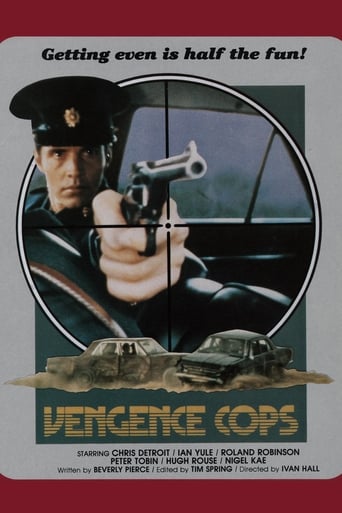
The police discover trace the perpetrators of a bank robbery to a group of organized criminals. The criminals attempt to use the sister of a deceased gang member to infiltrate the cops, but when she learns the gang was responsible for her brothers' death, she turns coat and assists the police in foiling the gang's plans.
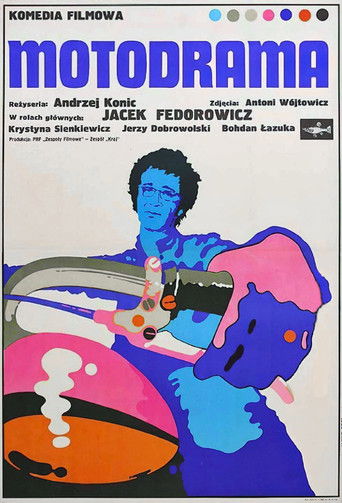
An unassuming post office clerk finds fame and success as a motorcycle racer.
In the spring of 1969, a young man from a small town arrives at the partner company in Berlin, where he falls in love with red-haired Rita. A love story about "everyday heroes," in which director Egon Günther continues his idiosyncratic formal experiments with actress Jutta Hoffmann, which he began in "Junge Frau von 1914" (Young Woman of 1914).
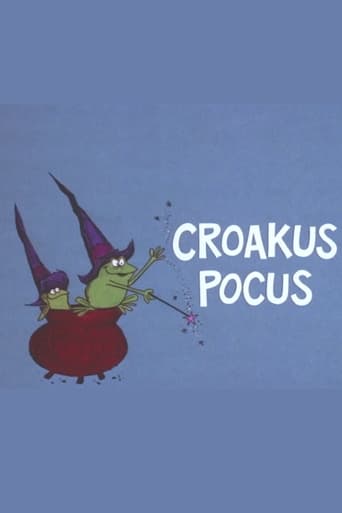
After waiting 400 years for a first kiss, the witch gets impatient and decides to make a brew that will make her attractive. She needs a hair of a frog to complete her brew, so Toro and Pancho is in the chase to avoid being caught by the witch.
This period compilation of documentaries shot with a Portapak camera from the early era of video experimentation offers an immediate view of the independent New York art scene (concerts and theater perfomances on the streets and in the clubs of downtown). It is a sort of summary of Steina and Woody Vasulka's first creative period, a period of fascination with the more bizarre aspects of "new American decadence". Thanks to the video camera and its revolutionary implications, the creators were able to penetrate into spheres where the documentarians of more classical media were neither allowed nor interested to enter, thereby helping to expand the ideas of documentary possibilities. Steina has remarked that she learned the craft of camerawork as documentarian thanks to these celebratory, countercultural scenes of the "sexual avant-garde"-- Participation also features a pulsing light show projection at the Fillmore East, and a scene from Off-Broadway drag theater.
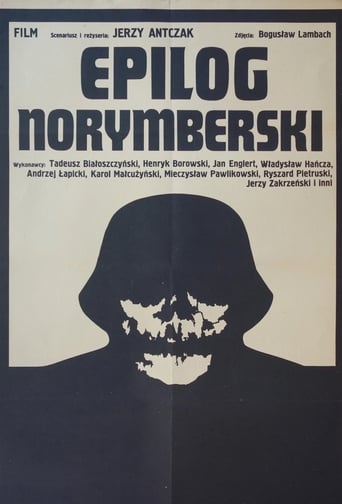
Reproduction of the Nuremberg trials using transcripts, made for Polish TV.
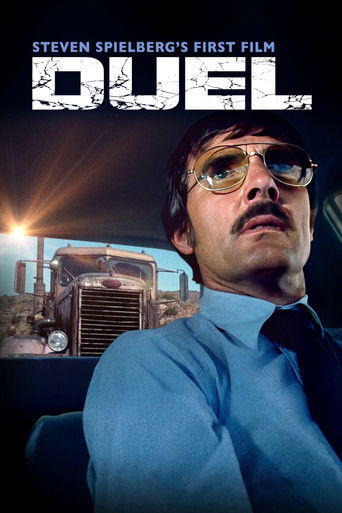
Traveling businessman David Mann angers the driver of a rusty tanker while crossing the California desert. A simple trip turns deadly, as Mann struggles to stay on the road while the tanker plays cat and mouse with his life.
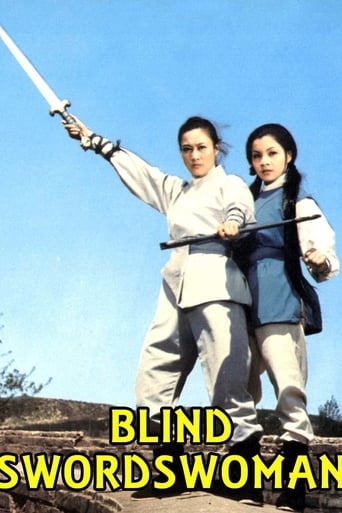
Two blind swords women come to the aid of a swordsman tracking down a ruthless martial arts master.
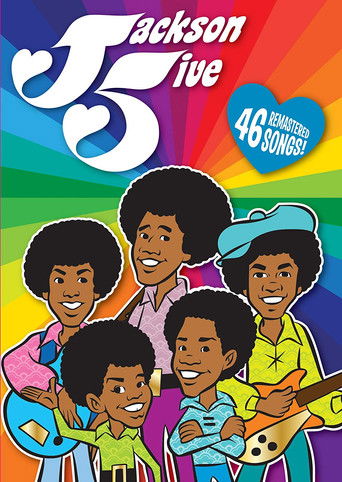
The Jackson 5ive was a Saturday morning cartoon series produced by Rankin/Bass and Motown Productions on ABC from September 11, 1971 until 14 October 1972; a fictionalized portrayal of the careers of Motown recording group The Jackson 5. The series was rebroadcast in syndication through Worldvision Enterprises during the 1984–1985 Saturday morning season, during a period when Michael Jackson was riding a major wave of popularity as a solo artist. The series was animated mainly in London at the studios of Halas and Batchelor, and some animation done at Estudios Moro, Barcelona, Spain. The director was Spanish-American Robert Balser.
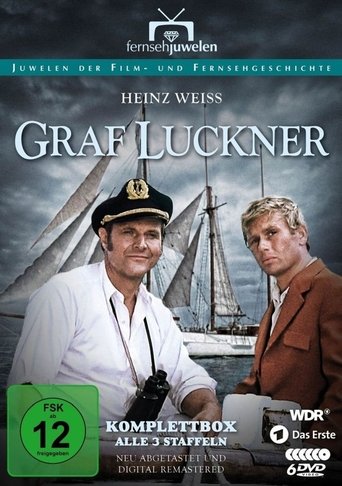
Between the first and second World Wars, we portray glorified and renown naval sea officer Felix Graf von Lucker and his fictitious ship Niobe, which is the 1887 built Amphitrite from Southampton. Von Luckner is famous for his tactical genius in the first World War, especially sinking 14 enemy ships and only losing one crewman, whilst always seeking a peaceful outcome - making him the ideal seaman.
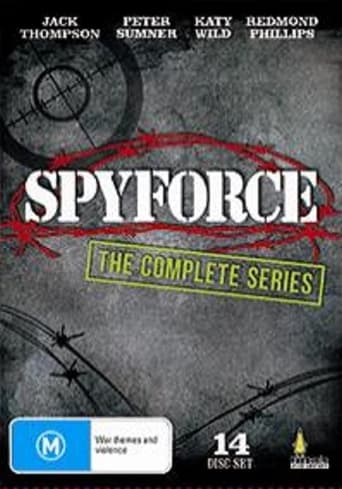
Spyforce was an Australian TV series produced from 1971 to 1973, based upon the adventures of Australian Military Intelligence operatives in the South West Pacific during World War II. It was produced by the Nine Network in conjunction with Paramount Pictures. The series centres on the action and adventures of lead actor Jack Thompson's character Erskine, and his main support character, Peter Sumner's Gunthar Haber. It was the first lead role for Jack Thompson. The two are part of an elite unit of special operatives, the Special Intelligence Unit, and their adventures are loosely based upon those of the real Services Reconnaissance Department who often operated behind Japanese-held lines during the war. Unlike most previous war films, Spyforce deliberately steered away from the notion that the United States was solely responsible for Japan's defeat, and highlights the important role Australian forces played in the defeat of the Imperial Japanese Army. Producer Roger Mirams was also careful to avoid stereotypes of the genre, and tired formulas for the battle scenes. The idea appealed to American producers Paramount Pictures, who backed creator Roger Mirams to begin production without having seen a script. He made the pilot episode, "Spy Catcher", which impressed Paramount, and the Nine Network immediately bought the local rights. The first episode aired in Sydney on 8 August 1971, and the rest of Australia on 26 August 1971. It was originally intended to produce 26 episodes, but following the success of the first series, Mirams held talks with both Nine Network and Paramount Pictures, who backed him for a second series. In all 42 episodes were produced. The series was last aired on Australian television in Adelaide on 21 September 1976, but has been re-run several times since.
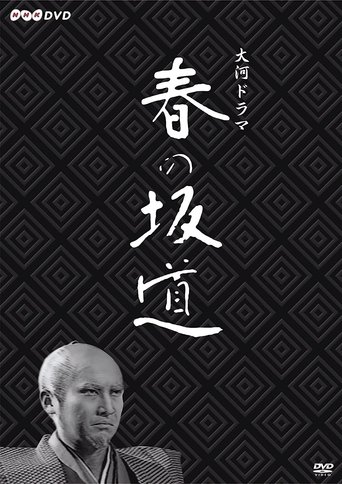
The story chronicles the life of Yagyū Munenori.
Soul Train is an American musical variety show that aired in syndication from 1971 to 2006. In its 35-year history, the show primarily featured performances by R&B, soul, and hip hop artists, although funk, jazz, disco, and gospel artists have also appeared. The series was created by Don Cornelius, who also served as its first host and executive producer. Production was suspended following the 2005–06 season, with a rerun package airing for two years after that. As a nod to Soul Train's longevity, the show's opening sequence contained a claim that it was the "longest-running first-run, nationally syndicated program in television history," with over 1,100 episodes produced from the show's debut through the 2005-06 season. Despite the production hiatus, Soul Train will continue to hold this honor until at least 2016, if and when its nearest competitor, Entertainment Tonight, completes its 35th season.
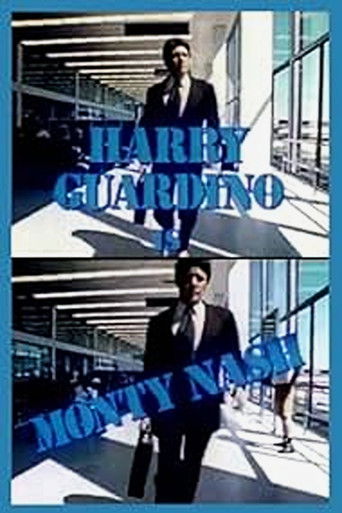
Monty Nash is a government agent who often goes undercover to apprehend criminals.

The science and faith programs is a TV program presented by the late d. Mustafa Mahmoud for twenty-eight years on Egyptian television, and he aimed to address science on the foundations of faith. The program reached a large degree of fame and Dr. Mustafa Mahmoud presented more than 400 episodes over twenty-eight years.
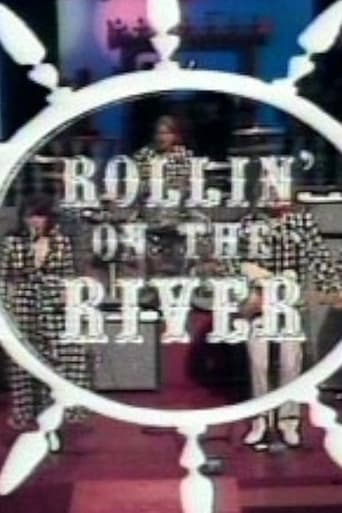
Rollin' On The River 1971-72 - (Rollin 1972-73) was a Canadian Music Variety Series hosted by Kenny Rogers and The First Edition. They were the first pop-rock group to host their own prime-time TV series. - 53 episodes x 60 min - Featured guests included: Tina Turner, Merle Haggard, Bo Diddley, April Wine, Bill Withers, The Raiders, Cheech & Chong, The Stampeders, Bruce Cockburn, The Grass Roots, The Five Man Electrical Band, Lighthouse, Climax, Billy Preston, Jim Croce, Kris Kristofferson, Jose Feliciano, Mac Davis, Ronnie Hawkins, John Kay, Chilliwack, Looking Glass, The James Gang, The Poppy Family, Ian & Sylvia, Pat Paulsen, Helen Reddy, Andy Kim, John Stewart and many others. *Note: The series was an hour long in Canada. In the U.S. it was only half an hour, and Canadian talents were excised from the show for prime-time viewing.
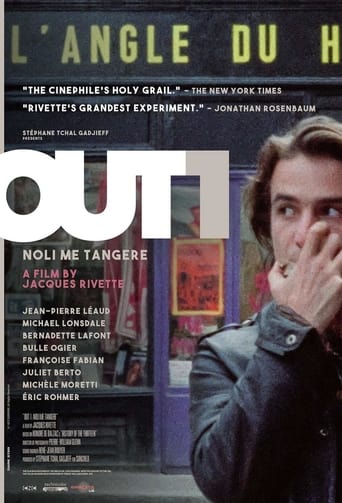
Following the May 1968 civil unrest in France, two theater groups rehearse plays by Aeschylus while two solitary individuals wander the Parisian streets hustling the populace for cash.
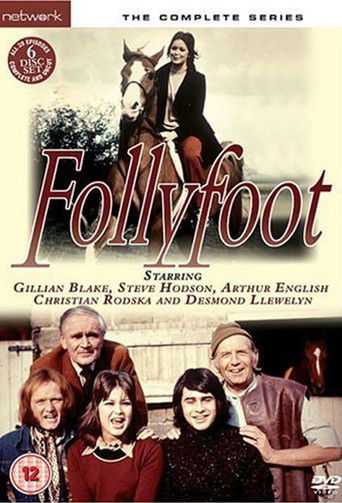
Follyfoot is a children's television series co-produced by the majority-partner British television company Yorkshire Television and the independent West German company TV Munich. It aired in the United Kingdom between 1971 and 1973, repeated for two years after that and again in the late 1980s. The series starred Gillian Blake in the lead role. Notable people connected with the series were actors Desmond Llewelyn and Arthur English and directors Jack Cardiff, Stephen Frears, Michael Apted and David Hemmings. It was originally inspired by Monica Dickens' 1963 novel Cobbler's Dream; she later wrote four further books in conjunction with the series—Follyfoot in 1971, Dora at Follyfoot in 1972, The Horses of Follyfoot in 1975, and Stranger at Follyfoot in 1976.

Schulmeister, l’espion de l’empereur (Schulmeister, the Emperor's Spy) is a French historical adventure television series consisting of 13 episodes (1971–1974), inspired by the real life of Charles Louis Schulmeister, a famous spy in the service of Napoleon I. It alternates between historical facts and fiction, offering a fictionalized portrait of a cunning spy, loyal to Napoleon, and always ready to turn a situation to his advantage.
Barlow at Large is a British television programme created by Troy Kennedy Martin and Elwyn Jones. It broadcast from September 1971 to February 1975, with a total of 29 episodes across four series. Stratford Johns reprises his role of DCI Charles Barlow from Z-Cars, Softly, Softly, and Softly, Softly: Taskforce. Barlow at Large originated as a three-part self-contained spin-off from Softly, Softly in 1971 with Barlow co-opted by the home office to investigate police corruption in Wales. Johns departed in 1972, but returned for a further series of Barlow at Large in the following year, Barlow having gone on full-time secondment to the Home Office. In 1974, the series was rebranded Barlow and two further series of eight episodes each followed, introducing DI Tucker. After the finale's transmission in February 1975, Barlow was next seen in the programme Second Verdict in which he, alongside a former colleague, investigates unsolved cases and unsafe historical convictions.
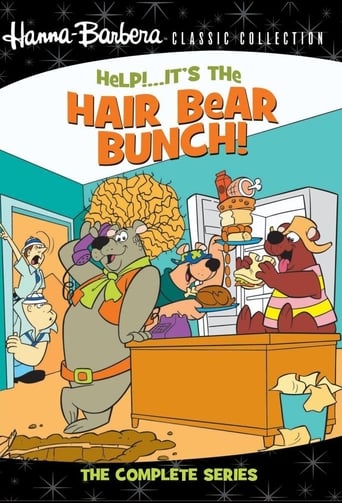
The adventures of three fun-loving hippie bears, who always find a way to escape the Wonderland Zoo.
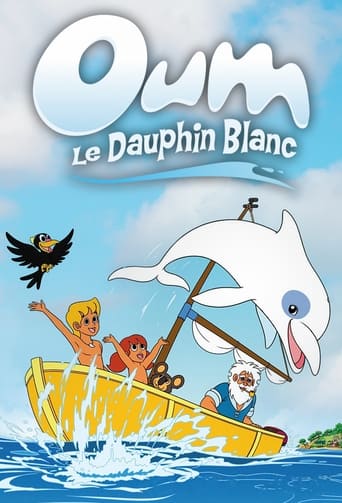
Zoom the White Dolphin was a 1971 French animated television series, of 13 episodes, created by Vladimir Tarta, directed by René Borg. The original French version was broadcast in 1971 on ORTF's second network and rebroadcast in France from 29 June 1981 on FR3. An English version was produced and broadcast internationally on networks such as CBC Television. The Japanese version of the series was titled Iruka to Shônen, which means "the dolphin and the boy". Production companies involved in the series were Telcia, Saga Films and Japan's Eiken.
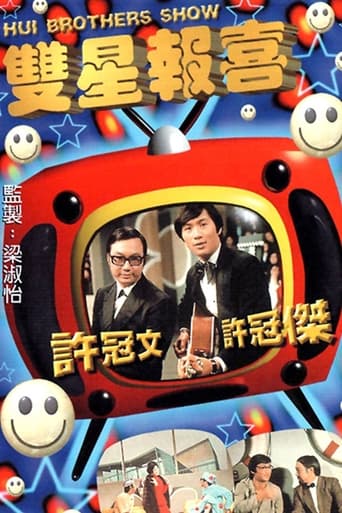
The Hui Brothers Show is a Hong Kong sketch comedy television series produced by TVB and hosted by and starring brothers Michael Hui and Samuel Hui that ran for 52 episodes from 1971 to 1973.

Intimate concerts for the new breed of singer-songwriter.
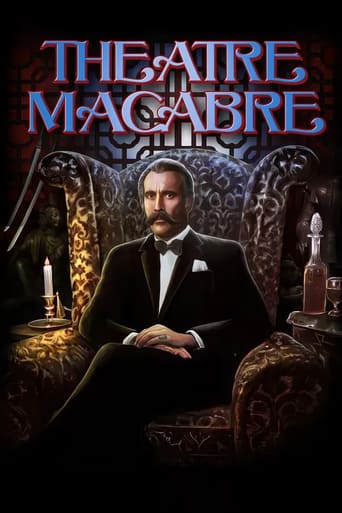
Christopher Lee hosts this horror anthology series from Poland with stories from various classic authors.
