
Pakhta-Aral 1925
Directed by N. Scerbakov.
Directed by N. Scerbakov.
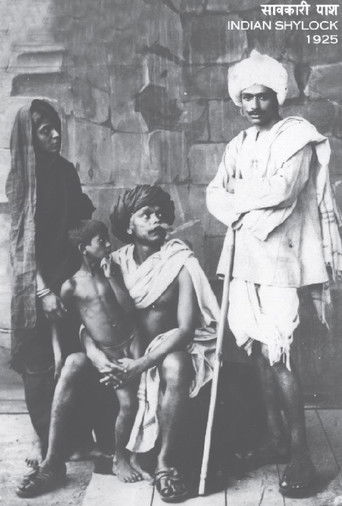
A social film with high melodrama, concerning a peasant (Shantaram) who loses his land to a greedy money-lender and moves to the city where he becomes a mill worker. Taking its cue from the realist tradition, the film counterposes an idyllic rural life (destroyed but the greedy money-lender who uses forged papers to steal the peasant's land) with the harsh city life. The shot of a hut accompanied by a howling dog are regarded as one of the most memorable moments of Indian cinema to date.
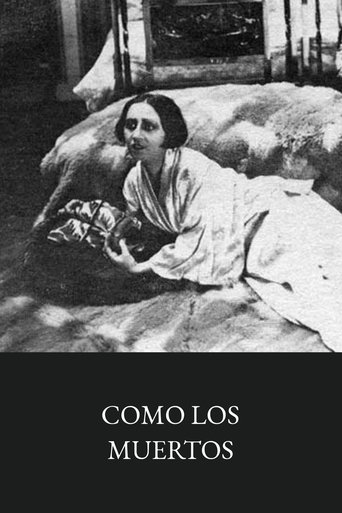
A man suffers from leprosy. The disease progresses in such a way that it drives him to madness, without his wife's knowledge. She begins to suffer a progressive moral deterioration, which completely ruins the marital relationship, this intense conflict leads to the worst outcome.
"The Pathe Sound Magazine presents An All-British Talking Cartoon - Little Bruin - The Talking Teddie." "Episode one --" A broken down building stands on a hill with a sign "Misery Farm" outside. The cartoon is drawn by Joe Noble.
“Roald Amundsen – Lincoln Ellsworths flyveekspedisjon 1925″ is a new DVD release of film footage from the nearly disastrous 1925 aeroplane expedition led by Norwegian polar hero Roald Amundsen. Financed by american businessman Lincoln Ellsworth, who also was a member of the expedition, the aeroplanes were registered as N24 and N25 and subsequently equipped for polar flights. They took off from King´s Bay in Svalbard on May 21st in an attempt to carry out the first transpolar flight of the North Pole, in order to establish once and for all whether there was in fact land in the area.
We see the animator's hand as he draws Jerry (Sid Griffiths?). Jerry is cycling along but the artist hasn't drawn him a bike. Speech bubble comes out: "- Mr. Artist! What about the bike?" A bike is drawn in. Jerry carries on cycling. There is moving landscape behind him. Suddenly a fire engine starts bringing up the rear. Jerry cycles along looking scared. The fire engine chases Jerry.
The film shows long-lost images of the early 20th-century Korean Peninsula, before the Korean War separated the North and South. The images include women spinning on cotton wheels, families making traditional tteok (rice cakes), a look at Dongsomun (Seoul’s ancient East Gate), which was destroyed just years later, and missionary activities in what is now North Korean territory. The footage was once stored in a German monastery, but later the Nazi government, which sided with Japan in World War II, tried to confiscate it because some of it could be interpreted as espousing a critical view toward the Japanese occupational regime in Korea. Fortunately, a monk saved the film, hiding it behind a stone wall in the basement before he died during the war. The film was rediscovered in 1975 during a renovation.
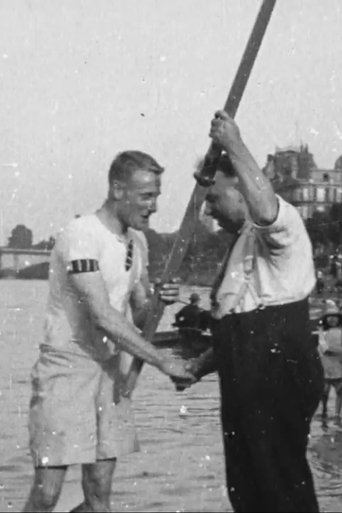
It's 1925 on the River Thames and Jack Beresford cruises to an easy victory in The Gold Cup - so easy his opponent, American Walter Hoover, is out of view. Beresford had successfully defended the title he won in 1924, the same year he won his first of three Olympic gold medals. Beresford, CBE, is one of Britain's most outstanding rowers and his streak of winning five medals in five consecutive Olympic Games was only beaten Sir Steve Redgrave at the Sydney Olympics in 2000.
A Christmas message from Topical Budget featuring two camels.

A farm owner had a son, Vivia, who played with a settler's daughter. The two grew up together and became very fond of each other; over time, their friendship blossomed into love. Then the father sent the boy to study in the capital. Gigi suffered greatly from his absence and spent her time waiting for his return. Finally, the big day arrived: she learned that the boy was returning. He did return, but he was accompanied by someone else: to marry a girl from the capital. As soon as he arrived, the boy sent for Gigi to introduce her to his wife. This is where the story reached its climax; Gigi resisted the news of the wedding, but could not withstand the final blow. The pain was so great that Gigi poisoned herself and died.

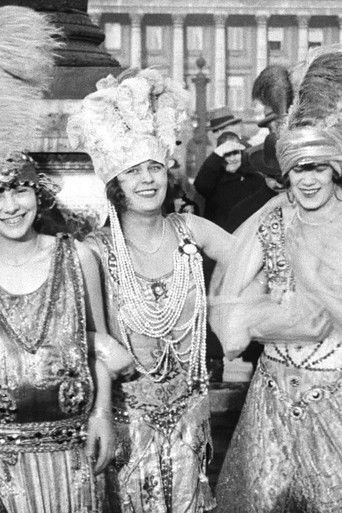
A 1925 newsreel showing the celebrations for St. Catherine’s Day on the streets of Paris.
Doing even better than Daniel, American girls dance in the lion's cage.

A defining cultural phenomenon of the Roaring Twenties, the Charleston gained widespread popularity after its appearance in October 1923 in the African American Broadway revue Runnin’ Wild. Newsreels captured the dance’s irresistible rise over the course of the decade. Fox News, Vol. 6, Release 74, issued on 13 June 1925, featured Charleston footage filmed at the Fox studio in New York and at Starlight Park, a prominent amusement park in the Bronx. In the studio footage the Charleston was demonstrated by a group of dancers sent by none other than Texas Guinan, the famed queen of New York speakeasies – among them was a very young Ruby Keeler, who, just a few years later, would marry Al Jolson and go on to become a successful actress. The surviving set of outtakes showcases a performance by an unidentified dancer embodying the Charleston’s spirit of freedom, fun, and youthful rebellion that so captivated audiences of the era.

The Funeral of Mr. C.R. Das, the first Indian mayor of the city of Calcutta. Prod.: Gaumont (Journal Actualité Gaumont) DCP. D.: 1’. Bn
India. Muslim religious ceremonies celebrated in Calcutta Year: 1925 Country: Francia Running time: 1'
The resultant faces this time are: Lady Astor, David Belasco, Clara Kimball Young, Billie Burke and Larry Semon.

