
Dying 2024
Mother Lissy, father Gerd, son Tom and daughter Ellen: the members of the Lunies family are estranged. But confronted with death, they finally meet each other again.
Mother Lissy, father Gerd, son Tom and daughter Ellen: the members of the Lunies family are estranged. But confronted with death, they finally meet each other again.


First barns burn, then an old house burns. A fire brigade goes around. A corpse burned beyond recognition is found in the old house. Intention or amazing coincidence? Franzi Heilmayr and Martin Merana believe in coincidence - until the evidence suddenly points in a completely different direction. And deadly danger still emanates from there.

When he reaches age 18, Peter is released from the children's home where he grew up, but this does not mean he is truly ready for adult life.

A woman with a mysterious illness is forced into action when a group of terrorists attempt to hijack a transatlantic overnight flight. In order to protect her son she will have to reveal a dark secret, and unleash the inner monster she has fought to hide.
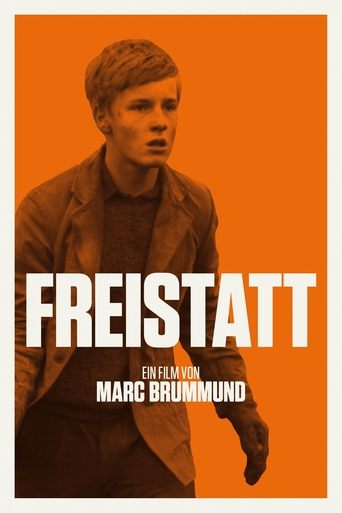
Summer 1968. 14-year-old Wolfgang is deported from his family in the secluded Church Welfare Institution sanctuary. One thing is clear for Wolfgang: His yearning for freedom, he will not soon buried in the bog.

Ex-con Zeki Müller goes undercover as a teacher at a below average Gymnasium to find money he'd stashed prior to incarceration.

The movie portrays the story of an Italian family emigrated in Germany in the 1970s. Romano (Gigi Savoia), the father, decides to open a pizzeria which, by mutual decision with the wife Rosa (Antonella Attili), will call Solino, leaving his sons Gigi and Giancarlo to work there. A hostile relationship comes to life between the father and his sons, which will end up in the escape of the boys from family.

Stories about citizens of a big city who encounter a variety of fates as a result of their difficulties in communicating with each other.

In this classic German thriller, Hans Beckert, a serial killer who preys on children, becomes the focus of a massive Berlin police manhunt. Beckert's heinous crimes are so repellant and disruptive to city life that he is even targeted by others in the seedy underworld network. With both cops and criminals in pursuit, the murderer soon realizes that people are on his trail, sending him into a tense, panicked attempt to escape justice.

On a winter morning, a mother goes to waken her son Heinrich; his bed is empty. She leaves her flat to find him. The neighbors' door, with a Star of David painted on it, is ajar, the furnishings in disarray, the family gone. She asks passersby, runs to the police then on to the rail yard. Flashbacks show that Heinrich and the neighbors' son Paul are six years old and best friends. Paul's family's deportation is expected soon; Heinrich's mother tells her son that they're going to Toyland. Heinrich wants to go with them, has a bag packed, and listens for their departure. His mother realizes he's joined them, and her resolve becomes more urgent. Will she arrive in time to save Heinrich?

Everything is under control, she thinks. Everything is lost, he thinks. And then they meet. And fall.

A man obsessed with video games becomes increasingly confused between the game and reality. When he causes a fatal accident and flees, a policeman, who is no less infatuated with his electronic surveillance system, follows in his footsteps. Both fall in love with the same woman, without knowing whether she actually exists, and become embroiled in a deadly duel as a result of their addiction.

Menschenfrauen is a film about relationships and the psychological oppression of women in society. Franz, a journalist, maintains relationships with four women. His three mistresses are introduced with television dreams of intense emotional violence (in the first dream, a mother shouts at her daughter, explaining that as a girl, she does not deserve a room of her own), and the fourth is his wife. He is desperate to have each to himself. Franz never offers a substantial sign of love, but is willing to say anything and make any promise for affection. His dependence on women for fulfilment is explained through arguments with his wife. He claims "I am my own sound. The women produce voices within me." An understandable and sometimes sympathetic antagonist is one of the films greatest strengths. The emotional damage he causes becomes believable.

This German political drama from iconoclastic filmmaker Herbert Achternbusch takes a slightly askew look at neo-Nazis and the Holocaust. His non-story (a typical trait of Achternbusch films) is divided into three parts. The first introduces Hades, an eccentric half-Jewish coffin maker. Also introduced are the women in his life. The second part depicts different scenes from the city's Jewish ghetto. Included are disturbing film clips from Nazi propaganda footage that shows the naked corpses of starved Jews piled up in the streets with the insinuation that the heartless relatives of the dead would unceremoniously toss them out when they expired. In the third part, Hades is buried at sea. In between, neo-Nazis march unopposed in Munich, Hades battles skinheads, and Hades' shop is repeatedly vandalized. A scene where Hades is fascinated with death is also seen.

On the beaches of Kenya they’re known as "Sugar Mamas" —European women who seek out African boys selling love to earn a living. Teresa, a 50-year-old Austrian and mother of a daughter entering puberty, travels to this vacation paradise, moving from beach to beach.

The monk Rasputin is summoned by the Russian nobility to use his healing powers to heal the dying heir to the Russian Empire.
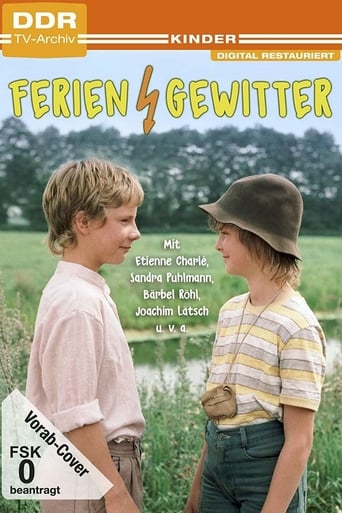
Summer holidays are beginning for 13 years old Daniel, a boy from East Berlin. He does not know yet that his parents are going to get divorced. They are afraid of Daniel`s reaction, so they have not told him about their decision until now. Together they drive to a village in the mountains. There Daniel finally recognizes the truth about his parents marital problems. When Daniel has an accident, this brings his parents together again, at least for the moment...





A soap-operatic mini-series about the history of Hotel Sacher in Vienna. It starts with the takeover by Anna Sacher after her husband Eduard dies at age 59. Most of the time, someone high or low in society seems to be kissing (or more) in one of the chambres séparées.
Prague 1942. The city is occupied by German troops. As the end of the war and the advancing Russian army comes ever nearer, the Czech chief inspector Beran and his assistant Jan Morava are hunting a serial killer. During his investigation, every step Morava takes is observed by Gestapo man Erwin Buback. Buback’s brief is to report to his Nazi superior Meckerle how closely the Prague police is linked to the Czech resistance movement. Then the Soviet troops reach Prague and in the armed rising against the occupiers even the most innocent become murderers.

Drama about the last ten years of Rudolf, Crown Prince of Austria.
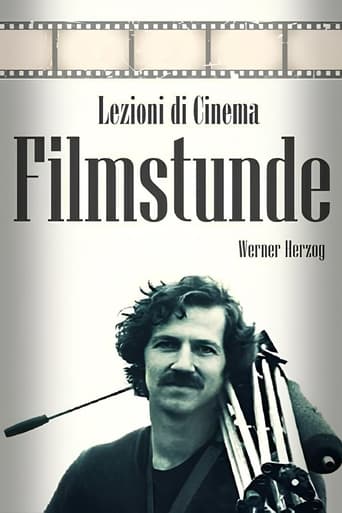
A 4-part series of interviews and demonstrations by various artists, authors and performers put on in 1991 for the Viennale film festival (which Herzog directed). Herzog conducts the interviews himself.

Familie Leitner is an Austrian television series.



Austrian Emperor Franz Joseph falls in love with young Elisabeth. It's love at first sight but Franz Joseph's mother Sophie doesn't approve of the relationship.

A young English navy lieutenant sets out to prove that the quickest way to reach India from London is by way of the Mediterranean and Suez rather than the long sea route around Africa and the Cape of Good Hope, which takes six months. With his friend, French explorer and natural scientist Martial de Sassenage, Thomas Waghorn leaves London in October 1829 with the aim of reaching Bombay in India in three months. The owner of a shipping line fears for his company's future should the two adventurers succeed, so he sends his agents to delay them along their way.

