
Casa din vis 1992
Căpălău, a peasant in a village near Brăila, tries to keep up with the turns of life. Based on "Ningea în Bărăgan” novel by Fănuș Neagu.
Căpălău, a peasant in a village near Brăila, tries to keep up with the turns of life. Based on "Ningea în Bărăgan” novel by Fănuș Neagu.

A gesture of defiance against Russia is made in 1905 by the sailors on the cruiser Potemkin, who received political asylum in Romania. In 2021, a sculptor is trying to make a work inspired by this event.

Aron, a 5-year-old boy, sets together with his worried father on a journey at the end of which he wishes, like the superheroes in the comic books, to save his mother suffering from a heart condition.
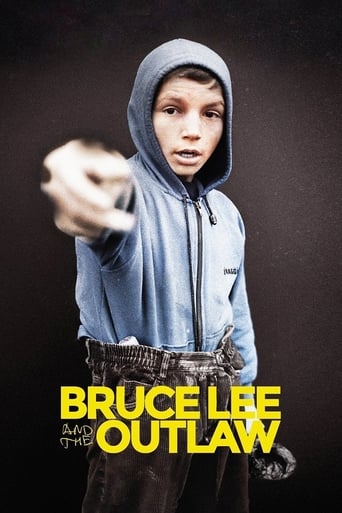
Nicu, a homeless street kid, is adopted by the notorious 'Bruce Lee' and brought up in the subterranean tunnels of Bucharest. As he grows up, he begins to realise that this 'King of the Underworld' may not be the father that he needs. Filmed over five years by photographer Joost Vandebrug, the film is a real life Oliver Twist story about growing up, and finding a family.
A young communist returns to a small provincial town.

Andrei is the head of a political party, a member of parliament and, at the same time, a prosperous businessman. He stopped being young a good number of years ago, but his love affair with the beautiful dancer Ana gives him the feeling of a second youth. On their way back from a mountain getaway, Andrei's car causes an accident, killing one man and injuring another. The victims were all former colleagues of Ana's band, and the deceased was Ana's boyfriend. The investigation into the cause of the accident and especially the statements of the survivor incriminate Andrei.

Ruxandra, a young woman just out of school, decides to become an actress, convinced that personal charm can keep instead of talent.
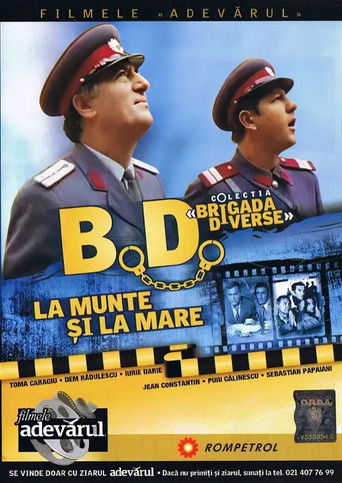
Misc. Brigade must solve a drug traffic case, in their own way
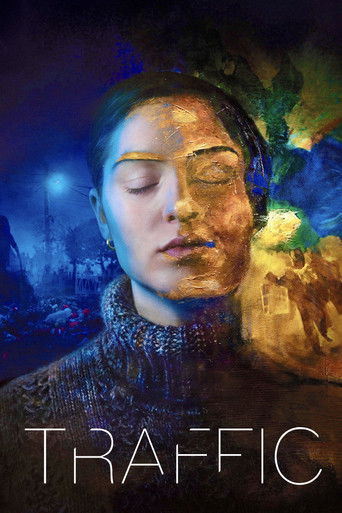
Natalia and Ginel leave their small Romanian Danube village to work abroad in Rotterdam. One evening, when she is assaulted after meeting a local, Natalia asks Ita, a friend from home turned into a crook, to help her.
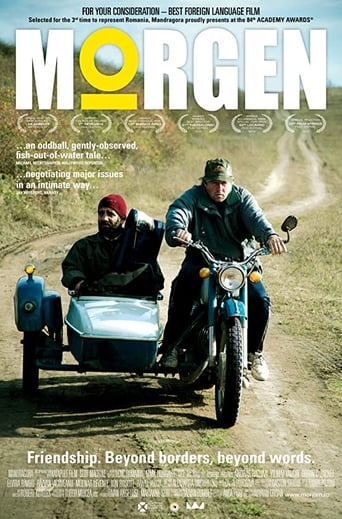
NELU, a man in his forties, works as a security guard in the local supermarket in Salonta, a small town on the Romanian-Hungarian border. This is the place where many illegal emigrants try to cross, by any means posible, to Hungary and then further to Western Europe. One morning, NELU will “fish” something different out of the river: a Turkish man trying to cross the border. Not able to communicate verballly, the two men will somehow understand each other. NELU takes the stranger to the farmhouse, gives him some dry clothes, food and shelter. He doesn’t really know how to help this stranger. The Turkish man gives NELU all the money he has on him so he will help him cross the border. Eventually, NELU takes the money and promises he will help him cross the border tomorrow, MORGEN…
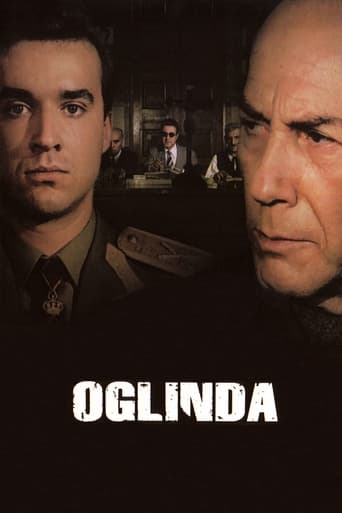
Depicts Romania during World War II, focusing on the Royal Coup that toppled Ion Antonescu, the Axis-allied Conducător and authoritarian Prime Minister. Focused around the August 23rd 1944 coup against Marshal Antonescu, the movie also tackles other topics from the same era such as the Iron Guard rebellion and the execution of political leaders by communists.
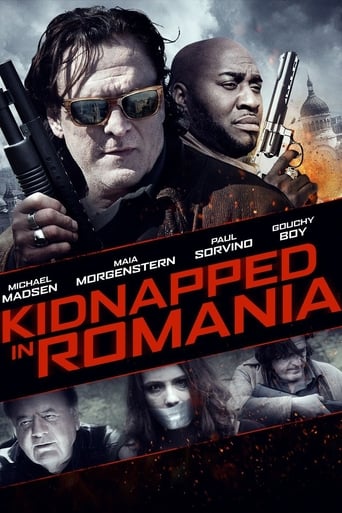
A couple of Italo-American journalists go missing during their work assignment in Romania.
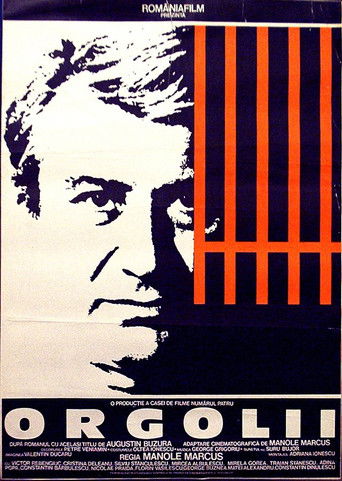
Professor Cristian conducts research on a citostatic. He is still dealing though with the unjust condemning he suffered in the 50s. Some of the people around him try to bring him down with same type of accusations.

Six Romanian artists get to live the dream of their life in a road-movie full of adventures: America, here we come! Coming all the way from Targoviste - a little town near the capital, the five actors, director, and a little child with his huge teddy bear, cross the ocean to perform in New York. Not everything goes according to plan though. The six decide, for some extra money, to start working with a local agent, also Romanian, settled in The States for some time, who promises them a major tour.
"Occident" is a bitter comedy about the people who want to emigrate from Romania, and about those who stay behind. The movie has a rich, interesting structure: there are three different stories - a weeklong in the film - that cross, interconnect and happen in the same period. The characters influence each others lives, sometimes even without knowing. Main characters from one story become secondary characters in another story. At the same time, scenes from the first part of the movie bring unexpected facts when seen the second or the third time. The stories do not have just one ending: the first story ends in each of the third parts in a different point, suggesting radically different solutions for the characters. The way in which the director fits time and links events together often produces thematically unexpected results.
During the summer of 1944, while Romanians turn weapons against Nazis, Mihai, an orphan teenager whose parents died in a bombing, tries to enlist in order to fight in the front line but he discovers that former police commissioner Potra tortured and beaten prisoners, including his father, who was political detained. Mihai will fight to bring Potra in front of the justice.
A man and a woman, eager for happiness and romance, encounter the desired reality, but fail to recognize it, preferring to take refuge in a space on the border between the concrete world and dreaming.
A happily married teacher finds out that a child of hers she believed dead for 10 tears is alive. On the trail of her first lover, she reconnects with her lost daughter.
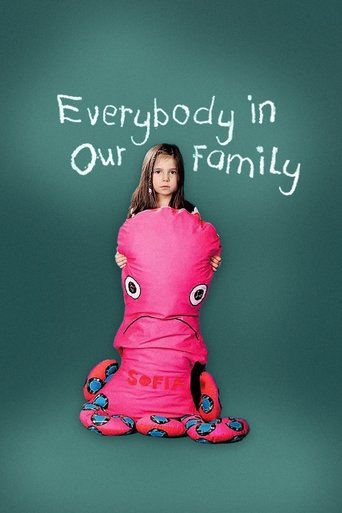
Marius is a divorced man in his late thirties. His five year-old daughter Sofia lives with her mother, which causes Marius a deep frustration. On the day Marius arrives to take his daughter on their annual holiday, he is told that she is ill but he doesn't believe it and insists to take her with him. The situation soon gets out of control with all the family taking part in a web of humor, violence, childish songs, police interventions and love statements.
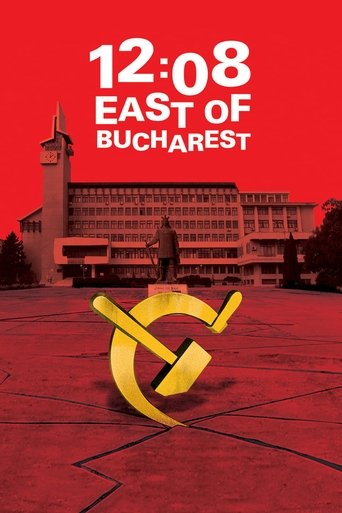
It's the 22nd of December. Sixteen years have passed since the revolution, and in a small town Christmas is about to come. Piscoci, an old retired man is preparing for another Christmas alone. Manescu, the history teacher, tries to keep up with his debts. Jderescu, the owner of a local television post, seems not to be so interested in the upcoming holidays. For him, the time to face history has come. Along with Manescu and Piscoci, he is trying to answer for himself a question which for 16 years has not had an answer: "Was it or wasn't it a revolution in their town?"
