
’Twas The Night Before Christmas 1925
Silent live-action visualization of the poem with some animation.
Silent live-action visualization of the poem with some animation.
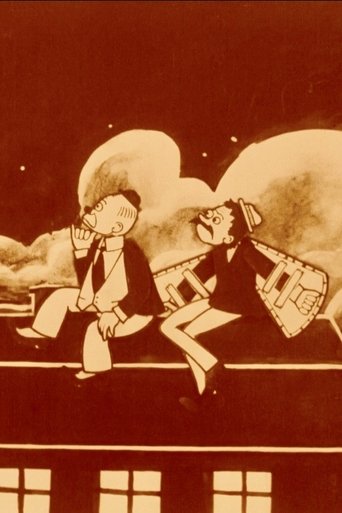
Ole Bims has invented a set of wings. Carrying a friend on his back, he flies away – all the way up to the sun, who hands him a bottle of brandy. But flying is not so easy when you’re drunk as a lord. (stumfilm.dk)

An amalgamation of two events featuring the British Empire Exhibition at Wembley

Brothel movie from the 20s
Brothel movie from the 20s
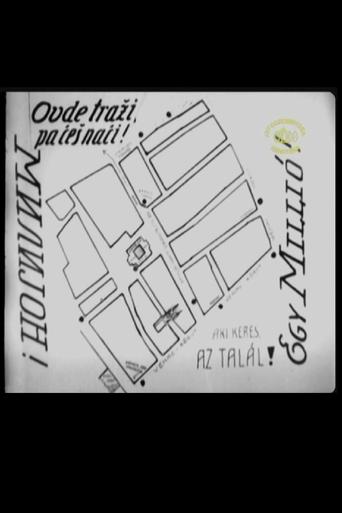
The very first Serbian animated film shows a pincer trying to find its way through labyrinth.
This rare fashion film is an exquisite showcase of Sonia Delaunay’s ‘Simultaneous’ dresses and fabrics, quite possibly made at the artist’s Parisian studio and home at 19 Boulevard Malesherbes. Dating around 1926-7 and filmed using the tricolor additive Keller-Dorian process (later also known as ‘Kodacolor cine film’), the film presents Delaunay’s geometric designs in rich colours. Having gradually shifted focus from painting to textile and clothing design in the early 1920s, and advocating the production of unique, one-off pieces, Delaunay treated her design work – and quite clearly also this film production – as an extension of her artistic practice. The film was one vehicle with which to make her case that there should be no hierarchy between fine and decorative arts (among other things, Delaunay used the film in her lectures about the influence of painting on clothing design).
A 1925 film.
Residences, offices, funeral homes, and Native Americans in Muskogee, OK.
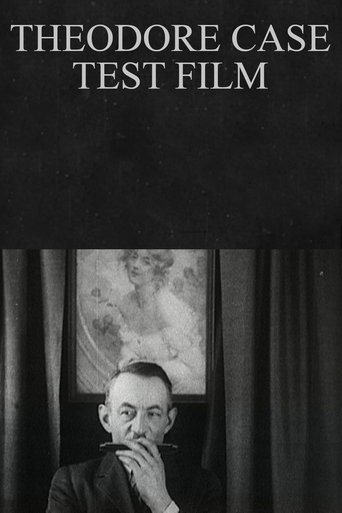
“An engineering graduate of Yale University, Theodore Case assisted Lee de Forest in developing sound-on-film called “Phonofilm.” Falling out with de Forest, Case and associate E.I. Sponable then built a laboratory behind Case’s family home in Auburn, New York, where they developed their own optical sound film system. Sold to William Fox, it was commercially exploited as “Movietone” with sensational results.” —David Shepard
American Short Film, Comedy
1925 animated cartoon in two-color Technicolor. The Old Family Toothbrush features a character named Kid Noah in “A New Redhead Satire” filmed in Naturecolor, using the Wilson Wetherald Process.
Documentary showing the making of Stetson hats, from animal skins to the finished product.
Series of animated vignettes linked by a disembodied hand which appears to be drawing the illustrations. In the first segment, the hand turns around a drawing of an old man and canine-hero Rin Tin Tin magically appears. In the second set of segments, drawings of children morph into adults who look completely unlike their youthful countenances. in the final segment, the hand slices up "The House That Jack Built" into the pictures of the most significant characters in the children's rhyme, and then reattaches the slips of paper to reform the house.
The film shows long-lost images of the early 20th-century Korean Peninsula, before the Korean War separated the North and South. The images include women spinning on cotton wheels, families making traditional tteok (rice cakes), a look at Dongsomun (Seoul’s ancient East Gate), which was destroyed just years later, and missionary activities in what is now North Korean territory. The footage was once stored in a German monastery, but later the Nazi government, which sided with Japan in World War II, tried to confiscate it because some of it could be interpreted as espousing a critical view toward the Japanese occupational regime in Korea. Fortunately, a monk saved the film, hiding it behind a stone wall in the basement before he died during the war. The film was rediscovered in 1975 during a renovation.
