
Tongue free, Tongue tied 2020
A short documentary focusing on the narratives and lives of 5 different women of different generations, offering an anthropological overview of traditions, customs and gender relations in Kosovo.
A short documentary focusing on the narratives and lives of 5 different women of different generations, offering an anthropological overview of traditions, customs and gender relations in Kosovo.
Beti, a woman in her late forties, together with her family, is deported by Serbian security forces from her home in the capital of Kosovo to the border village of Bllacë. With war breaking out in 1999, her story of survival is stitched together as the world she knew disintegrates. The seemingly endless cycle of cruelty Beti endures on her journey to a safe haven becomes a collective story of survival.
In the 1960s after Albania's break with the Soviet Union, the country became an unlikely satellite of communist China (Newsweek referred to the alliance as ‘Mediterranean Maoists’). Enver Hoxha called the bond between the two countries the ‘coming together of the 702 million’, China being the 700 million, Albania representing the two. In exchange for its chrome exports and introducing the 1971 resolution that got China into the United Nations, Albania received sustaining economic and military support. This short documentary focuses on the Chinese table tennis team’s friendship visit, which soon began to sour after US president Richard Nixon visited Beijing.
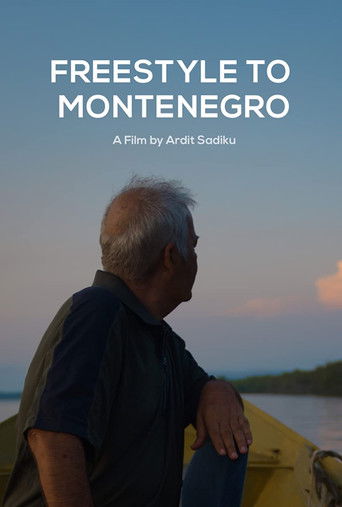
In the summer of 1987, Tonin Gjini swam from Albania to Yugoslavia, in search of freedom. Three decades later, he revisits the locations and recreates the events of that unforgettable experience.
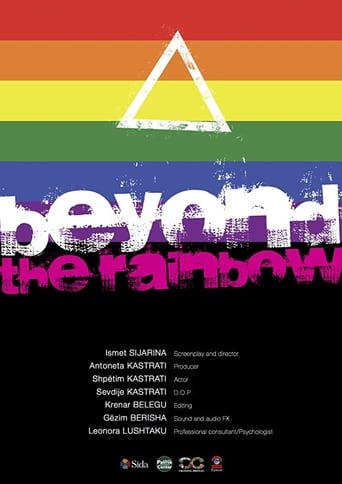
Homosexuality is one of the biggest taboos in Kosovar society. So much that the main characters of this film are hidden in shadows to protect them from the frequent attacks that occur against gays in Kosovo. This film gives the platform for Kosovo’s homosexual community to speak about their experiences and the discrimination against them, while shedding light on the subject through interviews with Kosovo’s religious leaders, psychologists, analysts and other citizens. Will society learn to accept these people as part of Kosovo’s new liberal reality, or must homosexuals remain in the shadows, hiding their true sexual identities in fear?
Helena was five years old when the Kosovo War began in February of 1998. She and her family were forced to flee their homes as Serbian soldiers swept the countryside, massacring ethnic Albanians and destroying their land. «Days of War» is a meditation on these experiences of war and displacement.
“What if women could move a house?” In “As If Biting Iron” (2019), Rizaj uses the medium of film to challenge this very question as we witness the walls of a brutalist building, situated in the forests of Kosovo, being moved by the forces of over 100 anonymous women. Pushing against the deadweight of the concrete, the burden of oppression literally and figuratively comes undone.
Four women, four heroines, who share a common fate. They have been brutally stricken by misfortune. It is not their shared past that brought them together, but it is “Hope” that keeps them alive, encouraging them to move on. “Hope” presents the different but powerful stories of Ferdonije, Auntie, Makfirete and Valentina. Although life can sometimes be very difficult, one must always try to find something to hold onto. Without hope, these four characters’ lives would have ended a long time ago. “Hope” has a power that even magic does not.
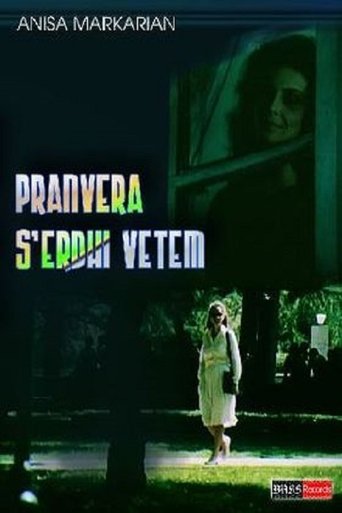
Irena, a young physicist, along with two of her colleagues, undertakes an important study far from home. She goes for a health check-up at the city hospital and learns that she suffers from leukemia. After recovering from her spiritual depression, she begins to come to terms with reality, appreciating every second of her life and the love she tries to avoid.
Kosovo 1988. Two young boys, a Serbian and an Albanian, raised together in a small town of Kosovo. As they grow up they find themselves in a war between two countries and on different fronts.
“Prizren - the City of Resources and Beauty” is a documentary directed by Zvonimir Saksida and produced by Zastava Film in 1972, which presents the history, traditions and beauties of Prizren with the aim of promoting the touristic potential of the city. Discovered in the Lumbardhi Cinema archive, it was screened for the first time during the exhibition “At Once Vague and Unavoidable: Modernities 1945-1989” produced as part of the partnership between Lumbardhi Foundation and Oral History Initiative within the project “Prizren Urban Memoryscapes” supported by Franco-German Cultural Fund, the French Embassy, the German Embassy, Municipality of Prizren and Sharrcem. The restoration and digitization of “Prizren - the City of Resources and Beauty” was made possible by the partner of the project, the French National Audiovisual Institute - INA and the French Embassy.
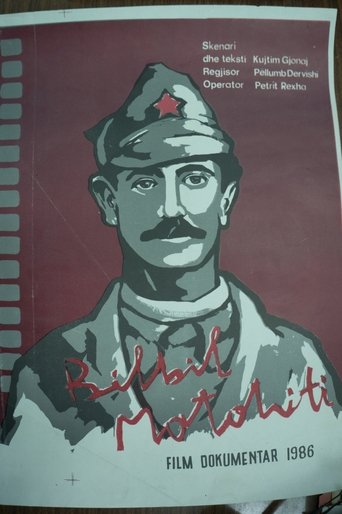
Documentary film from 1986.
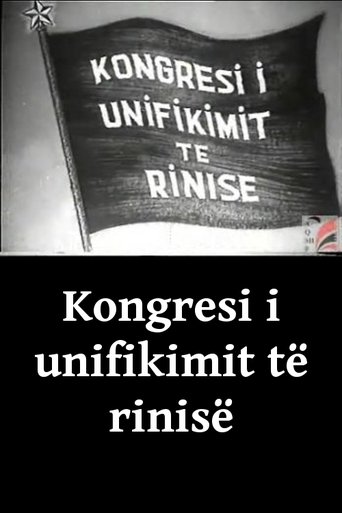
Congress for the unification of youth.

Documentary about the building of the Durres-Tirane railway.
Sala didn’t paint the Tirana facades in Dammi i Colori (Give Me the Colors), in his current show. Others did, as part of an ongoing project initiated by Edi Rama, the city’s mayor and a former artist.

