
Opowieść o bogini Amaterasu. Mit Japoński 1992
According to a Japanese legend, long ago the world was ruled by the Sun goddess Amaterasu. She had a younger brother, Susanoo, the god of Wind and Storms, who brought much harm to the earth.
According to a Japanese legend, long ago the world was ruled by the Sun goddess Amaterasu. She had a younger brother, Susanoo, the god of Wind and Storms, who brought much harm to the earth.

It's safe to say we're witnessing life and death on screen. Professor Grodzieński dissects a heart from a trout embryo. Microscopic images reveal the formation of the heart and its contractions. By eliminating individual heart components, we arrive at the contractile center. The effect of temperature on heart rate is profound. An increase in temperature is accompanied by increasingly rapid heart contractions. The heart pumps blood into blood vessels, their smallest branches reaching every corner of the body. We trace the movement of blood cells within the vessels. When the temperature exceeds 25°C, the heart stops.
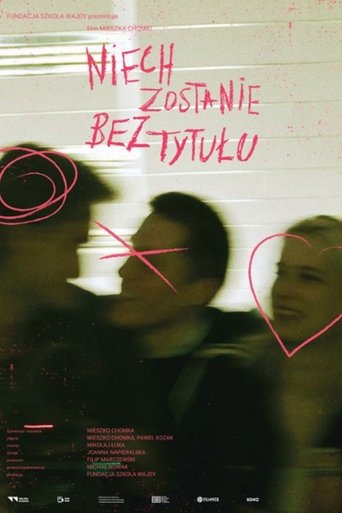
The film follows a young man as he tries to preserve his everyday life in the form of a video diary. He shares those important moments (both beautiful and trivial) with his girlfriend and his best friend.
A stop-motion animated film created by a Ukrainian artist living in Poland. Based on her own picture book of the same title, it addresses the difficult theme of depression in the family, told from a child’s perspective. The protagonists are a child and a mother struggling with depression. The child notices changes in the mother’s behavior, tries to understand what is happening, looks for ways to help, and at times takes on responsibility.
A special installment of the Polish Film Chronicle on March 8, 1949, highlighted women’s emancipation under socialism, emphasizing their roles in both light and heavy industries. The state supported women with childcare facilities, and feminatives were not used in job titles. Notable figures included Antonina Traczyk, a female shock worker, and Eugenia Pragier, a deputy minister. These changes were part of the Eastern Bloc’s feminist movement, as noted by the International Women’s Congress in Budapest.
Contemporary montage of shots taken in the first quarter of 1945 in Warsaw by an unknown cameraman. The special specimen is part of the project "Film Memory. Miracle at the Vistula River and other historical events in FINA's film resources".
The protagonist of the film, a retired miner from Silesia, has covered over 80,000 kilometers on foot. He is about to begin his third circumnavigation of the globe. He practices a rare and little-known sport in Poland: ultramarathon running. In two days of continuous running, he is able to cover 378 km – the distance from Bielsko-Biała to Warsaw. What is commonplace for him is impossible and crazy for the average mortal. His achievements are impressive: third place in the world championships in the 48-hour run and second place in the European championships in the 24-hour run. Despite this, he remains unknown to most people.
A comedy of errors: guitarist Bugi mistook his girlfriend for a marijuana plant, an angry police lieutenant mistook his duty for the TV show "The Bold and the Beautiful," and a certain unsubtle romance between a junior journalist and an audiotele presenter was washed away into the Indian Ocean by a tsunami...
A short tale of a man making his way in what would appear to be a consciously chosen direction and toward a concrete end. Waking at dawn in the wilderness, he begins to wander a road he knows well. As the sun sinks below the horizon, with his last remaining strength he finally arrives at the place which seems to be his home…
Veronica and her daughter arrive in a small town. Veronica has a plan but first she needs to ask someone for help – someone she hasn't seen for a while. This person is Thomas, a priest in a local church. Their meeting however will take an unexpected turn.
In the summer of 2021, the north-eastern European migration route was reactivated, prompting the European Union to adopt a harsh stance against migration, aligning with right-wing and conservative ideologies. The Polish-Belarusian border was heavily militarized, yet migrants continue to attempt crossings, facing severe repression from authorities. Meanwhile, the war in Ukraine since February 2022 has led to millions fleeing to Poland, with many finding temporary refuge in local homes. The film features members of the anarchist No Border Team, who discuss the ongoing crisis, state racism, and their efforts to support migrants at both the Polish-Belarusian and Polish-Ukrainian borders.
A film story about a group of musicians from Poland and Sweden who, led by Janusz Prusinowski, met at the end of 2015 to realize a year-long Polish-Swedish musical project. The starting point was joint work on repertoire, musical conversation, searching for answers, similar motifs and musical themes, and an attempt to create material for a joint album.

A visual experiment composed from simultaneous displays. Collage-type parallel of images becomes a sign of modernity, based on the chaos of multiplicity and excess. The collapse of linear forms leads to a complete degradation of borders, while the exhaustion of homogenous vision of the world – to the aesthetic eclecticism.
An outstanding artist talks about his painting. This moving confession leads from the emotions which moved a child years ago, to an artistic imperative realized several decades later. The extermination of Jewish Działoszyce has been preserved in memory and in art. The film is a reflection on the tragedy of a terrible time.
Joanna, brought up by her grandmother in the spirit of Orthodoxy, finished her studies in London and returned to a small town in Podlasie, the place of her birth. She knew she was doomed to an "intellectual desert" here, but she also felt she had a role to play. What role? She calls it a "search for truth". She researches the history of the borderland, her town and the people who once lived here, and these are often dramatic and controversial issues. That is why it is not easy for her. Attempts to get a job at the local school or community center ended in failure. She teaches young people, but she does it as a volunteer. She lives on the borderline between two worlds - the real one where she is still searching for her identity and clashes with the stuffy atmosphere of a small town and the unreal one which no longer exists - the Jews of Krynki whose memory she restores thanks to her voluntary work with the youth of Krynki.
