
Pina 2011
Pina is a feature-length dance film in 3D with the ensemble of the Tanztheater Wuppertal Pina Bausch, featuring the unique and inspiring art of the great German choreographer, who died in the summer of 2009.
Pina is a feature-length dance film in 3D with the ensemble of the Tanztheater Wuppertal Pina Bausch, featuring the unique and inspiring art of the great German choreographer, who died in the summer of 2009.
12-year-old Fabi has to finally prove himself as one of the family - by getting his first scar.
My mother googles the film hero of her youth: Helmut Berger. She is shocked: only an addicted shadow of the former icon seems to be left. She decides to halt the obvious catastrophic decline of the once “most handsome man in the world”. As a consequence, this one-time god of the screen is suddenly sitting on my mother’s sofa in Nordsehl in Lower Saxony. And he stays put - for several months. While he trustingly rolls out his whole life before us, the dividing lines between film team, world star and family intermingle. This is a film about ageing, rising and falling - and about the fact that it is sometimes possible to regain an element of dignity in life.
The first ascent of the Matterhorn was made on July 14, 1865 by Edward Whymper, Francis Douglas, Charles Hudson, Douglas Hadow, Michel Croz and two guides from Zermatt, Peter Taugwalder father and son. Douglas, Hudson, Hadow and Croz are killed on the descent after Hadow slips and drags the other three men down the north face. Whymper and the two Taugwalders, who survive, are later accused of having cut the rope that connected them to the rest of the group so as not to be dragged into the fall, but the ensuing investigation finds no evidence of their guilt and they are acquitted. The Matterhorn is the last great peak in the Alps to be conquered and its ascent marks the end of the golden age of mountaineering. One hundred and fifty years later, a team undertakes the same expedition in order to unravel the mystery.
Recording from the Burgtheater Vienna.
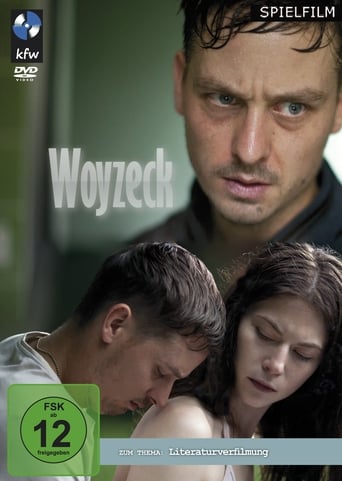
Woyzeck takes psychotropic drugs and punishes himself physically. He has no choice. It's his living. With what he earns selling his body and by working in a restaurant and in subway tunnels, he just about makes ends meet. Coming home to his wife Marie and his infant child, he’s an impotent wreck -- and definitely unable to afford the earrings he sees Marie wearing one day. She’s frustrated and the jewelry is a gift from the local pimp. Woyzeck wasn't supposed to find out. But he has. Plagued by voices, he loses his already weak grip on reality. He retreats into the tunnels with Marie and the baby. There Woyzeck is the master of life and death.
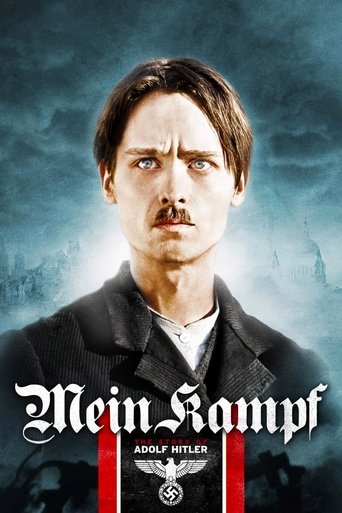
The young, despotic and untalented artist Adolf Hitler comes to Vienna to study art. He befriends the Jew Schlomo Herzl working on a novel with the title "Mein Kampf". Hitler is rejected by the Vienna Academy of Fine Arts. Herzl's concern for the sad young man continues, and leads him to a new career with disastrous consequences for world history.
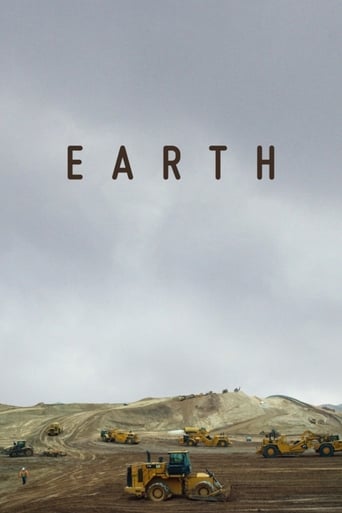
Several billion tons of earth are moved annually by humans - with shovels, excavators or dynamite. Nikolaus Geyrhalter observes people in mines, quarries, large construction sites in a constant struggle to appropriate the planet.
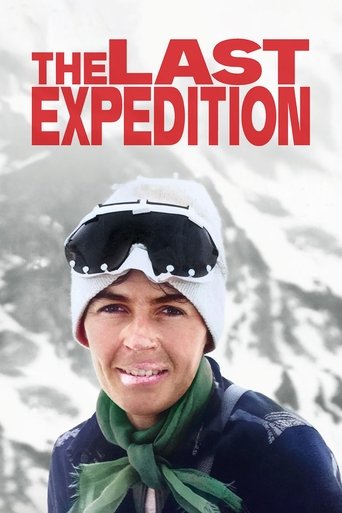
The true story of Wanda Rutkiewicz, the first woman in the world and the first person from Poland to climb the highest peaks on earth, told by herself.

Documentary on Lars von Trier
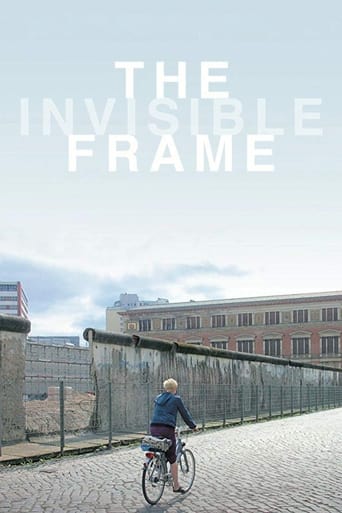
In 1988, Cynthia Beatt and the young Tilda Swinton embarked on a filmic journey along the Berlin Wall into little-known territory. The film is now an unusual document. 21 years later, in June 2009, Beatt & Swinton re-traced the line of the Wall that once isolated West Berlin. This film depicts this poetic passage through varied landscapes, this time on both sides of the former Wall.
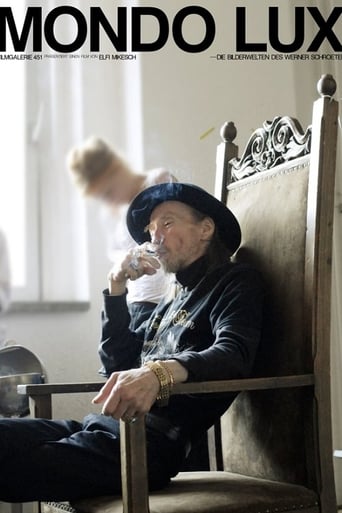
Werner Schroeter was one of the most significant proponents of New German Cinema. Schroeter was diagnosed with cancer in 2006. In her film, Elfi Mikesch, who photographed a number of Schroeter’s films and who collaborated closely with him to create his vision, provides us with an intimate insight into Schroeter’s artistic output during the remaining four years of his life.
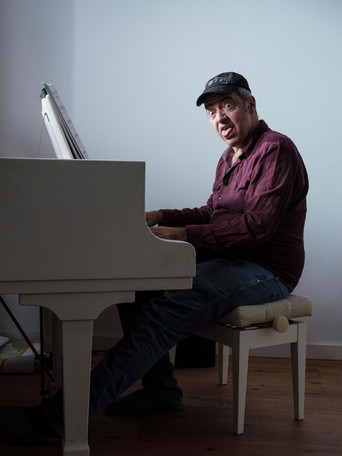
After suffering a stroke during a performance, cabaret artist Rainald Grebe faces up to his illness. A touching documentary about his return to the stage.
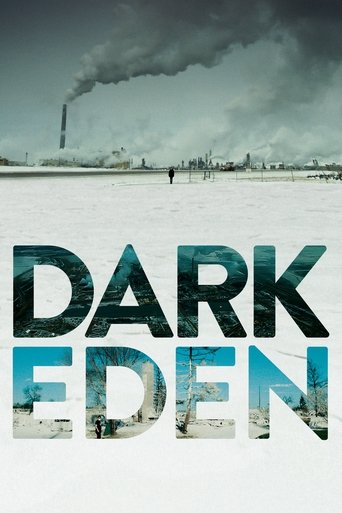
An exploration of the reality behind the dream of a better life; what is lost and what is gained in the pursuit of personal wealth and perceived happiness.
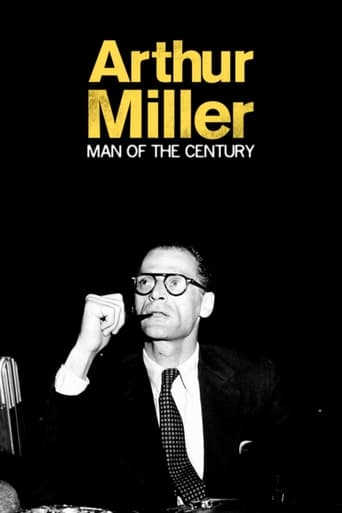
An unparalleled portrait of Arthur Miller (1915-2005), a major writer who left an indelible mark on the world. Miller's life is intimately connected with the great themes that marked the 20th century. Glamour, fame, social criticism and Marilyn Monroe.
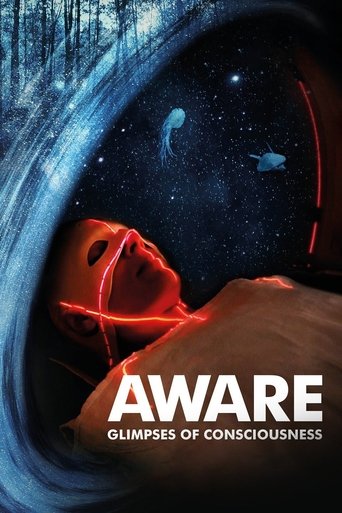
Aware follows six brilliant researchers around the world who set out to discover the true meaning of consciousness, the world's greatest unsolved mystery. Through radically different approaches, the cast of researchers take the audience into a fascinating world of high-tech brain research, eastern meditation, psychedelics, the consciousness of plants experiments and eventually beyond the explicable.
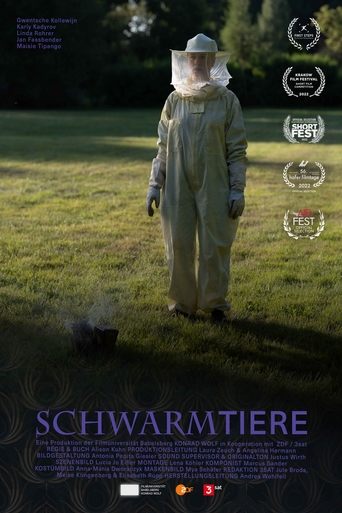
Karla doesn't have it easy as a newcomer at boarding school. Between bullying and exclusion, the 16-year-old is confronted with power struggles amongst teenagers. This adaptation of Rainer Maria Rilke's "Gym Class" shows Karla's attempt at dealing with these challenges.
Bianca Charamsa made her way to Japan during this year's cherry blossom season to get to grips with the country's character through conversations with some of its artists. Although two violent atomic catastrophes - the bombing of Hiroshima and the Fukushima nuclear disaster - have shaken and shaped modern-day Japan, the artist Takahiro Iwasaki believes that memory of 6th and 9th August 1945 is slowly fading, despite all the folded cranes left by visitors to the memorial sites. Natural catastrophes like sea- and earthquakes also rock Japan time and time again; perhaps this explains why the Japanese aesthetic Wabi Sabi incorporates both beauty and decay...much like the beauty of the cherry blossom as it withers during the annual festival of Hanami
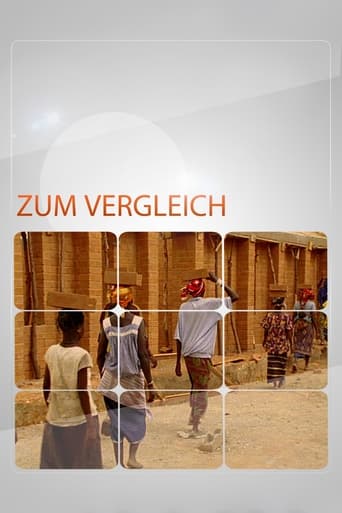
In Comparison revisits issues explored in the director's 2007 two channel installation Comparison Via a Third. Spanning continents and cultures, the film focuses on the brick in its many contexts, from the collective efforts of a community building a clinic in Burkina Faso, through semi industrialized moldings in India, to industrial production lines in Germany, France, Austria and Switzerland. Through its notable structure and its captivating rhythms, In Comparison presents various methods of labor production, allowing for an assessment that changes with every layer and goes well beyond a simple binary divide.
The Threepenny Opera proclaims itself "an opera for beggars," and it was in fact an attempt both to satirize traditional opera and operetta and to create a new kind of musical theater based on the theories of two young German artists, composer Kurt Weill and poet-playwright Bert Brecht. The show opens with a mock-Baroque overture, a nod to Threepenny's source, The Beggar's Opera, a brilliantly successful parody of Handel's operas written by John Gay in 1728. In a brief prologue following the overture, a shabby figure comes onstage with a barrel organ and launches into a song chronicling the crimes of the notorious bandit and womanizer Macheath, "Mack the Knife." The setting is a fair in Soho (London), just before Queen Victoria's coronation. In this production, Weill champion HK Gruber led the Ensemble Modern in a performance of Weill's complete original score, the first time it had been heard in Germany in many years. This production was broadcast on German television (3sat).

