
The Opening 2012
An early cut of the footage seen in Chants and Dances for Hand.
An early cut of the footage seen in Chants and Dances for Hand.

Documentary about the life of Haitian musician and song writer, Emmanuel Charlemagne. That artist was an important element of the popular Haitian socio-political movements in the 1980's and 1990's. His music had a strong presence and certainly influenced Haitian history prior to the departure of Jean-Claude Duvalier.
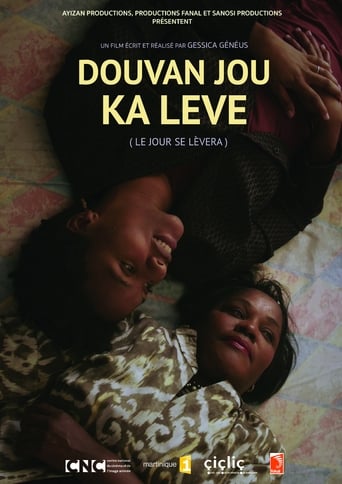
Stemming from her personal experience, her close ones’ testimonies and surprising encounters, Gessica Généus, Haitian filmmaker questions the “disease of the soul” devouring her native island.
Trials and tribulations of a poor peasant woman who moved to Port-au-Prince. Shot on 35mm.
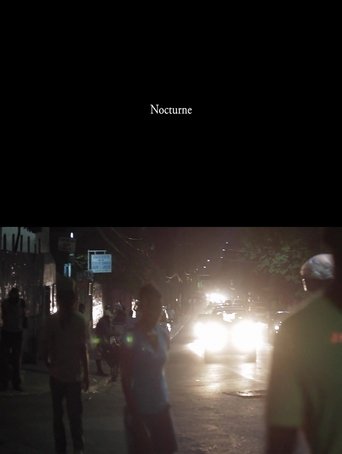
Nocturne was shot over 10 days (mostly at night), while thinking about material and poetic transformation—in dreams, in darkness, through objects or ideas—in Port-au-Prince, Haiti. During this time I was hosted by the Quatre Chemins Festival, whose collaborators became an important part of the project. Daphne Menard, appears in Nocturne singing a traditional Haitian song about a young man who goes off to buy coffee and is arrested by police. Guy Regis Junior's mother, an assiduous lottery player, describes her lottery dreams and the common system for deciphering their codes. Two young theater students, from ENARTS, Port-au-Prince's art school, rehearse a speech, written for the occasion.
The emblematic film of Haitian youth and the most exemplary, giving a new color to the stories of college students adapted to Haitian life.
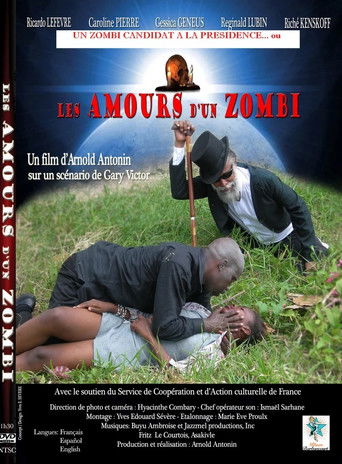
Zombie escapes from prison and says in TV that he's in love with a woman, becoming very popular in Haiti. Politicians decide to support his candidature for president.
Come see the sites and sounds of Haiti's Kanaval (Carnival) 2008 in Port-Au-Prince, featuring a plethora of local music stars.
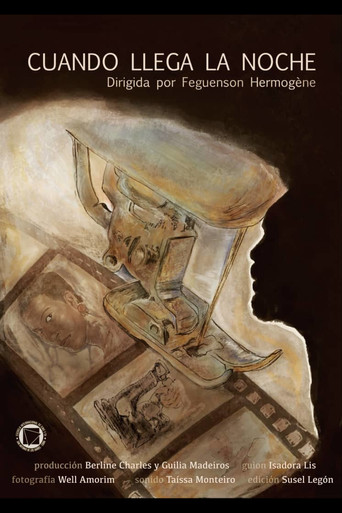
A short film about the director’s relationship with sewing, a craft he knew from a very young age thanks to his seamstress mother.
A 26-year-old man becomes gravely ill and died of an unknown disease. He was clearly hexed: it’s October 1980 and we are in Haïti. Meanwhile, in Reagan's country, health authorities have decided that Haitians, Homosexuals, Hemophiliacs and Heroin users are to be part of the 4H club whose members are dying in New York City, San Francisco, and Toronto. Why put the Haitians in a separate group?

Paul Junior Casimir, better known as Lintho, is a Haitian puppeteer. While he quietly carries on with his art, he becomes the object of jealousy from those around him and he is arrested without any reason. The artist will spend 407 days in prison.
Ritual dances, incantations and fetishes in an associative sequence of mystical scenes reveal the roots of the Afro-Cuban minority in Bauta, Cuba, whose colonial past is guarded by a statue of a slave in chains. Tobacco smoke and magical ceremonies awaken the spirits of ancestors and invite them to fill the forgotten places of cultural memory of a young generation searching for their identity in a post-colonial era of political instability and religious syncretism.

The Haitian Revolution 1791-1804 echoes in a small town in Rio Grande do Sul. Ancestral and diaspora songs are evoked to confront the colony, its representatives and its laws.

In French Guiana, in the middle of the carnival period, Emmanuel and Léon, two young, mixed-race brothers, attend their grandmother's funeral. Confronted by the reminiscences of the past, the memories of their childhood resurface and with them deeply buried secrets.
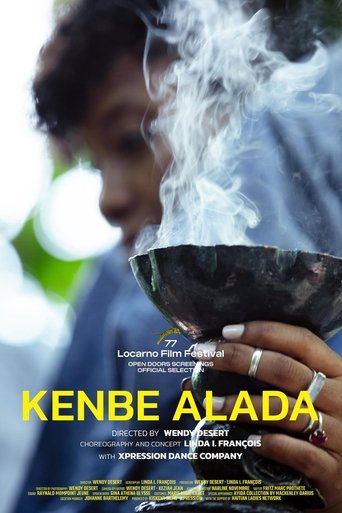
The result of a close collaboration between dancer-choreographer Linda I. François and filmmaker Wendy Desert. Song, poem, trance, and ritual blend into a folkloric world where every gesture tells the story of a people in search of their identity and roots.
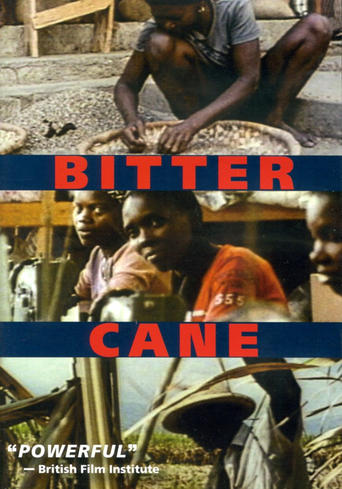
Six years in the making and filmed clandestinely under the Duvalier dictatorship, Bitter Cane is a timeless documentary classic about the exploitation and foreign domination of the Haitian people. From peasant coffee farms in the rugged tropical mountains to steamy US-owned sweatshops in the teeming capital, the film takes the viewer on a journey through Haitian history to a deeper understanding of that country's political economy.

In the Schloss Friedrichsfelde–a picturesque, neoclassical pleasure palace in North East Berlin–the ghosts of history begin to make themselves seen. Summoned by a syncretic Afro-Caribbean prayer ceremony, embodied spirits emerge and usher us through the halls of former “Rosenfelde Palace.” Sold from Groß Friedrichsburg along the Gold Coast, these ghosts of history fill the Schloss Friedrichsfelde—built in part with the profits from their enslavement.
The Haitian Sea, as you’ve never seen or heard it before: the sea tells the story of its relationship with the Haitian people, showcases its riches, reveals its mysteries and raises the alarm. From the excessive use of its resources to the consequences of climate change and pollution, all is revealed in different shades of blue. Haiti’s fate will be linked to the coasts and the children of Haiti – voodoo priestesses, fishermen, merchants, entrepreneurs, urban planners, historians, biologists and climate experts – help to tell the tale. A candid depiction of the challenges and the opportunities that must be seized before it’s too late.
The film Zatrap, shot in Black & White, in 16 MM, and in Creole/French, pinpoints the problems of a departmentalized Martinique, which no longer produces anything and depends on containers to feed its population. A Martinique that was preparing to "give" its daughters and sons to the mother country, metropolitan France, to work for the PTT (post office), the RATP (metro) and the AP (hospitals). At the time, Césaire called this transfer “genocide by substitution”, because at the same time as these young people were going into exile, other inhabitants from France were settling in Martinique.
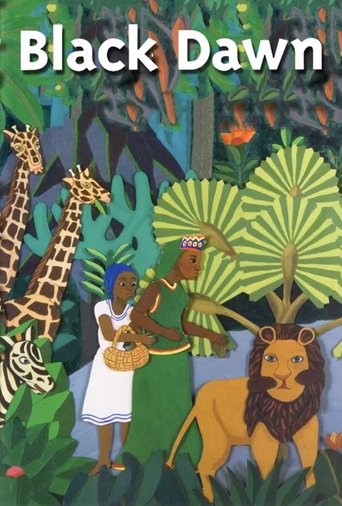
Recounts the founding of Haiti through the eyes of two captured African tribespeople, Sili and Simba. Starting with their capture in Africa, the story follows their trans-Atlantic journey on a slave ship to Haiti. There they escape their slavery on a French plantation and join the fight for independence led by Toussaint L'Ouverture and Dessaline, ultimately joining in the celebration of the first raising of the Haitian flag.

