Absurd People 2011
This film is about human alienation in a consumerist society. Nowadays man surrounded by modern industry tools founds himself solitary. He seeks his way out of the routine and enforced life norms but all he meets is a dead-end.
This film is about human alienation in a consumerist society. Nowadays man surrounded by modern industry tools founds himself solitary. He seeks his way out of the routine and enforced life norms but all he meets is a dead-end.

Investigative documentary tells a story of a Soviet Army soldier Artūras Sakalauskas. On the way home in a train after the Army training, he was humiliated and abused by his fellow comrades and shot all eight of them. Beržinis interviewed different people touched by this tragical event.

When Henrikas Šablevičius started filming Lithuanian “oddballs” – a professor, a fortune teller, racers, and many others who fell short of the concept of the “model citizen” – he invented a bizarre new genre of documentary biopic. Characteristic of these portraits is a sense of mocking irony directed not at their subjects (on the contrary, the filmmaker’s affection for them is palpable) but at the “Soviet hero” genre. The subject of this film is Apolinaras, a kindhearted policeman who even outwardly looks very unlike the ideological “guardian of morals.”.
Eimantas and Migle finally decide to move in together. One day Eimantas notices a snake in the toilet. While this confrontation ends without any casualties the atmosphere between the couple changes when the fear of a reptile at their house, slowly turns into the real paranoia.
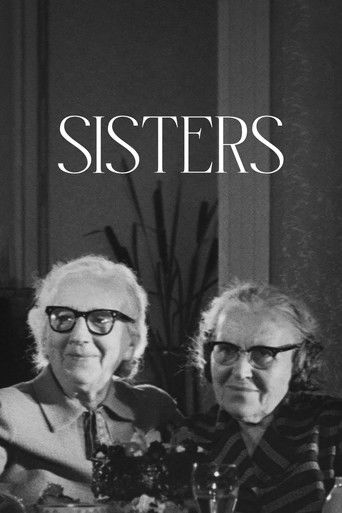
As people approached the 100th anniversary of Mikalojus Konstantinas Čiurlionis, all people, though somewhat related, became important. The film's heroines are the artist's sisters Jadvyga and Viktorija Čiurlionytė. The verbs were usually concerned with revealing the man, he did not even emphasize the difference between a celebrity and an unknown person in the village. And in "Sisters", the director is interested in the communication between the two sisters of honorable age, their states, relationships, insignificant, seemingly replicas, rather than building a monument to the brother.
A film about theft— stealing a toilet and robbing a bank.
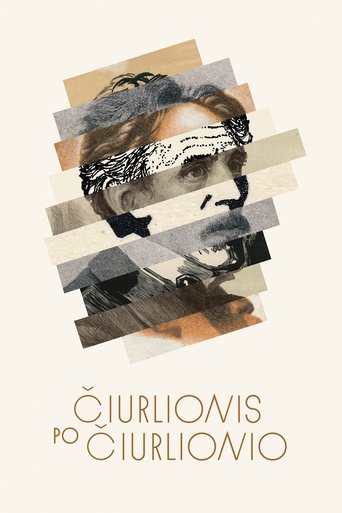
The film examines the development of public narrative, assessment and perception of the artist in different eras. After the death of MK Čiurlionis, an image of a lone genius, the embodiment of the spirit of the nation, is formed.

Animated short.
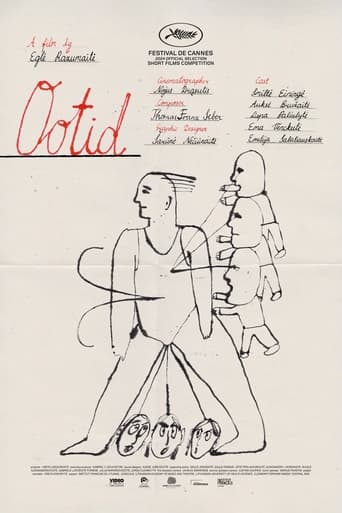
Girls at summer camp raise different versions of what happened to one of their friends who had to leave the camp and go home.
Gustoniai is a village located in the northern part of Lithuania. This place also lends its name to a contemporary art project that commenced in 2001. Every three years, artist Darius Ziura shoots a one-minute video portrait of every villager that has agreed to participate in the project. These portraits are then pieced together and edited into a film. With every episode, the project expands it’s time spectrum, thus reflecting on changes both in people’s age and lifestyle, as well as the evolution of social structures and processes, which are affected by the changing socio-political situation in the country. This project also reflects on the rapid changes in filming techniques and editing strategies, presenting the different trends of visual culture of every period.
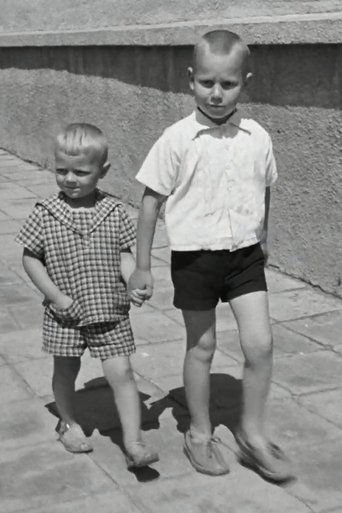
The film about the city of Naujoji Akmenė is regarded as one of the first Lithuanian attempts to liberate itself from the stereotypes of the Soviet documentary. Even though the remnants of the “Socialist prosperity” are clearly perceptible in the movie, the process of directing is obtaining more freedom: the voiceover is losing its canonization, and the power of the narrator is given to the main character, a small child Virginijus.
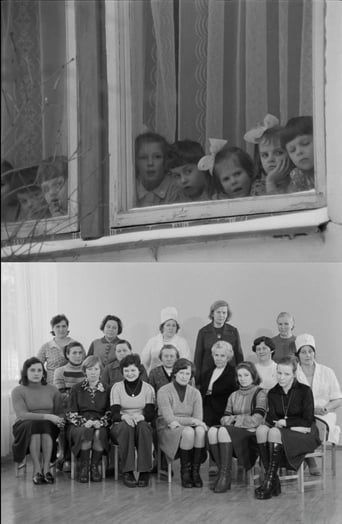
Documentary about a school for kids from troubled homes.
A poetic film about ancient Lithuanian traditions and rituals.

A film generated by artificial intelligence, based on the drawings and music of Mikalojus Konstantinas Čiurlionis. Viewers will be able to immerse themselves in a surreal journey through an abstract world. This is the first project of its kind. The chosen audiovisual motifs are known only to the AI.
Emilija Škarnulytė’s immersive installation is inspired by the Kaunas Tadas Ivanauskas Zoological Museum’s displays. For her performative, cinematic piece she brings together the poetic and scientific to create a sensory experience that investigates the philosophical concept of Deep Time and events on a geological scale. This story of survival through time, unfolds with the choreography of artificial lights and sounds. Škarnulytė’s work evokes time travel and can be understood as a form of archeology of the future. Here, she investigates the unknown, including pre- and post-human evolution and adaptation, the current intersecting structures of power and the devastating effects of climate change.
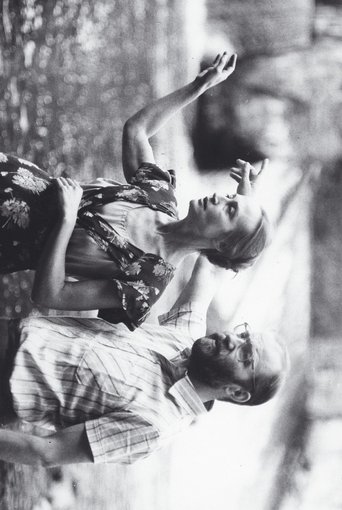
A village is a place to escape to from all urban neuroses. At first sight, the hero finds everything is simple and clear. Even his personal drama (he is nearly divorced from Deima) seems to be solvable.
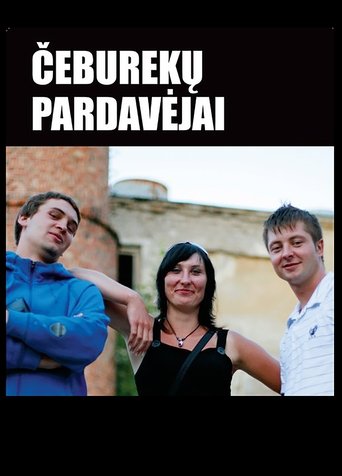
"Hot Čeburėkai, cold beer" -- is probably the best known slogan of illegal Lithuanian bussines. The slogan comes as a set together with the vacation at the seaside resorts for more than twenty years. But who are those young people selling čeburėkai at the seaside? How many of Čeburėkai one needs to buy to collect a kitten? How many of čeburėkai needs to be taken to the policemen at the hotel so that the next time he wouldn't chase you through the sand dunes? These questions will be answered by three old friends -"Čeburėkai sellers" - Sigis, Asta and Rokas. They will lead us to the secret world of Čeburėkai sellers, where it's hard to get and even more difficult to get out.

Original folk craftsmen-sculptors who are united by the traditional, wood carving craft that came from centuries old.

