The Way to Kangaroos 2012
Macedonian amateur feature production.
Macedonian amateur feature production.
A story about a man who appropriates other people's knowledge and achievements and erects a monument to himself in whose justification and necessity he believes.
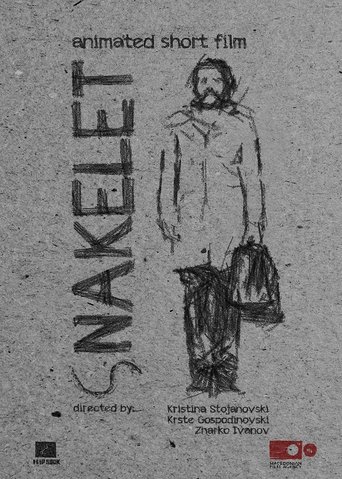
A broken man disappointed by his wife, his friends and the whole world around him, decides to leave civilization and live in the wilderness. In the forest he makes an unexpected new friend – a snakelet.
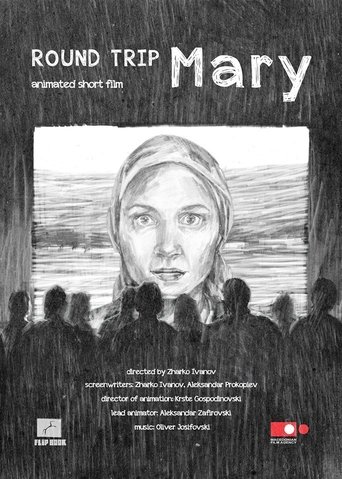
Round Trip: Mary is the second part of the Round Trip trilogy. A young cowgirl in a small village is rounding up her cattle and preparing herself for a trip to the town. On her way there she meets different people in different situations. In the town she is attracted by the cinema and the film posters and enters a cinema for the first time…
The natural beauties of Dojran Lake showing the unique method of fishing by birds.

Fantastic love between two billboards...
Produced at International Video Colony Ohrid, Macedonia 1989. Screened in retrospective at Alternative Film/Video Belgrade Festival 2014.
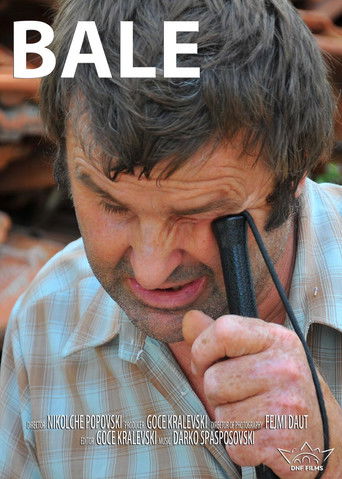
Bale is a middle-aged man who became blind when he was a teenager. He used to live with his mother, his father, his brother and his two sisters. After finishing high school in Skopje he returned to Brajcino at his family. His family has not been a pleasant environment. Quarrels and rows fulfilled Bale’s everyday life. Having a father addicted to alcohol made problems inevitable. But besides all the disruptions, Bale have grown into a mature person that couldn’t succeed in life only because of its state of invalidity.
The film treats those thematic contents of the fresco painting in the church "St. George" in Staro Nagoricani that present the cruelty in the persecution of true fighters for the Christian faith. "In the summer of our Lord 1317, the great painters - Evtihie and Mihailo Astrapa, were called upon to decorate the church of St. George in Staro Nagoricani with magnificent paintings: the dazzling elegance of the style did not prevent them from depicting scenes of unstoppable executioner's invention in the calendar and life of St. George."
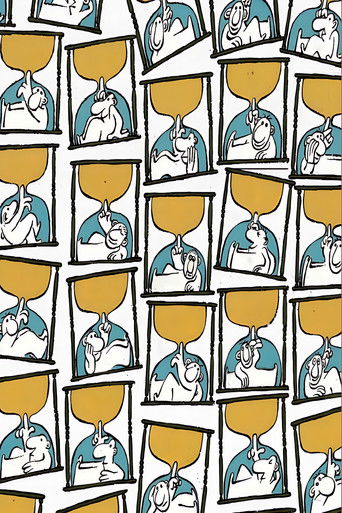
Through the hourglass, which metaphorically represents the unstoppable flow of movement, that is, the cycle of life, the individual is first represented, and then, through collectivism and the structural symbiosis of individuals, the entire humanity is marked within the closed circle of life, called existence.
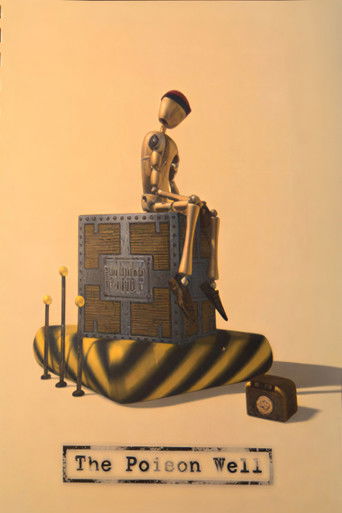
A 20 minute animated film by Nikola Chikos
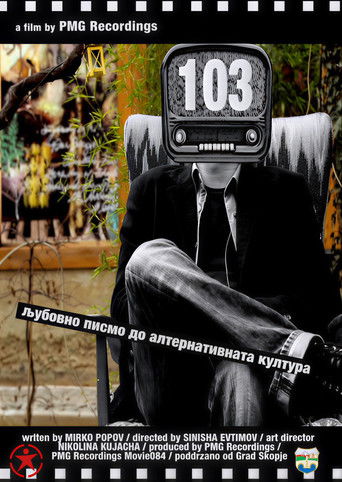
A story about Kanal 103 – cult and unique alternative radio station from Skopje, Macedonia.
Reportage about Baki Imeri, poet, translator and journalist. From a Romanian mother and an Albanian father, Baki lives and works in Bucharest. A man who amazes with his creative energy and with his desire, and efforts, to create real bridges between peoples, using artistic and cultural values.
The film deals with the frescoes in Macedonian churches, which are harbingers of the Renaissance. Special attention is given to the medieval churches: "St. Panteleimon" in Gorno Nerezi and "St. George" in the village of Kurbinovo. Two hundred years before the Renaissance began in Italy, the Renaissance began in Macedonia, with the frescoes of the famous masters Mihail and Evtihij. Comparing the fresco "Lamentation of Christ" by Giotto di Bondone, who is considered a harbinger of the Renaissance, and the same fresco by Mihail and Evtihij, one notices a great similarity in the psychological analysis of the characters.
A film about the members of the USKA-KAN trumpet orchestra from Berovo. Uskata is a middle-aged man who lives with his family in a Roma settlement. He talks about his love and talent for music. Together with his son, they play the trumpet and practice constantly. They find inspiration in world-famous jazz performers, such as Louis Armstrong. Together with their orchestra, they participate in festivals and are winners of awards for the best trumpet orchestra.
A documentary about the monumental fortress Carevi Kuli, located above the city of Strumica, at an altitude of 445 meters above sea level. The fortress dates back to the 5th century BC and was an important geo strategic site throughout history.
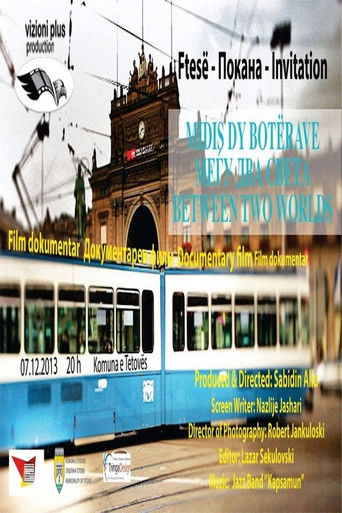
Traditions, distance, migration, language, and traditional customs will make up the mosaic of this documentary film which will present a concrete reality with the means of expression of the film.
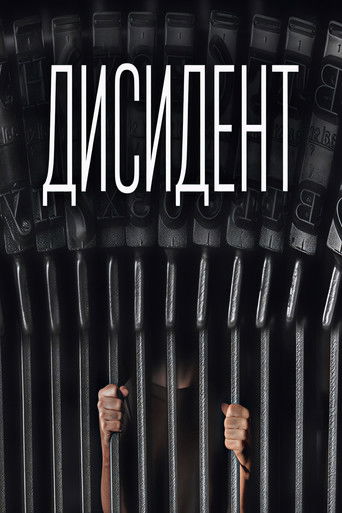
A film about the life and work of the Macedonian dissident Dragan Bogdanovski, one of the most famous Macedonian political emigrants after 1945. His contemporaries speak about Dragan Bogdanovski, as well as documents, daily press, and photographs. The film uses both live action sequences and authentic footage of Bogdanovski (audio and video).
In 1982, a fifteen-member Macedonian mountaineering expedition leaves for South America, in the Cordillera Blanca region in northeastern Peru, to realize the planned climb. The film follows the entire journey of the expedition – from Skopje, through Paris, to the peaks of Huascaran.
The personality of Lazar Lečić, coach of the basketball club “Rabotnički” from Skopje, is an example of enormous dynamism and professionalism in his work. Following his reactions during a basketball game, we witness a real drama filled to the maximum with a variety of emotions and gestures. His face fully and in a very characteristic way expresses everything that happens on the court.
