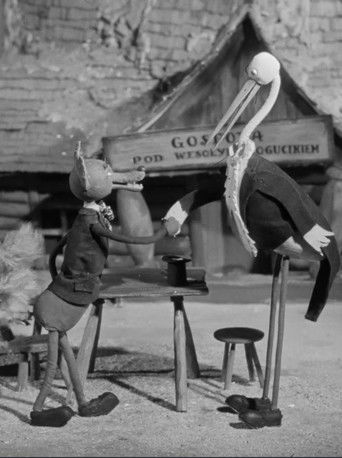
The Fox and the Stork 1951
The classic fairy tale about a miserly fox who served a stork his dinner on a flat plate and the stork who returned the favor by serving his dinner in a narrow jug.
The classic fairy tale about a miserly fox who served a stork his dinner on a flat plate and the stork who returned the favor by serving his dinner in a narrow jug.

Presenting the cycle of life through the story of two sand dogs.
Kościsław is a little skeleton who wants nothing more than to play his guitar. Unfortunately, his lack of assertiveness is a major obstacle.
The workshop participants reflected on situations from their own lives that had left a particularly strong impression on them and which were related to seemingly trivial gestures. Based on these memories, they created a film story about the value of mindfulness in relationships and its great impact on the quality of our lives. The film was made as part of the workshops during the 17th ŻUBROFFKA in Białystok in December 2023.
Iron powder mixed with car oil was used to carry out the work, which was then manipulated by means of a neodymium magnet placed under the animation table. The effect has been perfectly synchronized with electronic music.
Animals play the role of people.
Short animation
The video is a collection of fragments and snippets that switch like TV channels. Wide access to cable and satellite television contributed greatly to this phenomenon (the “Viva generation”). Most of the content is found footage from low quality amateur videos (recorded using early digital cameras and mobile phones), as well as from some of the first TV programs on clubbing. The party goers shown in the video are dancing at Łódź’s Love Parade, on a Polish platform at the Love Parade in Berlin, at a Hardbass hooligan event in Łódź, as well as in various urban and rural clubs. For some techno was boiling with aggression and stupidity, for others it was a form of collective fun and self-expression.
In 1998, for the New Year’s Eve party at the Forum Fabricum club in Łódź, Zammenhoff created the video work called 'Manifesto'. The film was presented within an installation formed of many television sets and functioned as the party’s decor. The artist delivered an address in which he expressed a pessimistic evaluation of his own belief from the beginning of the decade in the potential of new techno-culture to radically transform reality.
Cyprian, Filip, Ola and Kuba – four, out of fifteen of young patients who are in a long-term coma. Their parents are determined to help the and bring them back to life. The film presents an unusual story of people, who are not giving up in the face of tragedy. They are filled with hope and fight for the health of their children at the “Alarm Clock” clinic located near Warsaw. Most Polish hospitals serve as a sort of a checkroom to children in a comma, while the Alarm Clock clinic is a worldwide phenomenon – it offers just fifteen beds, but managed to wake up eight patients in one year.


"Once Means Forever" is a short animated film, which shows us, without delusion, story of young women. Girl who could be any other women. Looking by her eyes, we will be troubled by her one day. The day which will change her life forever.
In the late 1960’s, four strong men from a local bar in Wroclaw in southwest Poland carried a 150 kg heavy German-made "credenza" from one side of the Zgodna street to the other. Then it disappeared. Against the will of his mother, the filmmaker and son sets out to find the vanished piece of furniture in the place his family escaped 40 years ago, and finds a new perspective on the emigration. In sensitive and tragicomical observations, shot mise-en-scène in one building, this wild goose chase can also be seen as a social experiment about how much we are an oblivious product of history. The background are the mysterious and dramatic spring months of 1968 in Poland - a time that until today evokes a lot of controversy inside Poland while it is largely unheard of outside.
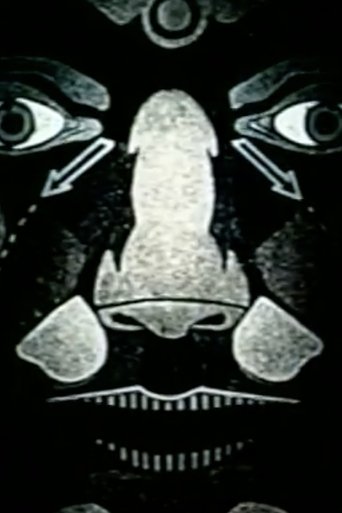
A film mocking the consumerist attitude towards life.
The attack of the Colorado potato beetle on crops in the GDR, Poland and Czechoslovakia in 1950 was interpreted by the authorities as a planned American action against the Eastern Bloc. The Americans were to drop the Colorado beetle from planes which provided aid for the people of West Germany. Propaganda was spread everywhere – posters, radio, and cinema. In the film "Stonka", apart from propaganda and instructions, we could see some high-quality shots showing the beetle's life cycle. The voiceover’s commentary and the Colorado beetle close-ups make the production more dramatic. It is typical of nature films, in which the state television specialized later. Apart from the history of the pest, the potato is another protagonist of the film - its position in the Polish diet, agriculture, and customs. "
An allegoric narrative about Polishness, and the romance of martyrdom often attached to it. The sacred space of a church is established, full of symbols of Polishness and spirituality. The corruption of this sacred space is depicted through the autonomous motion of objects: a purse full of coins suggests that Poland has been sold to foreign countries; struggle is symbolized by swords, helmets, shields, and flaming torches; and a more general decline is conveyed through the symbolism of food and alcohol.
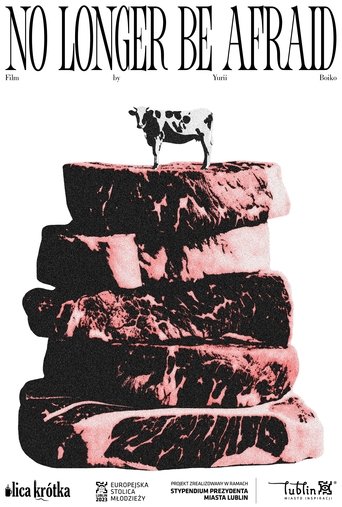
Every day millions of animals are killed for consumer purposes in the world. Among them is also our X.
