The Fourth Man

The Fourth Man 2010

1

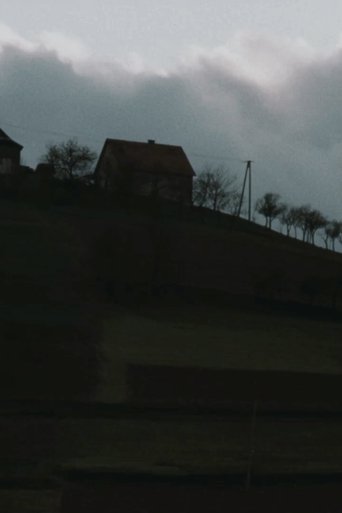
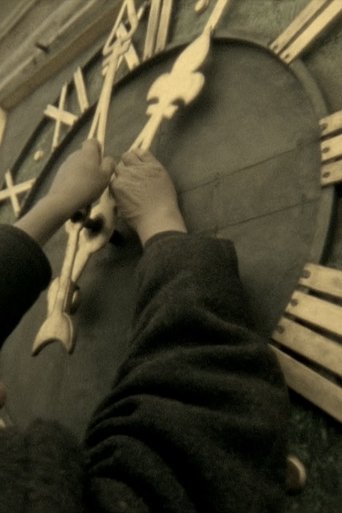
Wilderness in the Bieszczady mountains, with the nearest shop eight kilometers away. These are the conditions in which Zbyszek who burns charcoal decided to live. He treats hard work as a kind of atonement for his past deeds. Three tar makers who worked with him, including his son, are already dead. The man sees a link between their deaths and his deeds. His next companion is black Gustaw whose dream is to study medicine. Will he turn out to be the title fourth man?
2010

The First Cosmonaut

The First Cosmonaut 1996

1

In February 1942, aerospace doctors Zygmunt Rascher, Zygfryd Ruff and Wolfgang Romberg conducted a study on the issue of high altitude flight at Dachau Concentration Camp. Over 200 prisoners were used in these experiments and about 80 of them lost their lives. The document begins with the reading of the letters by Zygmunt Rasher to the Reichsführer on experiments; They contain accurate descriptions of death and autopsies. From the documentary we learn that the first man who crossed the space was an anonymous merchant of Jewish nationality - it was in Dachau, 19 years before the Soviet space flight Yuri Gagarin.

1996

Women, Cats and Children

Women, Cats and Children 1995

1

A short documentary about women, cats and children and the relative importance of each to the other.

1995

Zertwa

Zertwa 1988

1

The film is set in the Bialystok region on the holy mountain of Grabarka, the areas of Siemiatycz, Milejczyc and others. The protagonist is John Trochimczyk, who driven by misfortune decides to carry the cross before the feast of the Saviour and dedicate it to Grabarka to rescue his sick wife. With a wooden cross provided, he meets along the way local people and all the time is approaching the sacred mountains of Grabarka.

1988

Dedykacja

Dedykacja 1987

1

The documentary presents children from the village of Paszyn, who paint on glass. The boys also became interested in carving figures in wood. They were encouraged by the local parish priest, Father Edward Nitka, to develop local, folk culture. The children talk passionately about the themes of their works.

1987

The Sheriff's Case

The Sheriff's Case 1987

1

Documentary portrait of a mysterious man who guarded order in Lomza in the '80s. Memories of the sheriff provide an opportunity to show the grim reality of Lomza. Focused like a lens on some problems plaguing the country - alcoholism, stupefaction, the disappearance of ambition and aspiration, crime, the lack of hope for any change. All this is tried to be remedied by the almost fairy-tale character of an extreme idealist from Lomza - the title sheriff - who single-handedly undertakes the fight against all manifestations of evil, exposing himself to ridicule and even suspicion of mental illness.

1987

Proba

Proba 1987

1

Children from the Youth Culture Centre in Nowy Sącz, under the care of their instructors, prepare for a performance to dance and sing together. They belong to the regional song and dance ensemble "Sądeczoki". They try to follow the teachers' instructions as best as they can to improve their skills and refine their performance.

1987

A Night at the Palace

A Night at the Palace 1986

1

A portrait of the employees of the Palace of Culture and Science in Warsaw. The film shows one night, during which we witness the duty of its guards, cleaners, guards, elevators. It's a pretext to listen to their stories about the Palace, its history. Everything happens while the wedding of the daughter of the Palace's guards is taking place in the background in the PKiN staff canteen.

1986

Kantor

Kantor 1985

1

To say of Kantor that he is among Poland's most outstanding artists of the second half of the twentieth century is to say very little. Kantor is to Polish art what Joseph Beuys was to German art, what Andy Warhol was to American art. He created a unique strain of theatre, was an active participant in the revolutions of the neo-avant-garde, a highly original theoretician, an innovator strongly grounded in tradition, an anti-painterly painter, a happener-heretic, and an ironic conceptualist. These are only a few of his many incarnations. Apart from that, Kantor was an untiring animator of artistic life in post-war Poland, one could even say, one of its chief motivating forces. His greatness derives not so much from his oeuvre, as from Kantor himself in his entirety, as a kind of Gesamtkunstwerk that consists of his art, his theory, and his life.

1985

To idzie mlodosc

To idzie mlodosc 1981

1

A documentary etude presenting statements made by high school graduates in 1981 about their perception of socialism in the People's Republic of Poland. Young women and men express their dissatisfaction and fears about their own future in socialist Poland, whose fate, they claim, is subject to the vision of Moscow and party comrades at home.

1981

Praga Farewells: Gallery

Praga Farewells: Gallery 1977

1

In photos and films, Praga resembles a small town rather than a district of Warsaw. One may see service facilities, sometimes only signboards and few craftsmen doing jobs becoming a thing of the past. Grinders, engravers, tailors, blacksmiths, saddlers rarely meet their customers. The symbol of the passing era is a cabman portrayed against high and modern blocks of flats. In the backyards of Praga, mangles are still visible. It is a thing of women, similarly to beauty and hairdressing salons. A lighthouse keeper still lights gas lamps, but the bygone world slowly dies out.

1977

The Ferry

The Ferry 1984

1

Portrait of a family emigrating to Sweden.

1984

In A Car Factory

In A Car Factory 1975

1

A short displaying the process of manufacturing and assembling a Fiat 126P in Poland, a so-called "maluch".

1975

The Threshold

The Threshold 1975

1

A brief look into a classroom in Warsaw, featuring mentally disabled students.

1975

Very Objective Difficulties

Very Objective Difficulties 1972

1

An "Open letter to the directors of the Municipal Transport Company in Warsaw", an appeal for a more rational and passenger-oriented communication policy in the capital. From the film we learn that when asked about the causes of problems with Warsaw public transport, the authorities typically give the same answer: "objective difficulties" are to blame. The author of the documentary, the author of many films devoted to the faults and thoughtlessness of Warsaw officials, managed to identify 8 basic difficulties that make the use of public transport in the capital city in the early 1970s a nightmare. The degree of their "objectivity" can be decided by the viewer himself.

1972

The Spatial Compositions of Katarzyna Kobro

The Spatial Compositions of Katarzyna Kobro 1971

1

Abstract, geometric forms, became the basis for the most outstanding works of the avant-garde sculptor Katarzyna Kobro. With her 'Spatial Compositions', she created her own artistic language, with which she aroused a lot of criticism, which was based on the traditional assumption that a sculpture should be a compact, modelled mass. However, the task of "Composition" was to shape forms that were to come into being. Kobro, however, still wanted to change the space surrounding people with her own art.

1971

Kurpie

Kurpie 1964

1

Ethnographic reportage on the life of the Kurpie people, a population of Mazurian origin, living in the wilderness areas in the basin of the lower Narew River and its tributaries, a tough, talented people, skillful craftsmen and versatile artists. The documentary consists of their statements and reportage photos showing their working time.

1964

Boleslaw Bierut Passed Away

Boleslaw Bierut Passed Away 1956

1

A special episode of the Chronicle commemorating the death of Bolesław Bierut. He died in Moscow, March 13, 1956. The President of Poland, the President of the Council of Ministers of the Polish People's Republic, the First Secretary of the Central Committee of the Polish United Workers' Party, was a guest of the earth-shattering 20th Congress of the Communist Party of the Soviet Union, at which Khrushchev delivered a secret speech on the crimes of Stalinism. Obviously, the film does not mention that because in our country Bierut's death began the thaw period. An honor guard was set next to the coffin in Moscow. The funeral was attended by PUWP delegates, marshals of the USSR, family and workers. The last journey led through Moscow to the airport, where the Bulgarian Prime Minister gave his farewell speech. The funeral march created by Fryderyk Chopin accompanies the images in the production.

1956

Szczesliwice

Szczesliwice 1960

1

Szczesliwice, despite its cheerful name, is a place visited by few people. The central dumping site in Ochota has already become an urban legend. The narrator provides us with statistical data, he also, in a literary way, develops the legend of treasures and treasure hunters. The rubble from Warsaw, ruined by the war, was taken to Szczesliwice, including any lost valuables. The protagonists, junk collectors, talk about the things they find there. The landscape of the dump is shrouded in fog, it looks like a post-apocalyptic desert in the city. There are people wandering around it who seem hypnotized by the vision of fortune. Today, after land reclamation, Szczesliwicki Park and its facilities are located there.

1960