
Jabłka 1974
Pawełek spends his holidays in the countryside where he meets Wisia. Meanwhile, somebody is stealing fruit from the boy's grandfather's orchard.
Pawełek spends his holidays in the countryside where he meets Wisia. Meanwhile, somebody is stealing fruit from the boy's grandfather's orchard.
The forester's daughter learns about her mother's affair.
Due to the difficult financial situation, a young man leaves his native village.
An older man comes from the provinces to meet his son, who is a famous actor.
Biographical television film about Małgorzata Fornalska, a Polish communist activist and anti-Nazi resistance fighter who was executed by the Gestapo in 1944, in the ruins of the Warsaw Ghetto.
Marta proposes to a writer experiencing a creative crisis to live in a house that she rents to his current lover.
Jasiek Kalaciński gives up his education and sports career to work on his parents' farm. By coincidence, he finds himself in the world of film.
The runaway shows up in a forest hut in the Bieszczady Mountains, taking advantage of the host's hospitality. After dark, three hunting party dignitaries join them.
The director, cinematographer and screenwriter leave the film set to examine the footage. They take with them an elderly actor who suffers a heart attack while traveling.
Iwona goes to a small town, where she sets up a youth recitation club at the Cultural Center.
This film takes place in 1941. Five polish women of different ages, and an adopted Jewish girl, have been exiled to a small Bulgarian town on the Black Sea coast. They believe they have found a quiet refuge, but the war even reaches this remote place.
A Jewish boy in the ghetto tries to get an extra portion of food by using the canteen card belonging to his deceased father.
The whole story is told from the perspective of their parents. The mothers (a teacher, a beautician, and a motorist) and the fathers (a farmer and a miner) describe years of estrangement, depression, self-harm, and suicide attempts. All these things happened until the moment of "outing", that is, defining one's true gender identity. In the documentary, we learn about the lives of ten transgender children. Two of them live abroad: in Germany and Canada. This global perspective shows even more bluntly how unfriendly Polish reality is for trans people. There is no support from the government in access to doctors, psychologists, psychiatrists, sexologists. There is also no refund of medication and medical procedures, and no legal protection. Finally, in Poland, trans people have to sue their parents in order to have the correct gender on file. This is their everyday life.

PURE is like a travel into the unknown. Like a dream or an oneiric story coming from within, ready to be told.
A highlander looking for a job ends up in a small village, where he is employed in a fish farm.
Under the care of her brother, Little Małgosia goes to her grandmother and gives her a cake baked by her mother.
The owner of a dog run over on the road decides to find the perpetrator and bring him to justice.
A Latvian engineer returns as an expert to the shipyard on the Coast, which he had to leave once.
After finishing serving in the military, Tadeusz starts working in a tailor shop. The man does not stop dreaming about gliding.
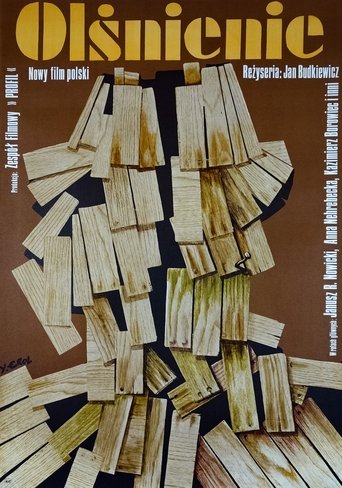
The action of the show begins in 1964. The heroine - Agnieszka, an assistant at a university, lives in a hotel for young researchers. She differs from the rest of the inhabitants, she is lost and closed in on herself, which triggers malicious reactions in the environment that turn into acts of collective psychological aggression.
