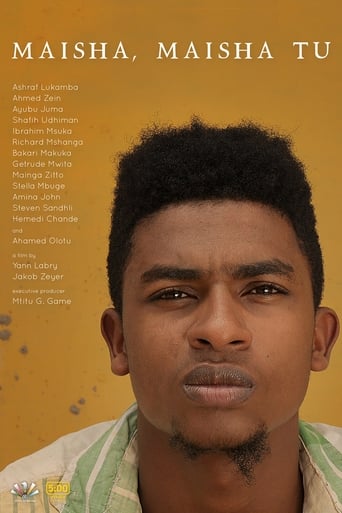
Maisha, Maisha Tu 2019
Shot in Tanzania, this feature film shows four different life stories - stories of challenges, opportunities and second chances.
Shot in Tanzania, this feature film shows four different life stories - stories of challenges, opportunities and second chances.

An action movie about hunting animals.

Nicholaus blames his wife Vivian for not conceiving a child, but is unwilling to see a doctor to investigate the cause of their infertility. Meanwhile, Nicholaus' girlfriend Victoria becomes pregnant. He believes that this child is his, but it turns out not to be.

Two brothers get into a misunderstanding over who is the rightful master of Kung Fu.
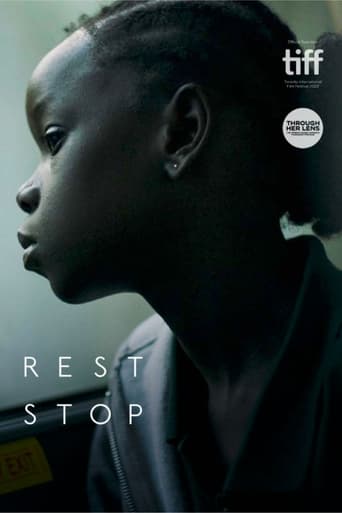
A young Ugandan-American girl gains a new understanding of her family and her place in the world as she travels with her mother and brother from New York to Oklahoma, in this richly textured drama by Crystal Kayiza.
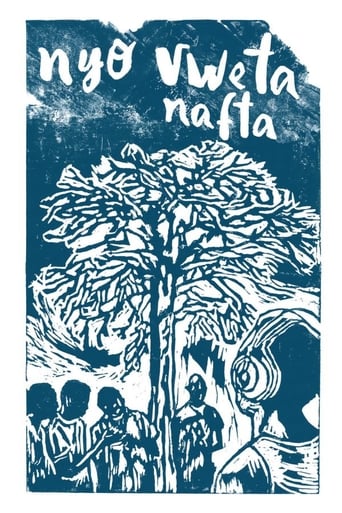
Shooting on 16mm film in Mozambique, director Ico Costa explores the textures of human behaviour as he follows young men who wonder what lies beyond their immediate surroundings. In the fragments of conversations captured in the Maputo market, a recording studio and on coconut trees, we find daily routines and tedium lead to chit-chat on desire, money and hope. In the interplay between performance and document, poetry emerges from fleeting everyday moments.

Ernania is hospitalized in a psychiatric hospital in Mozambique. She dreams about her little son, Hanic, and her husband, Pak, who is a soldier of the war. In the meantime, a quirky musical instrument plays: her own bed. Ernania’s musical virtuosity, attracts the attention of the hospital nurses. One day, her song is played in a radio program and Rosa, an evangelical priest of “Rádio Moçambique”, goes to the hospital to listen to Ernania’s song. Ernania takes the priest’s visit as an opportunity to run away from the hospital.

Arif journeys between Zanzibar and Oslo, exploring his roots and personal identity. Guided by the spiral of a seashell — a symbol of past, present, and future—he navigates memory, belonging, and culture in a poetic search for self across time and space.
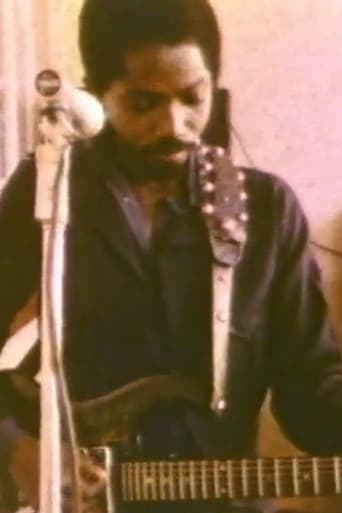
A man listens to music on a cassette. It seems to have been composed by an amateur. Then, on stage, he is now the conductor of an orchestra and this time, it’s he who is playing this music.
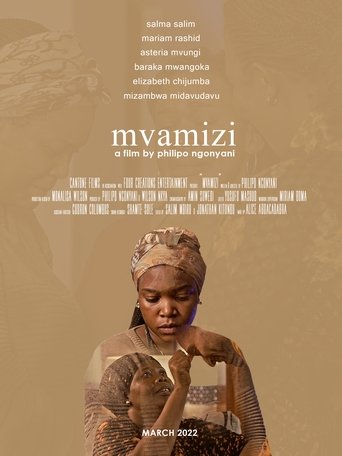
Five siblings are brought back under the same roof after their father's passing, with a deadly intruder roaming their halls and no way out they are forced to face the truth, the intruder, and worse, each other.

The dawn of an era for women's football in Zanzibar. This film is a follow-up to the 2007 Zanzibar Soccer Queens which focused on Women Fighters Football Club, a team of strong-willed Muslim women determined to play soccer to better their lives.
Mureithi started this project after the 2007/8 post-election violence in Kenya left more than 1,200 people dead and 500,000 displaced in his home country. His goal: To understand how to confront unresolved trauma and heal — before the March 2013 elections. He has released an early version of the 60-minute documentary in advance of the upcoming elections in an effort to stave off another round of violence. Film critic Roger Ebert called the work "an urgent documentary by a filmmaker I admire."
In the Kenyan slums of Kibera, a ten-year-old boy hustles to provide for his family, taking him away from his crush on her birthday.
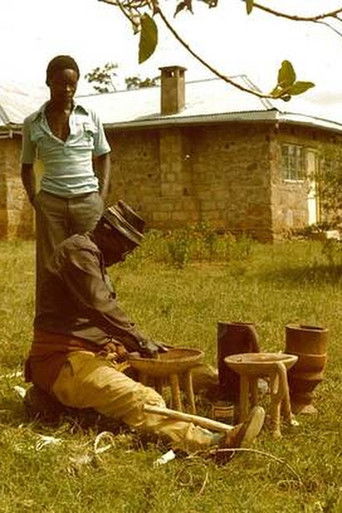
The film explores the rural life and feelings of the Iteso people of Kenya. The African sense of community is experienced through their daily activities ranging from farming to storytelling. The film portrays the Iteso’s spirit of sharing and reciprocal giving, values which contribute to the unity and survival of communities in Africa. The film is narrated by members of the Iteso community.
‘Something special about Nairobi is the people. I love the people of Nairobi. One thing I dislike about Nairobi is that there are barely spaces for children to play’, says Victoria behind the wheel of her van, driving from one birthday party to the next. Five years earlier, she set up a helium balloon business in the Kenyan capital to surround herself with joy and find safety after escaping an abusive relationship. In the colourful bouncy castles she erects and in the children’s laughter that fill them up, she finds healing and new strength.
Evokes the personal trajectory of a Tanzanian Massai woman refusing genital mutilation. Directed by two NGO volunteers from Luxemburg working on a development project in Tanzania. Released in 2009, this film has been broadcasted since in various film festivals in Europe, on the occasion of different AR actions in Luxemburg and on national television (RTL).
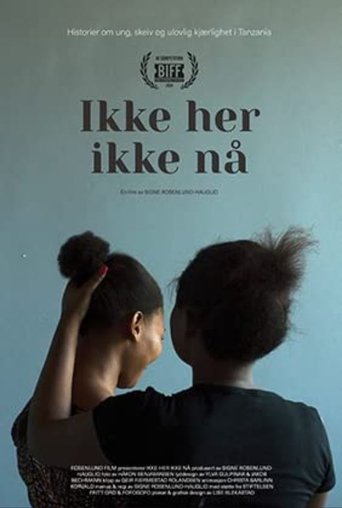
In a secluded house in the outskirts of Dar es Salaam, ten individuals meet to share stories of suppression, violence and harassment, but also of dreams, hopes and their illegal love for one another.
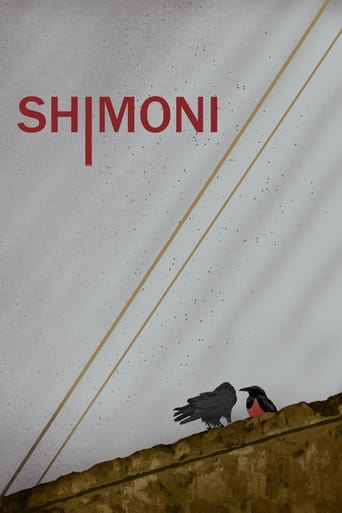
A teacher newly released from prison renegotiates the confines of the physical world while forced to face his nightmare in the flesh.

In the Swahili cultural sex education 'Unyago', Bahati Ngazi learns from the wise women of the Swahili community the cultural importance of sex education through rituals.

After being released from jail, Jitu decides to change his bad behavior and become a good person.
