Day and Date

Day and Date 1970

1

Day and Date was a daily hour-long syndicated program in the 1990s. It was syndicated by Group W Productions in 1996. It was hosted by Dana King and Patrick Vanhorn. The program was intended as a lead-in to local early news programs.

1970

Ruthie on the Telephone

Ruthie on the Telephone 1970

1

Ruthie on the Telephone is an American comedy television series that was broadcast on the CBS network from August 7 to November 5, 1949. It is perhaps most notable for the fact that each episode was only five minutes long, yet it was shown during a prime-time television slot.

1970

Bill

Bill 1970

1

Bill is a 1981 CBS TV movie starring Mickey Rooney and Dennis Quaid. The film is based on the life of Bill Sackter. A sequel, Bill: On His Own, was released in 1983.

1970

Horton Hears a Who!

Horton Hears a Who! 1970

7.00

Horton Hears a Who! is a 1970 television half-hour long special based on the Dr. Seuss book of the same name, Horton Hears a Who!. It was produced and directed by Chuck Jones - who previously produced the Seuss special How the Grinch Stole Christmas! - for MGM Television. The special contains songs with lyrics by Seuss and music by Eugene Poddany, who would later write songs for Seuss' book, The Cat in the Hat Song Book.

1970

The Vincent Lopez Show

The Vincent Lopez Show 1970

1

The Vincent Lopez Show is an American musical television program broadcast on the now defunct DuMont Television Network, and later on CBS Television.

1970

The Sound of Jazz

The Sound of Jazz 1958

1

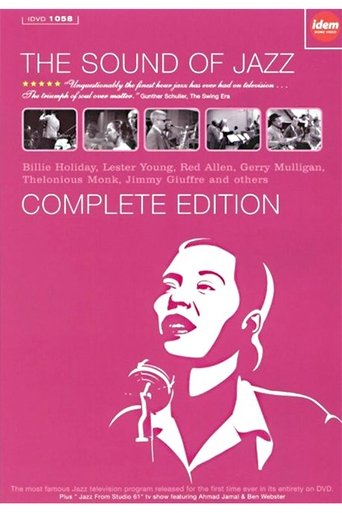
"The Sound of Jazz" is a 1957 edition of the CBS television series Seven Lively Arts, and was one of the first major programs featuring jazz to air on American network television.

1958

Let's Join Joanie

Let's Join Joanie 1970

1

Let's Join Joanie is an unaired TV pilot produced in 1950 at CBS Columbia Square in Hollywood as a proposed live weekly series, based on their radio show Leave It To Joan. Today, it is best remembered for its star, Joan Davis, who would later star in the popular 1952–1955 sitcom I Married Joan.

1970

The Hollywood Game

The Hollywood Game 1970

1

The Hollywood Game is a prime time game show hosted by Bob Goen that ran for four weeks on CBS during the summer of 1992. It involved two teams of two contestants each, who answered trivia questions about film and television. In most rounds, the teams chose trivia categories that were represented by the nine letters in "H-O-L-L-Y-W-O-O-D". Peter Allen hosted the pilot, which taped on May 14, 1991. However, he was too ill to host the series and died the day before its premiere. The show was taped at CBS Television City's Studio 33 and was the first game show John Cramer announced. The Hollywood Game was the last game show to air in primetime until Who Wants to Be a Millionaire.

1970

Joey Faye's Frolics

Joey Faye's Frolics 1970

1

Joey Faye's Frolics is an American comedy/variety show that aired on CBS Wednesday night from 9:30 to 10:00 pm Eastern time for two weeks from April 5, 1950 to April 12, 1950.

1970

Finding John Christmas

Finding John Christmas 1970

8.00

Finding John Christmas is a 2003 television movie that first aired on CBS. The film is a sequel to the 2001 television movie A Town Without Christmas.

1970

Adventures in Jazz

Adventures in Jazz 1970

1

Adventures in Jazz is a 1949 CBS television show. The program was broadcast live, showcasing jazz musicians and singers. Ella Fitzgerald, Billie Holiday and June Christy made appearances on the short-lived series. Radio personality Fred Robbins hosted the series premiere, but left due to other commitments. He was replaced by actor Bill Williams until his return in May 1949.

1970

The Jo Stafford Show

The Jo Stafford Show 1970

1

The Jo Stafford Show is a 15-minute musical variety program which aired on CBS in prime time in the 1954–1955 television season. Jo Stafford began her solo singing career after success with the big band group known as The Pied Pipers. Arrangements for the program were handled by Stafford's husband, Paul Weston, himself a conductor and arranger at Capitol Records and Columbia Records. The series aired on Tuesday evenings at 7:45 Eastern Time after Douglas Edwards with the News and preceding the half-hour The Red Skelton Show. Singer Perry Como had a similar 15-minute program on CBS in the same time slot on Monday, Wednesday, and Friday evenings. Paul Weston wrote a special theme song for the show. The show had the same cast of regular performers Stafford worked with during her Chesterfield Supper Club shows from Hollywood. Paul Weston and his Orchestra and the Starlighters provided the music and vocal accompaniments on the television show just as they had done on Stafford's hosted "Supper Club" radio programs. The television program was done live. During the year it aired, Stafford was beset with many of the on-air difficulties which came with live television, including the loss of her skirt on one show while singing "Let Me Go, Lover!". One of the cast members tripped, and as he fell, a button on his coat caught in Stafford's costume. Her skirt falling along with the actor, Stafford tried holding onto it while singing "Let me go".

1970

The Kate Smith Show

The Kate Smith Show 1970

1

The Kate Smith Show is a half-hour variety program which aired on CBS television from January 25 to July 18, 1960. The program features singer Kate Smith and the Harry Simeone Chorale.

1970

It Pays to Be Ignorant

It Pays to Be Ignorant 1970

1

It Pays to Be Ignorant was a radio comedy show which maintained its popularity during a nine-year run on three networks for such sponsors as Philip Morris, Chrysler, and DeSoto. The series was a spoof on the authoritative, academic discourse evident on such authoritative panel series as Quiz Kids and Information Please, while the beginning of the program parodied the popular quiz show, Doctor I.Q. With announcers Ken Roberts and Dick Stark, the program was broadcast on Mutual from June 25, 1942 to February 28, 1944, on CBS from February 25, 1944 to September 27, 1950 and finally on NBC from July 4, 1951 to September 26, 1951.

1970

The Hoober-Bloob Highway

The Hoober-Bloob Highway 1970

1

The Hoober-Bloob Highway is an animated musical special written by Dr. Seuss and produced by DePatie-Freleng Enterprises for CBS in 1975. The special is a musical, and features several songs written by Dr. Seuss and composed by Dean Elliott. Mr. Hoober-Bloob, a dispatcher of newborn children from some location in space, is preparing to send a new child down his highway to Earth, but first, he gives the child a chance to decide for himself whether he wants the life of a human. Mr. Hoober-Bloob shows him the realistic problems and pleasures that people face in life. The story suggests that while things may be pretty bad, there's always something to be thankful for.

1970