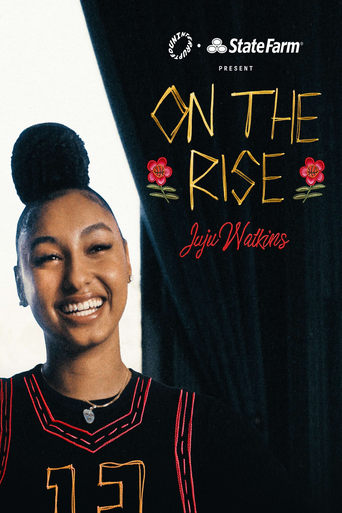
On the Rise: Juju Watkins 2024
Get a behind-the-scenes look at the incredible journey of JuJu Watkins as she goes from high school basketball phenom to USC superstar.
Get a behind-the-scenes look at the incredible journey of JuJu Watkins as she goes from high school basketball phenom to USC superstar.

Cartoon All-Stars to the Rescue is an American animated drug prevention television special starring many of the popular cartoon characters from American weekday, Sunday morning and Saturday morning television at the time of this film's release. Financed by McDonald's and Ronald McDonald Children's Charities, the special was originally simulcast on April 21, 1990 on all four major American television networks: ABC, NBC, FOX and CBS, and most independent stations, as well as various cable networks. McDonald's also distributed a VHS home video edition of the special, produced by Buena Vista Home Video, which opened with an introduction from President George H. W. Bush, and First Lady Barbara Bush. The show was produced by the Academy of Television Arts & Sciences Foundation and Southern Star Productions, and was animated overseas by Wang Film Productions Co., Ltd.. The musical number "Wonderful Ways to Say No" was written by Howard Ashman and Alan Menken, who also wrote the songs for The Little Mermaid, Beauty and the Beast and Aladdin. The plot chronicles the exploits of Michael, a teenager who is using marijuana and stealing his father's beer. His younger sister, Corey, is worried about him because he started acting differently. When her piggy bank goes missing, her cartoon tie-in toys come to life to help her find it. After discovering it in Michael's room along with his stash of drugs, the various cartoon characters proceed to work together and take him on a fantasy journey to teach him the risks and consequences a life of drug-use can bring and save the world.
Judge for Yourself, at first subtitled The Fred Allen Show, is a Mark Goodson and Bill Todman nontraditional court show/quiz show, with comedian Fred Allen as the emcee. It aired on NBC from August 18, 1953 to May 11, 1954. Dennis James was the series announcer but took over as host in January 1954. Each week three performers – singers, dancers, musicians, or comedians – were judged by two panels, one of professional entertainers and the other from the studio audience. If one of the amateur judges rated the acts 1, 2, or 3 in the same order as the celebrities, that individual would win a $1,000 prize. Two instrumental jazz groups that appeared on Judge for Yourself had considerable success thereafter, vibraphonist Terry Gibbs and the Marian McPartland Trio. The original intent of the series was to allow Allen to interact with guests, much as Groucho Marx did on his own NBC series, You Bet Your Life. The complicated format first employed, however, was revamped in the middle of the season. On the episode which aired on January 5, 1954, the professional judges were dropped, and the studio audience panel rated new songs to predict future hits, the comparable format of ABC's Jukebox Jury, which also aired in the 1953–1954 season.
Jackpot! is a television game show seen in three different runs between 1974 and 1990. Geoff Edwards hosted the original version of this Bob Stewart production from January 7, 1974 until September 26, 1975 on NBC. A second version, produced in Canada, aired from September 30, 1985 to December 30, 1988 on the USA Network in the U.S. and was hosted by Mike Darrow. A third version, again hosted by Edwards, ran from September 18, 1989 to March 16, 1990 in syndication and was filmed in Glendale, California. Elements of Jackpot! were later used in the GSN game show Hollywood Showdown. Its producer, Sande Stewart, became a production partner of his father during the 1980s.
Bonino is an ethnic situation comedy television series starring Ezio Pinza as an Italian-American opera singer trying to rear his six children after the death of their mother. The program aired on live NBC from September 12 to December 26, 1953. Pinza's character is named Babbo Bonino. Character actress Mary Wickes portrayed Martha the housekeeper, a role which she filled over the years in numerous other series. The actors portraying the children were Conrad Janis as eldest son Edward, Lenka Peterson as older daughter Doris, Chet Allen as Jerry; Oliver Andes as Carlo, Gaye Huston as Fancesca, and Van Dyke Parks as Andrew, the youngest. Allen had earlier appeared as Amahl in Gian Carlo Menotti's Amahl and the Night Visitors on NBC's Hallmark Hall of Fame in 1951-1952. Parks, who grew up in Lake Charles, Louisiana, became a rock-music producer and composer who cowrote with Brian Wilson the Beach Boys' hits "Heroes and Villains" and "Surf's Up".Mike Kellin, who was cast the following year in Celeste Holm's short-lived CBS sitcom Honestly, Celeste!, appeared in the role of Rusty. David Opatoshu, portrayed Walter Rogers, Babbo's agent, who tries to convince him to return to singing. As each episode unfolds, Bonino realizes that his children are more independent than he thought. Pinza sang in each episode.Anthony Eisley, later of ABC's detective series Hawaiian Eye, guest starred in Bonino as John Clinton.
Continental Classroom is a series of college credit courses that ran on NBC from October 6, 1958 to 1963.
The Imogene Coca Show is a half-hour NBC television series starring Imogene Coca in both situation comedy and variety show formats. The program debuted on October 2, 1954, after the ending of Sid Caesar's Your Show of Shows, on which Coca had been a popular regular performer. The first two episodes of The Imogene Coca Show center upon the difficulties of a television star starting a new series. Her co-stars were Billy DeWolfe and Ruth Donnelly. The program became a variety show in its third episode, with standard songs, comedy sketches, and weekly guest stars. Then in February 1955, Coca was cast as a newlywed with a husband and two lively neighbors, Helen and Harry Milliken, portrayed, respectively, by Bibi Osterwald and David Burns. Eight years thereafter in the 1963-1964 season, Coca was cast in another NBC situation comedy, Grindl, about the wacky life of a maid working for an employment agency. The Imogene Coca Show aired on Saturday evenings at 9 p.m. EST preceding The Jimmy Durante Show and opposite Two for the Money on CBS. ABC aired Saturday evening boxing at the time. The program was telecast from New York City. It ended after a single season.
Fame is a television series that ran on NBC in the summer of 2003. The show was essentially NBC's attempt to duplicate the success of mega-hit American Idol, right down to their selection of judges. Former pop star Carnie Wilson was similar in her judgements to American Idol's Paula Abdul, Johnny Wright, the veteran music producer, was the show's analogue of Randy Jackson, and JoJo Wright was, like Simon Cowell, the judge who says things to stir people up. The show retained the original Fame theme music, as well as producer Debbie Allen. Former boy band member Joey Fatone was the official host of the show, but Allen also made frequent appearances. The show was based on the Italian show Saranno Famosi, where young talented dancers, singers and actors attended a school to became real superstars. The main goal of the show was to make all the challengers able to dance, sing and act and so to be complete. It still airs in Italy.
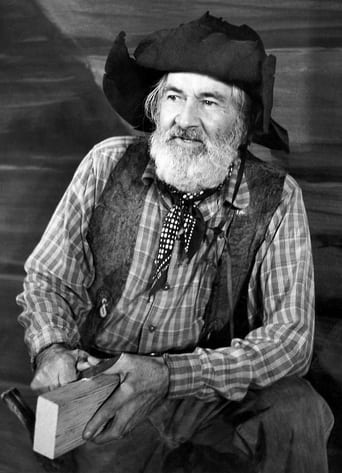
The Gabby Hayes Show is a general purpose western television series in which the film star and Roy Rogers confidant, George "Gabby" Hayes, narrated each episode, showed clips from old westerns, or told tall tales for a primarily children's audience.
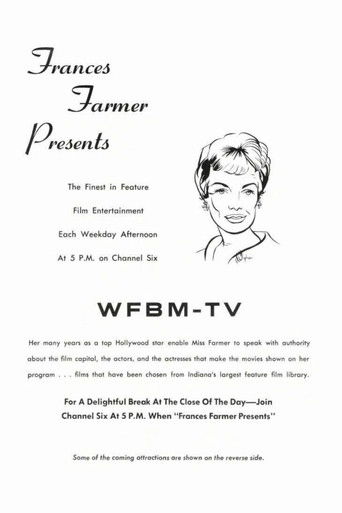
Frances Farmer Presents is an American anthology series that aired on Indianapolis station WFBM-TV. The series premiered on October 13, 1958 and ended in September 1964.

Dogs from around the world compete in various events.
Missing Links is a Goodson-Todman game show hosted by Ed McMahon which originally ran on NBC from September 9, 1963 to March 27, 1964.
Queen for a Day was an American radio and television game show that helped to usher in American listeners' and viewers' fascination with big-prize giveaway shows. Queen for a Day originated on the Mutual Radio Network on April 30, 1945 in New York City before moving to Los Angeles a few months later, and running until 1957. The show then ran on NBC Television from 1956 to 1964. The series is considered a forerunner of modern-day "reality television". The show became popular enough that NBC increased its running time from 30 to 45 minutes to sell more commercials, at a then-premium rate of $4,000 per minute.
Dotto is an American television quiz show which aired on CBS from January 6 to August 15, 1958 and was hosted by Jack Narz. Although it quickly became the highest-rated daytime game show on television, its end came when it became the unexpected first casualty – and ignition – of the quiz show scandals that rocked American broadcasting as the 1950s closed.
Caesars Challenge is an American game show that aired on NBC from June 14, 1993 to January 14, 1994. Ahmad Rashad hosted the show and Dan Doherty, dressed as a gladiator, served as the show's assistant. Chad Brown and Zach Ruby also served as assistants early in the show. Steve Day announced the program, which was taped at Caesars Palace in Paradise, Nevada. Caesars Challenge, produced by Rosner Television and Stephen J. Cannell Productions, is the last daytime game show to air on NBC.
America's Most Talented Kid is an American television series that originally aired on NBC on March 28, 2003. In each round, three age groups of talented children would perform songs, dance numbers, magic, and other forms of entertainment in front of head judge Lance Bass and other guest celebrity judges, such as Sisqo, Maureen McCormick, Jermaine Jackson and Daisy Fuentes. Host Mario Lopez led the highest scorer from each round until only three children were left to compete in the grand finale. In the end, Cheyenne Kimball was crowned the grand champion. The final NBC episode featured senior citizens competing in a special "America's Most Talented Senior". A limited-run series on NBC to compete with the growing talent-show trend in reality television, it would later move to the PAX Network, the title pluralised to "Kids", with Dave Coulier as a host and judged by Daryl Sabara, Scarlett Pomers and Bobb'e J. Thompson. Unlike the NBC version, however, each show would crown a $1,000 winner plus the chance to keep in the finale. The Grand Champion of this season of "America's Most Talented Kids" was then 13-year-old rock violinist/singer/songwriter Antonio Pontarelli.
C. Everett Koop, M.D. is a five-part American documentary television series hosted by C. Everett Koop. The series premiered June 4, 1991, on NBC.
Rootie Kazootie was the principal character on the 1950s children's television show The Rootie Kazootie Club. The show was the creation of Steve Carlin and featured human actors along with hand puppets.
Winning Streak is an American television game show hosted by Bill Cullen and announced by Don Pardo. It aired daily on NBC from July 1, 1974 to January 3, 1975 and was produced at the NBC Studios in New York's Rockefeller Plaza.
The World in Your Home is an NBC Television TV series which aired from December 22, 1944 to 1948, originally broadcast on WNBT, NBC's New York flagship, then broadcast on NBC-affiliate stations WRGB in New York's Capital District and WPTZ in Philadelphia starting shortly after its premiere. The program consisted of educational short films. Each episode was 15 minutes long, and is believed to be one of the first television programs in the history of the NBC Television network. The series aired after I Love to Eat with James Beard in 1946, and after Campus Hoopla in 1947. Little else is known about the series.
